
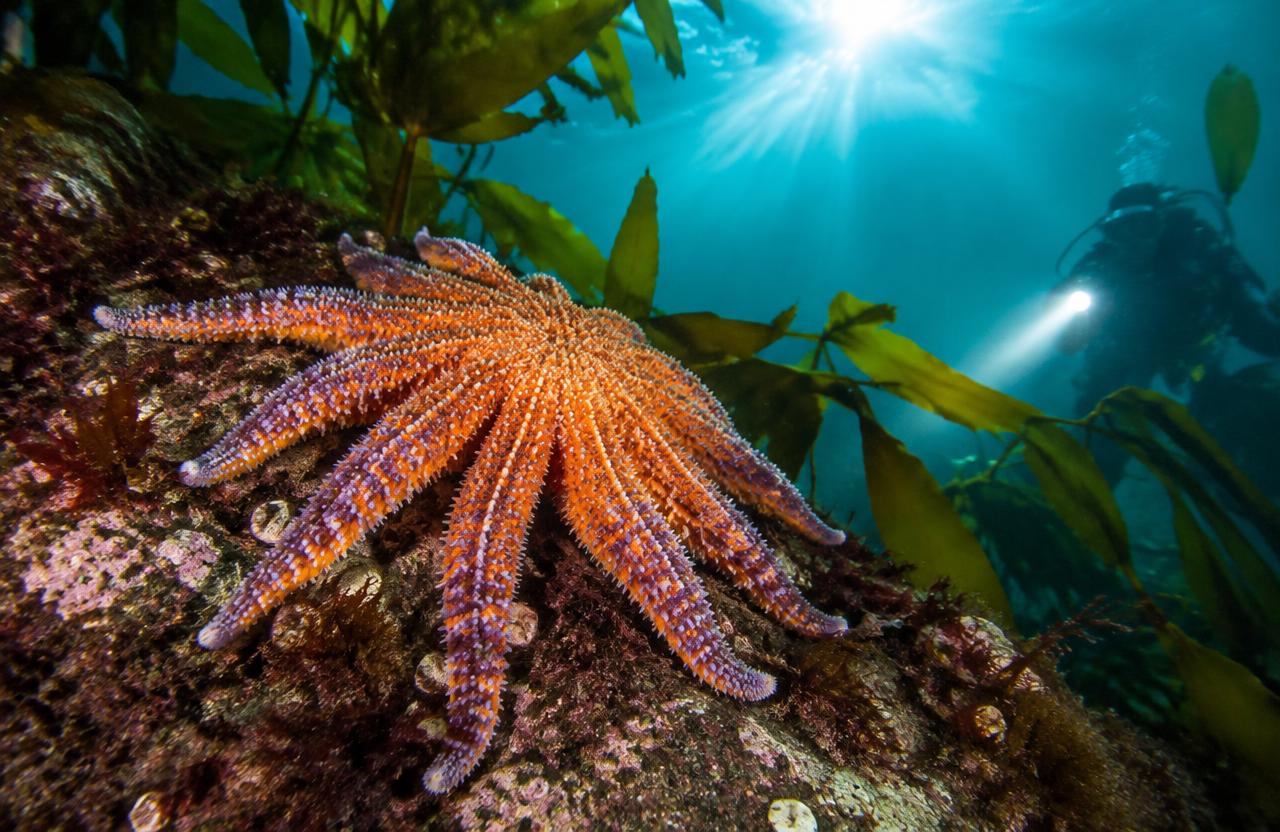
Off the coast of Monterey, California, divers are slipping into the cold, choppy Pacific carrying plastic bags containing an unlikely hope for one of the planet's most important ecosystems: a sea star with up to 24 arms.
The sunflower sea star is critically endangered. Scientists believe that bringing it back could help restore kelp forests that have been devastated along the Pacific coast over the past decade.
'Stars in the water'
On the back deck of a research boat, Ashley Kidd, co-founder of the non-profit Sunflower Star Laboratory, gives the divers their final command: "Dive No 1 … stars in the water."
On the seabed, the divers place the sea stars inside specialised cages but leave the doors wide open. The aim is to encourage the creatures to roam the ocean floor, where they were once a crucial part of the ecosystem.
"We have a star that decided to go for a walk today," Kidd said, tracking one particularly mobile animal.
"They are a sea star, but the cool thing with these guys is they have more than five arms," she said. "They can have up to 24 arms, and we want to bring them back."
The redwoods of the sea
Kelp forests are often described as the redwoods of the sea. Kelp can grow taller than a 10-storey building at rates of up to two feet a day, forming dense underwater canopies that shelter thousands of marine species.
They are also a powerful ally against climate change. Worldwide, kelp forests absorb around 200 million tonnes of carbon dioxide each year.
Yet in parts of the Pacific coast, an estimated 95% of these forests have been lost in the past decade.
A heatwave and a disease
The collapse began around 2013, when a marine heatwave fuelled by the climate crisis drove up water temperatures along the west coast of North America.
The warm water accelerated the spread of sea star wasting syndrome, a disease that literally dissolves the bodies of affected animals. It wiped out more than 90% of the Pacific's sunflower sea stars.
That set off a chain reaction. Sunflower sea stars are voracious predators of purple sea urchins, which graze on kelp. With their main predator gone, urchin populations exploded, turning lush forests into barren seabeds known as urchin barrens.
Restoring the balance
Researchers hope that by reintroducing sunflower sea stars, raised in laboratories, they can help bring urchin numbers back under control and allow kelp to regrow.
The work is slow and uncertain. Scientists must learn how the captive-bred stars behave in the wild, whether they stay in the release areas, and whether they can survive future heatwaves and outbreaks of disease.
Other restoration efforts along the coast include divers removing urchins by hand and replanting kelp, but many researchers believe that restoring natural predators is essential for long-term recovery.
Lessons for Scotland
Kelp forests also grow off Scotland's coasts, where they support fish, seals and seabirds. Scottish researchers and campaigners have pushed for stronger protection of these habitats from damage caused by dredging and warming seas.
The California experience shows how quickly a marine ecosystem can unravel when a key species disappears, and how difficult it is to rebuild.
A race against warming
Scientists warn that marine heatwaves are becoming more frequent and intense as the oceans absorb heat from greenhouse gas emissions. Restoration projects may buy time, but they cannot succeed on their own if waters continue to warm.
For now, the divers off Monterey are celebrating small victories: a sea star that walks out of its cage, an urchin eaten, a patch of seabed that might one day turn green again.


