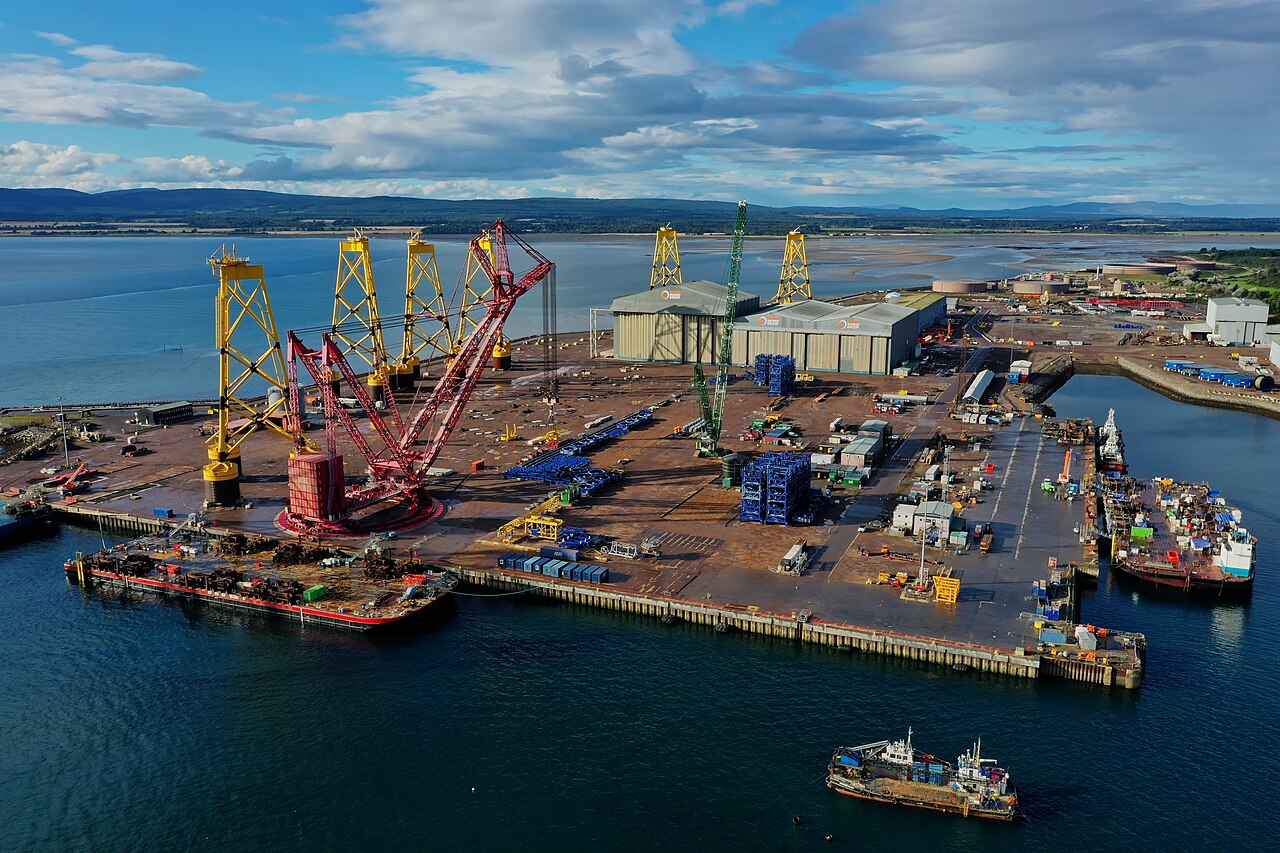
A £350 million factory has opened at the Port of Nigg in the Highlands to manufacture the subsea cables needed to carry electricity over long distances. Sumitomo Electric Industries held the opening ceremony on Monday, describing the facility as the first in the UK capable of producing high-voltage direct current subsea cables.
The project brings a major new manufacturing operation to Easter Ross, within the Inverness and Cromarty Firth Green Freeport. Sumitomo says it will create more than 200 skilled local jobs and support more than 400 across the wider UK supply chain. Those are employment projections, rather than a count of people already working at the plant on opening day.
The company says its investment totals £350 million. The National reported that the Scottish Government and its agencies provided £24.5 million in grant funding towards construction. That public contribution is separate from the company’s stated overall investment figure. First Minister John Swinney and Scottish Secretary Douglas Alexander attended the opening, according to the BBC.
Cables to connect offshore wind with demand
The plant will make high-voltage direct current, or HVDC, transmission cables. These are designed to transport electricity beneath the sea between generating areas and the places where power is consumed. Scotland’s offshore wind resources are often far from the centres of demand they are intended to serve, making transmission infrastructure an important part of developing that generation.
Sumitomo describes the connections as electricity superhighways. The BBC reported the company’s explanation that HVDC cables can carry a higher volume of usable energy than traditional high-voltage alternating-current cables. The opening adds domestic manufacturing capacity for that infrastructure; the factory does not itself generate electricity or complete the connections to customers.
The site covers 15 hectares, with 58,000 square metres of floor space, according to the company. Its main products will include 525-kilovolt cables insulated with cross-linked polyethylene, known as XLPE. Sumitomo also plans to produce subsea inter-array cables, which connect turbines within offshore wind projects before electricity is transmitted onwards.
That gives the Nigg operation a role in different stages of the offshore electricity network. Cables between turbines and the longer transmission links serve different purposes, but both form part of the infrastructure needed to bring offshore generation into the wider power system. Orders, installation work and grid connections will determine how the new manufacturing capacity is used.
Skilled jobs and public investment
Sumitomo’s statement says training will include a train-the-trainer model and programmes for operators in Japan. Developing the workforce is part of the company’s plan to establish the new production base. Its estimate of more than 200 direct skilled jobs is accompanied by the wider supply-chain figure; these should not be added together as though every position has already been created.
The BBC reported an estimate of up to 250 direct jobs. The figures describe the company’s intended employment scale, rather than contradictory headcounts at the opening ceremony. The larger supply-chain projection covers activity outside the factory as well as the local operation, so it does not mean more than 400 additional jobs will necessarily all be located at Nigg.
Swinney described the factory as a vote of confidence in Scotland’s engineering and skills. Ministers linked it to the development of offshore wind and energy security. The location within the Green Freeport places the investment in an area designated by the Scottish and UK governments to encourage industrial activity and investment.
The freeport designation is part of the project’s setting, not a substitute for the manufacturing work. The BBC describes freeports as areas where normal tax and customs arrangements do not apply in full. At Nigg, the practical development is the opening of a facility intended to make a product required by large electricity infrastructure projects.
Monday’s ceremony marks a manufacturing milestone rather than the completion of new operating subsea links. Sumitomo says the cables will support delivery of renewable electricity and strengthen energy security. Those benefits depend on the wider network being built and connected. The immediate confirmed development is the opening of the plant, its planned products and the investment and employment commitments accompanying it.