People across southern Scotland are being denied effective access to food, healthcare and housing, the country’s human rights watchdog has warned in a report examining life in communities home to more than a million residents.
The Scottish Human Rights Commission found clear failures across eight local authority areas. Its central conclusion was that services could exist on paper yet remain inaccessible to people who needed them, because of distance, transport difficulties or restrictions on where treatment was available.
The findings, reported on Wednesday, put renewed pressure on government and public bodies to show that support reaches rural and island communities as well as larger towns. The commission said some rights were deteriorating rather than improving.
Deputy First Minister Jenny Gilruth said the Scottish government already funded free bus travel for several groups. She also acknowledged that some routes no longer existed and said public service reform offered an opportunity to move decision-making closer to communities.
A gap between entitlement and everyday life
The commission gathered evidence during visits in February and March, alongside interviews, focus groups, community events and an online survey. It heard from hundreds of people about the practical obstacles they faced in meeting basic needs.
Communities visited included Stranraer, Dumfries, Ayr, Kilmarnock, Hamilton, Irvine, Arran, Galashiels, Kelso, Dalkeith and Haddington. The project also covered Ayrshire and the islands of Cumbrae and Arran, bringing different kinds of isolation into the same investigation.
Commission chair Professor Angela O’Hagan said the findings exposed a gap between the rights people were entitled to and their lived experience. She described the report as a call to action for those responsible for managing and delivering public services.
The watchdog recognised the work of communities and public bodies trying to protect people’s dignity in difficult circumstances. But that effort, it concluded, had not prevented failures in the realisation of economic, social and cultural rights.
Those rights concern essentials including food, housing, healthcare and education. The report treats difficulties obtaining them as a connected public responsibility, rather than a collection of unrelated problems for individual households to solve.
Healthcare divided by geography
One case described by the commission concerned Donald, a former landscape gardener who suffered a stroke and later contracted Lyme disease. A locum neurologist referred him to a specialist clinic in another health board area, but the referral was rejected because of where he lived.
His experience illustrates the distinction at the heart of the report: the existence of specialist care does not guarantee that a patient can obtain it. He described being left unable to work and without access to treatment he believed could help.
Another account concerned a woman struggling to navigate services for her husband, a former soldier. She described a healthcare system that proved impossible to negotiate and a deterioration in his mental health while the family sought help.
These are individual accounts gathered for the investigation, not a measure of how every patient is treated. They nevertheless show why the commission examined the organisation and accessibility of services alongside their availability.
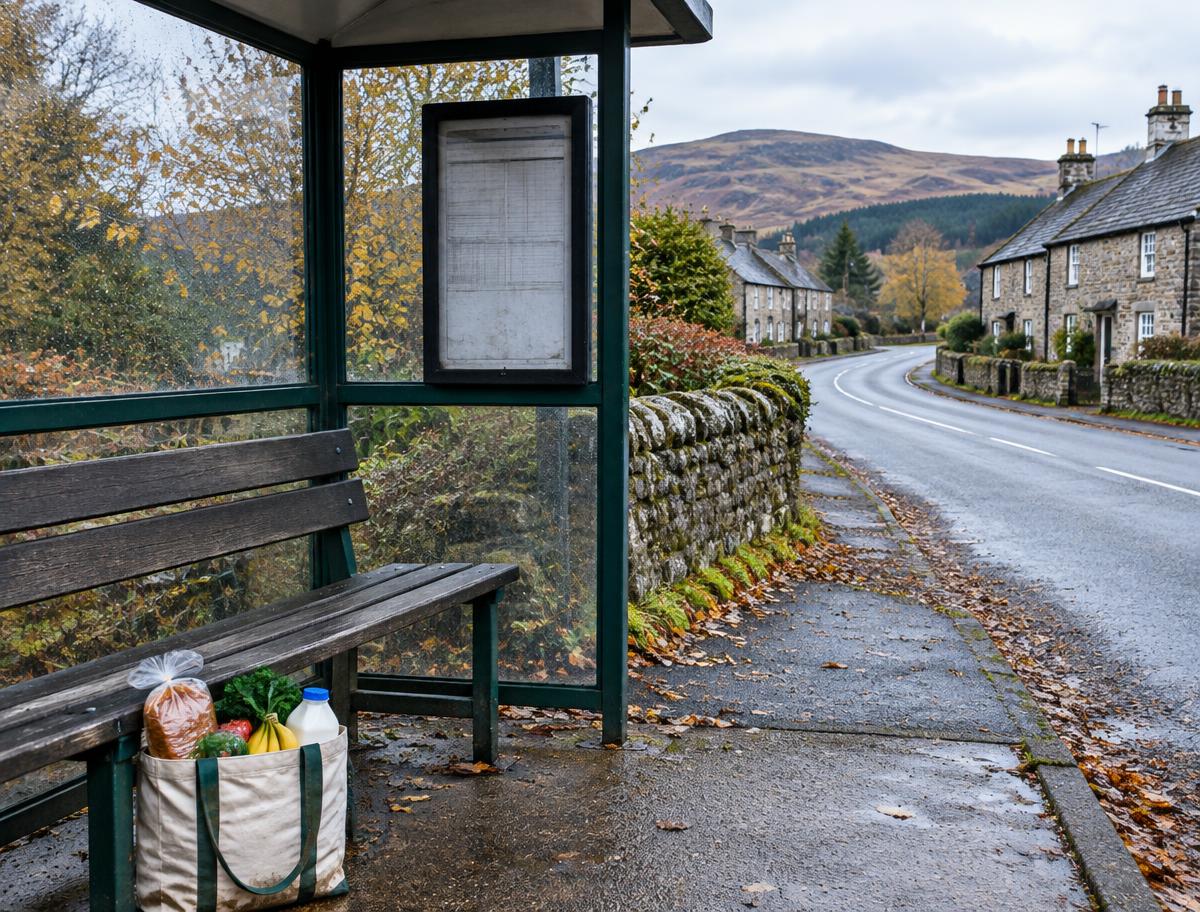
Free travel needs a service to run on
Transport is a recurring obstacle. BBC reporting highlighted the shortage of wheelchair-accessible taxis in Dumfries and Galloway and the long journey facing expectant mothers in Wigtownshire seeking maternity services in Dumfries.
The watchdog also heard that households were cutting back on meals and relying on food banks as costs rose and incomes failed to cover their needs. A charity manager described a disparity between provision in towns and support reaching scattered villages.
Gilruth pointed to concessionary bus travel for people under 22, those over 60 and people with disabilities. But her acknowledgement of missing routes draws attention to the limits of a fare concession where there is no bus to catch.
She said local government had powers to franchise services and pursue different approaches to transport. She also argued that reform could help address the sense of distance people felt from decisions taken in Edinburgh.
Parliament asked to act
The commission has shared its report with the Scottish Parliament and urged scrutiny of the government, councils and other bodies responsible for delivering rights. It is calling for a coordinated response across services, rather than separate fixes that leave other barriers untouched.
Southern Scotland is the second region covered by its spotlight programme, following work in the Highlands and Islands. A community workshop on 21 October will discuss the findings and how local organisations can use the recommendations.
The immediate challenge is not simply to announce that help exists. It is to demonstrate that people can reach it, qualify for it and use it wherever they live. That is the practical test the commission’s findings now place before Scotland’s public authorities.