
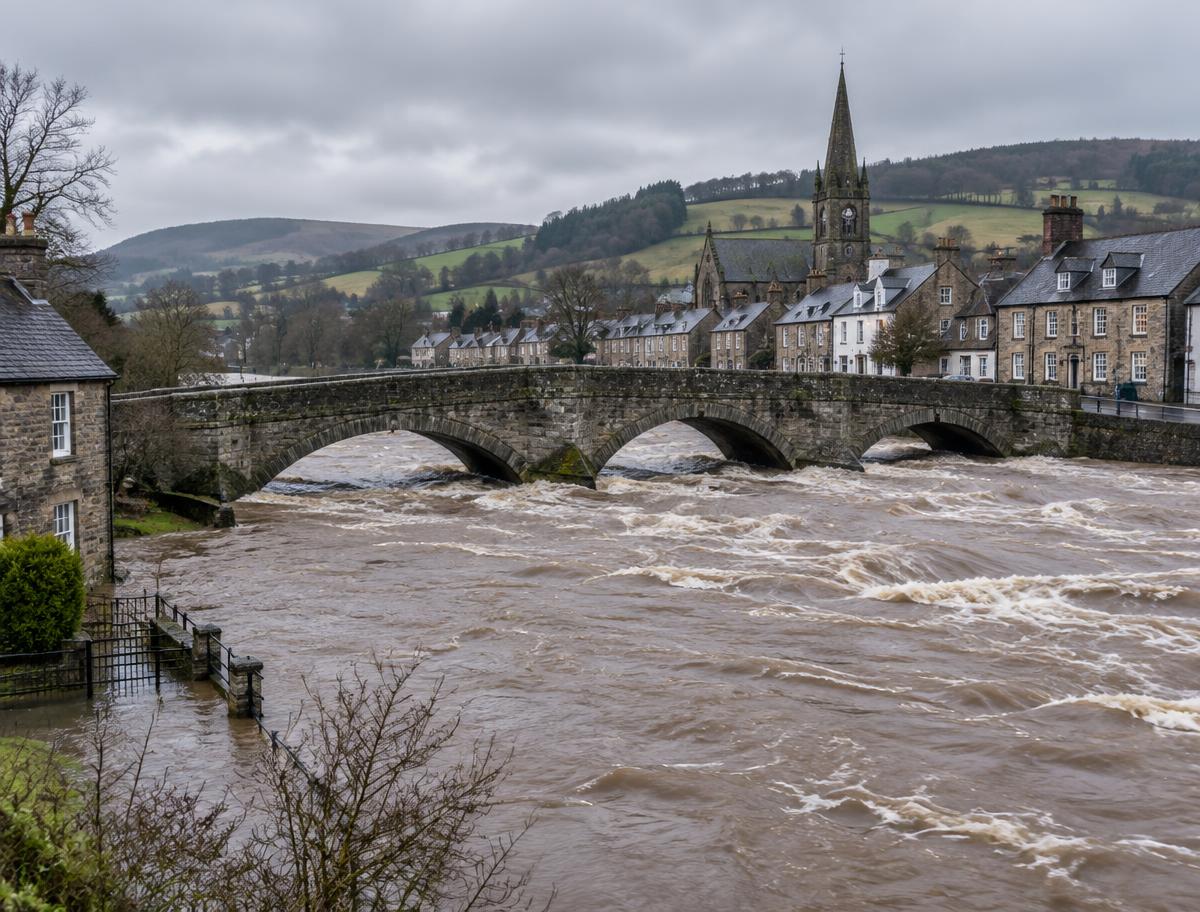
Households and businesses across the Scottish Borders are being urged to check they are signed up to receive flood warnings, after the Scottish Environment Protection Agency (SEPA) rolled out an enhanced version of its free Floodline service for the region.
SEPA says the upgraded system is designed to give at-risk properties more accurate and timely alerts ahead of flooding, reducing the risk of people being caught unprepared when rivers rise quickly during heavy rainfall.
Why the Borders is a priority area
The Scottish Borders includes several towns and villages built along rivers such as the Tweed, Teviot and Ettrick, many of which have a long history of flooding during periods of intense or prolonged rain. Hawick, in particular, has experienced repeated serious flooding over the years, prompting substantial flood protection investment in the town in recent years.
Because flooding in the region can develop quickly once rivers are already high, SEPA has said that earlier and more precise warnings give residents and businesses extra time to move vehicles, raise furniture, deploy flood barriers or simply leave an area before water levels become dangerous.
How the enhanced service works
SEPA’s Floodline service allows people to register their property to receive flood warnings by phone call, text message or email when flooding is expected in their area. The enhanced version introduced for the Borders is intended to improve the accuracy of forecasting models and the timeliness of alerts specific to local watercourses, rather than relying solely on broader regional warnings.
Registration remains free and voluntary, and SEPA has encouraged anyone living or operating a business near a river, burn or area with a known flood history to sign up, even if they have not previously experienced flooding themselves, since risk can change over time as rainfall patterns shift.
The wider context of flood risk in Scotland
Scotland’s flood warning system has been under increasing strain in recent years as heavier and more frequent rainfall events, linked by scientists to climate change, have raised the likelihood of flash flooding in areas that previously saw it rarely. SEPA has been gradually extending and upgrading its warning coverage across different parts of the country as resources allow, with regional improvements such as the one announced for the Borders forming part of that longer-term programme.
Local authorities, including Scottish Borders Council, work alongside SEPA on flood risk management plans that combine warning systems with physical measures such as flood walls, embankments and natural flood management schemes intended to slow the flow of water into rivers during storms.
What residents should do
SEPA has advised residents and business owners in the Borders to check their current flood warning registration status and to update their contact details if they have moved home, changed phone number or not previously signed up. The agency has stressed that the enhanced service is only effective if people are registered to receive it, and that checking registration takes only a few minutes online or by phone.
With the autumn and winter months traditionally bringing the heaviest rainfall of the year to the region, officials are hoping that higher take-up of the improved alert system will help reduce the disruption and damage caused when flooding does occur.
How Scotland’s flood warning system is organised
SEPA operates Scotland’s national flood forecasting and warning service, working alongside the Met Office through the Scottish Flood Forecasting Service to produce daily flood guidance statements as well as targeted warnings for specific catchments. The system is built around three main types of alert: flood alerts, which cover wider areas and indicate a general possibility of flooding; flood warnings, which are more specific and indicate that flooding is expected imminently in a defined location; and severe flood warnings, reserved for situations where there is a significant risk to life.
Each enhancement to the network, such as the one introduced for the Borders, typically involves refining the hydrological models used to predict how quickly rainfall will translate into rising river levels in a particular catchment, as well as expanding the number of monitoring points feeding data back to forecasters in real time. The aim is to narrow the gap between a generic regional alert and a warning specific enough for a household to know whether their own property is actually at risk.
Learning from past flooding events
The Scottish Borders has featured prominently in the country’s flood history, with events in Hawick and Peebles in particular prompting detailed reviews of both infrastructure and warning systems. The £56m Hawick Flood Protection Scheme, completed in recent years, was designed to protect the town from the kind of river flooding that caused severe damage to homes and businesses on the River Teviot in the past, and is often cited as a model for how flood defences and warning systems can work together.
Across Scotland more broadly, SEPA has pointed to events such as Storm Babet in 2023, which caused significant flooding in Angus, Aberdeenshire and parts of the Borders, as evidence of the need for continued investment in forecasting and warning capability. Storms of that kind can see rivers rise from normal levels to dangerous flood conditions within a matter of hours, leaving little time for manual intervention if warnings are not issued promptly.
The funding and policy backdrop
Flood risk management in Scotland operates under the Flood Risk Management (Scotland) Act 2009, which placed statutory duties on SEPA and local authorities to assess and manage flood risk on a catchment basis. Local flood risk management plans, reviewed on a six-year cycle, set out the combination of structural defences, natural flood management and warning systems that are judged most cost-effective for a given area.
The Scottish government has committed substantial capital funding to flood protection schemes in recent years, though councils and campaign groups have at times argued that demand for new defences across the country outstrips available funding, meaning warning systems such as the enhanced Floodline service remain an important and comparatively low-cost way of reducing harm in areas where physical defences cannot be built immediately.
Registering for alerts
People wishing to sign up can register online through SEPA’s website or by calling Floodline directly, providing a postcode and contact details so that warnings can be targeted to the right property. SEPA has said the service remains free to use and that it continues to review coverage across the country, with further enhancements expected in other flood-prone areas as the programme develops, informed by lessons learned from the rollout in the Borders.


