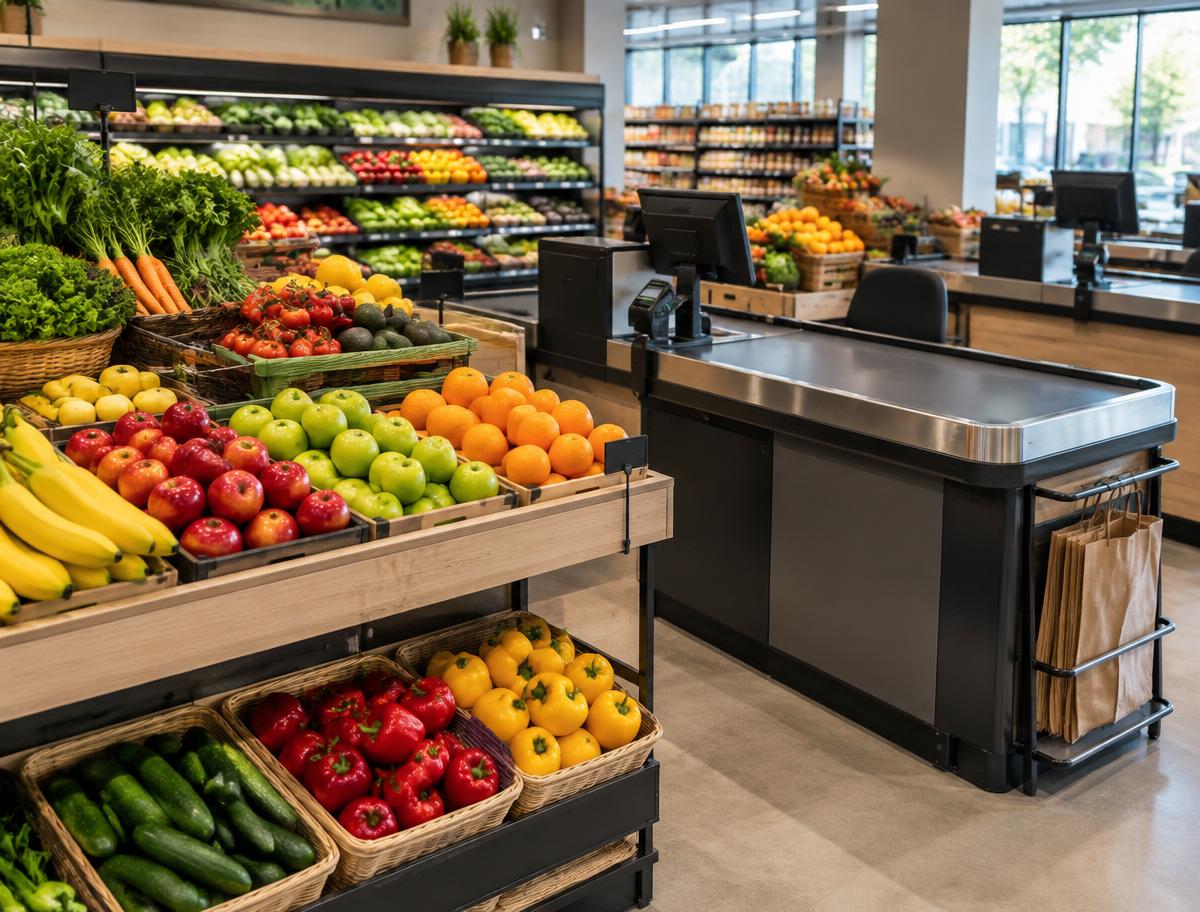
New rules restricting how foods high in fat, sugar and salt can be sold and promoted in Scotland came into force on 1 October, with larger retailers banned from placing items such as sugary drinks, sweets and biscuits in prominent spots including shop entrances, checkouts and the ends of aisles.
The regulations, passed by the Scottish Parliament last year, apply to businesses with more than 50 employees and cover both physical stores and online retail, the Scottish Government said.
What the rules change
Under the new regime, larger retailers can no longer display prepackaged high fat, sugar or salt products, including sugary soft drinks, confectionery, biscuits and some breakfast cereals, in locations designed to catch shoppers’ attention, such as entrances, checkout areas and prominent aisle-end displays known in the industry as “gondola ends”. Certain price promotions are also restricted, including offers of free refills on sugary soft drinks.
Smaller retailers, those with 50 or fewer employees, fall outside the placement restrictions, a distinction ministers say was built into the policy to limit the burden on independent and small businesses while still targeting the larger supermarkets and chains where most purchasing happens.
The public health case
Public Health Minister Maree Todd said around two in three adults in Scotland are overweight or obese, and that people living in the most deprived areas are disproportionately affected by the associated harms. She argued that prominent in-store placement and promotions are designed to encourage impulse purchases of high-calorie food and drink, and that removing these prompts should help shift everyday shopping habits over time.
Public health researchers have long argued that where food is placed in a shop, not just its price, has a measurable effect on what people buy, with prominent positioning shown in studies to increase sales of the products on display. Scotland has one of the highest rates of obesity in Western Europe, and ministers have linked this to pressure on the NHS from conditions such as type 2 diabetes and heart disease.
Bringing Scotland into line
The Scottish Government has pointed out that broadly similar restrictions on the placement and promotion of high fat, sugar and salt foods already apply in England and Wales, where comparable rules took effect in 2022. Ministers say the Scottish regulations were designed with industry input to limit disruption, including a longer lead-in time for businesses to adjust store layouts and online platforms.
A long road to legislation
Proposals to restrict the promotion of unhealthy food in Scotland date back several years, with the Scottish Government first consulting on the idea as part of its wider diet and obesity strategy before the Covid-19 pandemic delayed progress. Ministers argued at the time that restricting promotions was a necessary complement to measures such as the soft drinks industry levy, often known as the sugar tax, introduced UK-wide in 2018, which encouraged manufacturers to reformulate drinks to reduce sugar content.
The policy was also shaped by lessons from Scotland’s minimum unit pricing regime for alcohol, introduced in 2018, which similarly aimed to use regulation of sale and promotion to shift consumption patterns over the long term rather than relying solely on individual choice or education campaigns.
Reaction and enforcement
Retail industry bodies had previously raised concerns about the cost and complexity of redesigning store layouts and digital storefronts to comply, though the government says extensive engagement took place before the rules were finalised. Local authorities, which are responsible for enforcement under similar regimes elsewhere in the UK, are expected to monitor compliance, with the detail of enforcement powers set out in the regulations themselves.
What happens next
The Scottish Government says it will monitor the impact of the changes on shopping patterns and public health outcomes over time, though any measurable effect on obesity rates is likely to take years to assess. Ministers have signalled the restrictions form part of a wider strategy aimed at tackling diet-related ill health, alongside other measures such as restrictions on advertising and continuing work on reformulating food products to reduce sugar, fat and salt content.
Health campaigners have broadly welcomed the change, though some have cautioned that tackling obesity will also require action on food pricing, advertising and the broader food environment, rather than placement rules alone.
Industry analysts have noted that similar placement restrictions introduced in England and Wales in 2022 led retailers to redesign store layouts well in advance of the deadline, suggesting Scottish retailers are likely to have made comparable preparations, though compliance will only be properly tested once enforcement activity begins in earnest.