
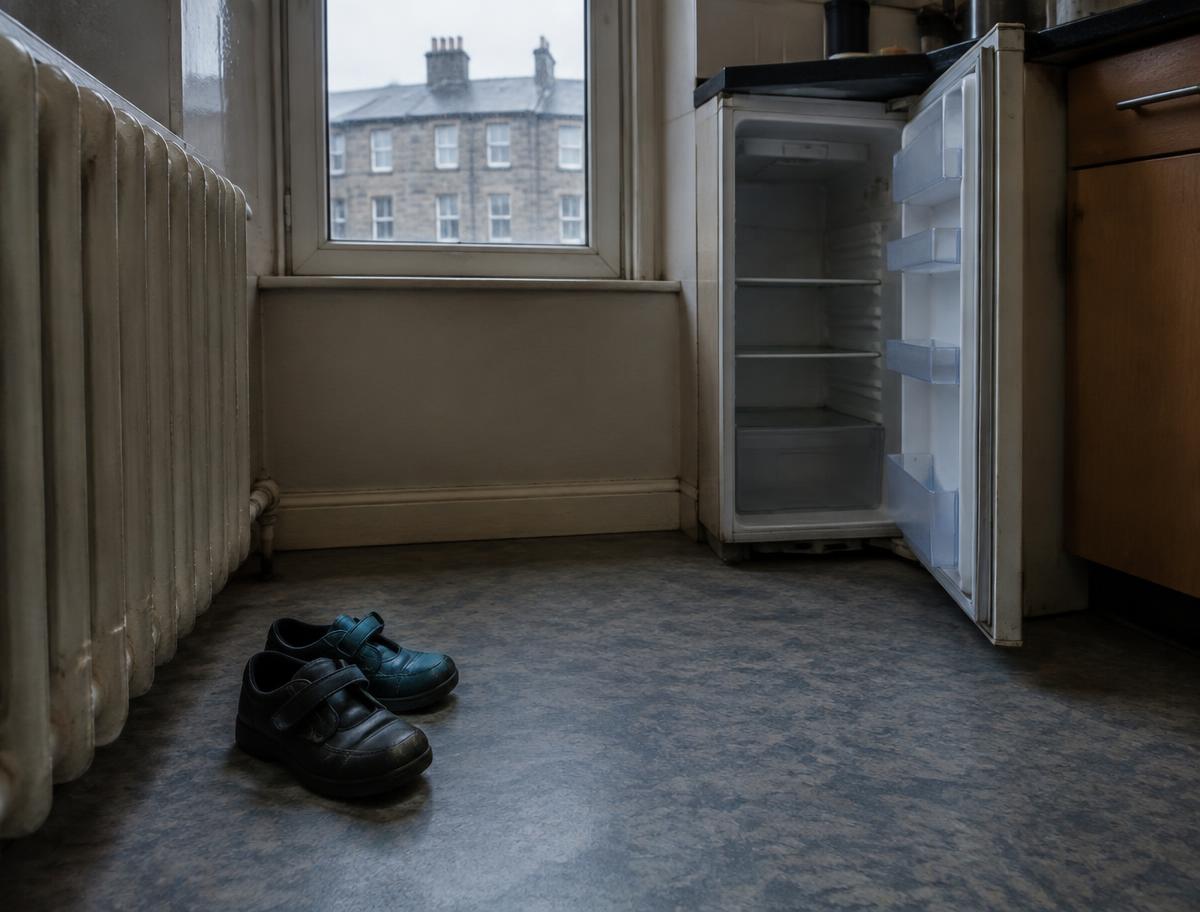
Scotland is on course to miss its legally binding targets to cut child poverty "by a wide margin", according to a major report from the Joseph Rowntree Foundation (JRF), which says one in five Scottish children is still growing up poor.
The social reform charity is calling for "radical change" and a "much bolder and properly-funded plan to reduce poverty", arguing that local government, public services and the tax system all need to be rewired if ministers are to get their pledges back on track.
The Scottish government insists it has made great strides, saying its policies are keeping 100,000 children out of poverty this year. But it accepted there is more to do.
A law with a deadline
In 2017, MSPs passed legislation requiring ministers to hit four child poverty targets. The headline measure commits Scotland to pushing the share of children in relative poverty below 10% by 2030.
The JRF's Poverty in Scotland report found that figure has remained stubbornly high, averaging 21% between 2022 and 2025. That is better than the UK average of 28%, but still more than twice the level the law demands in little more than four years.
Relative poverty means a household's disposable income after housing costs falls below 60% of the UK median, adjusted for the size and make-up of the family. It is the measure most commonly used to judge whether children are being left behind as the rest of the country moves on.
Across the whole population, the report concluded that 940,000 people in Scotland are living in relative poverty, around 17% of everyone in the country.
Why progress has stalled
The charity said that "despite some progress", the Scottish government's existing plans "will not deliver the scale of change needed to shift the dial".
It described the reasons for the shortfall as "complex". Among the factors it identified were UK government austerity, the cost of living crisis and what it called "a dysfunctional relationship between local and national government in Scotland".
That final point is likely to sting at Holyrood. Councils deliver many of the services families in poverty rely on, from school meals and early years childcare to housing support and welfare advice. The JRF's argument is that unless councils and ministers pull in the same direction, and are funded to do so, money spent at national level will not reach the households who need it.
The government's case
Ministers point to the Scottish Child Payment, a weekly benefit for low-income families which has no equivalent elsewhere in the UK, as evidence that Scotland is taking a different path. The government's figure of 100,000 children kept out of poverty this year is central to its defence.
On the same day the report was published, the Scottish government announced 250 NHS jobs aimed at parents, presented as part of its work to tackle child poverty by helping families into secure employment.
Supporters of the current approach argue that the cost of living shock and decisions made at Westminster have worked against Scotland's efforts, and that without devolved policies the figures would be considerably worse.
The pressure ahead
Critics will say the report exposes the gap between ambition and delivery. A target set in law is not a slogan; it is a promise the Scottish Parliament made to children who are now in classrooms, and failing to meet it would be a significant political blow.
The JRF's central message is that incremental steps are no longer enough. With four years left before the 2030 deadline, it wants ministers to treat the problem as a national emergency, with the funding, structural reform and tax decisions that would imply.
Whether any government is willing to make those choices, particularly when public finances are already under strain, is now the question facing Holyrood. For the families behind the statistics, the answer will be measured not in reports but in rent paid, heating switched on and food on the table.
For now, one Scottish child in every five remains below the poverty line, and the clock on the government's own legal deadline continues to run.