
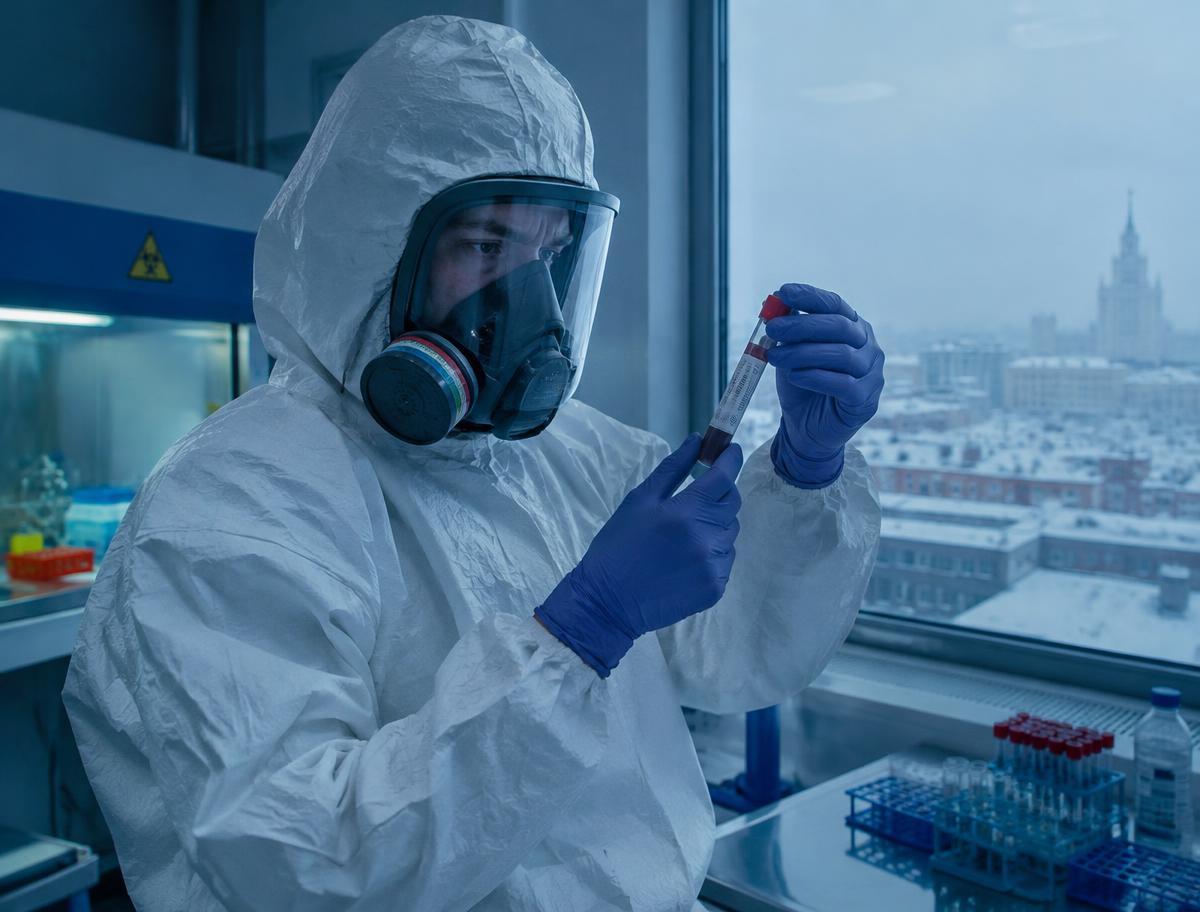
US President Donald Trump says he has arranged a call with Vladimir Putin about the death of a laboratory worker at a plague research centre in Siberia, as the World Health Organization pressed Russia for more information.
The 28-year-old employee was working at the anti-plague institute in the Siberian city of Irkutsk. Russian officials say they are investigating the death but have not confirmed that the suspected disease is pneumonic plague. They insist there is no risk of an epidemic.
Reports emerged on Friday that almost 200 people had been placed under observation following the death.
Trump: 'We don't think so'
Speaking to reporters on Wednesday evening, Mr Trump said he did not believe the case involved a bioweapon. We're going to find out soon enough, but we don't think so, he said.
He added that Russian authorities said the situation was under control and that he hoped it was. Comparing the response to China's handling of the early stages of the Covid pandemic, he said China did not say much and Russia was not saying much either, but that Moscow said it had the situation very much under control.
Mr Trump said the United States was in deep discussions with Russia. However, Kremlin spokesman Dmitry Peskov said no phone call had been scheduled.
WHO calls for transparency
WHO director-general Tedros Adhanom Ghebreyesus called for greater openness from Moscow and requested further information on laboratory tests carried out on the person who died.
We don't yet have the full picture of this event, he said. He added that the WHO was also seeking verification of media reports that a second employee had developed pneumonia of undetermined cause.
Dr Tedros called on Russia to provide timely, complete and transparent information so that the facts could be clarified.
Under the International Health Regulations, countries are expected to notify the WHO of events that may constitute a public health emergency of international concern and to share relevant information.
What is pneumonic plague?
Plague is caused by the bacterium Yersinia pestis, which is usually spread by fleas carried by rodents. It exists in several forms. Bubonic plague, which affects the lymph nodes, is the most common.
Pneumonic plague is a serious lung infection and is often described as the most virulent form. Unlike bubonic plague, it can spread directly from person to person through respiratory droplets. Without rapid treatment it is frequently fatal, but it can be treated with common antibiotics if caught early.
Plague still occurs naturally in parts of the world, including areas of Central Asia, Africa and the Americas. Russia maintains a network of anti-plague institutes, dating back to the Soviet era, that monitor natural outbreaks and study dangerous pathogens.
Questions about laboratory safety
The death has prompted questions over how the worker became infected and whether the case is linked to work at the institute. Russian officials have not publicly set out the circumstances.
Experts in biosecurity have long called for stronger international oversight of laboratories that handle dangerous pathogens. Accidental infections in high-containment laboratories are rare, but when they occur they raise concerns about safety procedures and transparency.
Moscow has rejected suggestions that the incident poses a wider threat. Officials have stressed that contacts are being monitored and that the situation is contained.
Diplomacy and suspicion
The case comes at a time of deep mistrust between Russia and Western governments, shaped by the war in Ukraine. That backdrop makes clear and verifiable information more important, as both sides weigh competing claims.
For now, the key facts remain limited: a young worker has died, almost 200 people have been under observation and the cause has not been publicly confirmed. Whether a call between the two presidents takes place, and what the WHO learns from Russian health authorities, may determine how quickly those gaps are filled.