
Russia has arrested a Japanese journalist on the far eastern island of Sakhalin and accused him of spying, in the latest sign of rising tension between Moscow and Tokyo.
The Russian foreign ministry spokesperson, Maria Zakharova, named the reporter as Yuki Imai of the Hokkaido Shimbun newspaper. She said he was accused of "conducting espionage activities on Russian territory".
If convicted, he could face up to 20 years in prison.
The arrest
Mr Imai worked at the newspaper's bureau in Yuzhno-Sakhalinsk, the main city on Sakhalin. According to Russia's state news agency Tass, he was preparing to return to Japan when he was detained on suspicion of collecting information on Russia's defence capabilities.
Russia's FSB security service claimed he had intended to pass the information to Japanese intelligence.
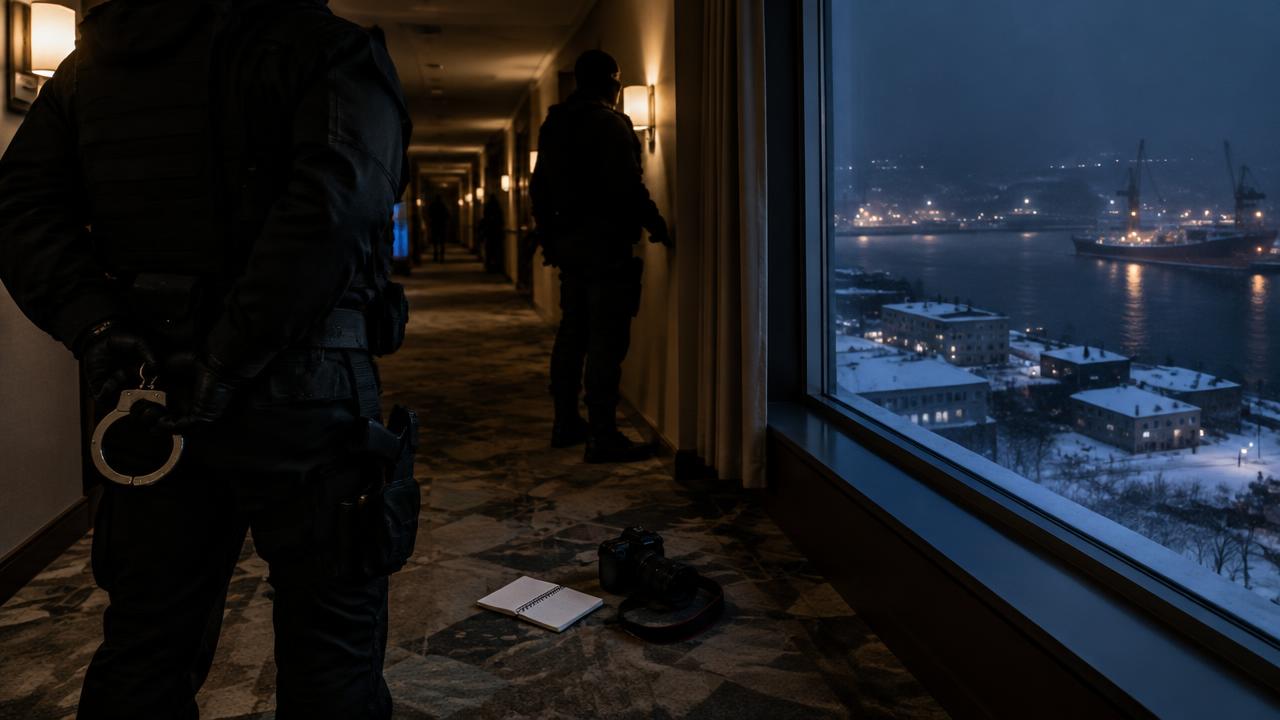
The FSB released a video showing masked officers storming a hotel room, pushing a man to the floor and handcuffing him. The man was then flown to Moscow, where a court ordered him to be held in pre-trial detention. The FSB did not say when the arrest or the hearing took place.
Tokyo responds
Japan's foreign ministry urged Moscow to give the journalist "fair and impartial treatment".
An official told Agence France-Presse that the Japanese embassy in Moscow and the consulate general in Yuzhno-Sakhalinsk had asked the Russian authorities for "the prompt provision of information, as well as for humanitarian consideration".
The Hokkaido Shimbun said it was aware of the Russian announcement but was "still confirming the details". "Ensuring the safety of the journalist is our top priority, and we are responding accordingly," it said.
Islands at the heart of the dispute
The arrest comes at a time of rapidly deteriorating relations between the two countries, driven by Japan's support for Ukraine and a long-running dispute over a group of islands.
The islands, at the southern end of the Kuril chain near Sakhalin, were seized by the Soviet Union at the end of the Second World War. Russia calls them the Southern Kurils; Japan calls them the Northern Territories and claims the four closest to its territory. The nearest lies less than 4km from Hokkaido.
The dispute has prevented the two countries from ever signing a formal peace treaty to end the war.
'Unfriendly' countries
Russia regards Japan as an "unfriendly" country because it has joined western sanctions imposed over the war in Ukraine.
In recent years Russia has arrested a number of citizens from "unfriendly" countries, accusing them of working for western intelligence services. The US journalist Evan Gershkovich of the Wall Street Journal was arrested on espionage charges in 2023 and sentenced to 16 years in prison, before being freed in a prisoner exchange in 2024.
Press freedom groups say such cases are used as bargaining chips, and that the spying charges are rarely supported by public evidence. Moscow says it is defending itself against foreign intelligence operations.
A sensitive region
Sakhalin and the Kuril Islands are of significant military importance to Russia. The area guards access to the Sea of Okhotsk, where Russia bases part of its nuclear submarine fleet, and has seen a build-up of missile defences in recent years.
Journalists working in the region have long had to operate carefully, as reporting on military facilities can quickly be treated as a security matter.
What happens next
Espionage cases in Russia are usually heard behind closed doors, and conviction rates are extremely high. Pre-trial detention can last many months.
For Japan, the case presents a difficult diplomatic challenge. For Mr Imai's family and colleagues in Hokkaido, it is the start of an anxious wait for news from a Moscow prison.


