
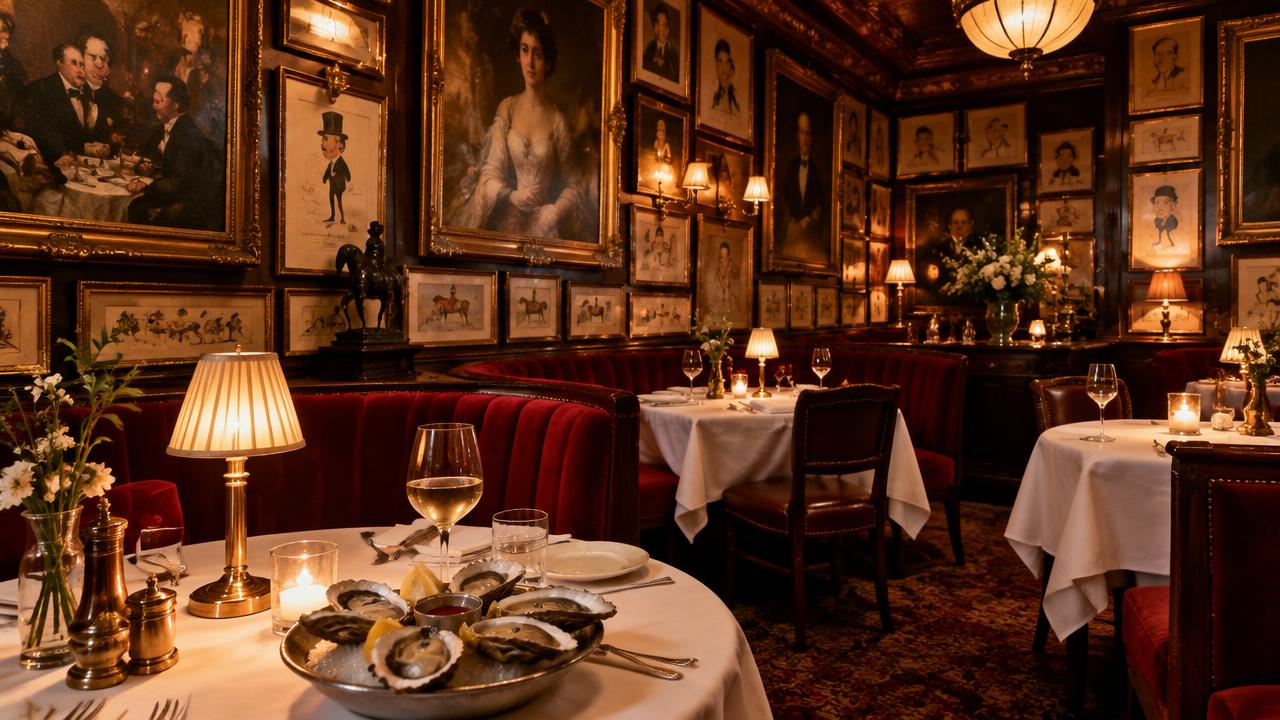
Rules, London's oldest restaurant, has been donated to the National Trust by its owner, ensuring that the Covent Garden institution will be protected "for ever".
The restaurant on Maiden Lane was founded in 1798 by Thomas Rule. In the more than two centuries since, it has outlasted nine British monarchs and 45 prime ministers – but has changed hands only three times.
Its owner, JP Mayhew, said the National Trust would "protect this place in a way that no one else could".
Oysters under George III
When Thomas Rule served his first oysters, George III was on the throne, John Adams was president of the United States, and William Pitt the Younger had just introduced income tax to pay for the wars against Napoleon.
Over the years, Rules became a favourite of writers, actors and politicians. Charles Dickens, Laurence Olivier and Charlie Chaplin were among its customers.
Its walls are crammed with paintings, cartoons and drawings collected over generations, and its red banquettes and brass lamps have made it one of the most recognisable dining rooms in the capital. The restaurant is especially known for traditional British game, oysters and puddings.
'It will always be run as a restaurant'
The National Trust says diners should not expect dramatic change. "Our involvement, day to day, will probably be very light touch," said Lucy Porten, a national curator for the charity.
"It will always be run as a restaurant. We will look after the building and its contents, but we recognise that they will have to evolve if they are going to continue to meet diners' needs."
The menu will stay largely the same – and, crucially, there will be no scones. "It's not a National Trust menu, this is a very successful business in its own right. There will be no scones. That's not their business," she said.
There will be no special prices or preferential bookings for National Trust members either, "because it is a business, and it has to be successful". Instead, the charity is exploring virtual visits and other ways for people to experience the space from afar.
A careful decision
Mr Mayhew first approached the National Trust about a possible gift several years ago. Ms Porten said the charity was "excited by the offer" but thought carefully about whether it was the right organisation to take it on.
The Trust can hold property "inalienably" – meaning it can never be sold or mortgaged without the approval of Parliament. "That means that we have to think about what's right for now, but also to think about looking after them for future generations," she said. "That's quite a big thing."
Social history on a plate
For the charity, part of the appeal is the chance to tell different stories from those found in its stately homes and gardens.
"You get a sense of all the delicious food which has been enjoyed here, the fine wines that have been consumed, the good company," Ms Porten said. "There's something in the air about the conversations and the celebrations, the flirtations, the deals that have been struck, the heartbreak."
"It's an extraordinary slice of the social history of London, and to have been here for so long – in this site and doing this business – is a very rare and special thing."
A rare survivor
London's restaurant trade is notoriously unforgiving. High rents, rising costs and changing tastes close hundreds of venues every year, and very few survive more than a few decades.
That Rules has lasted for 228 years makes it almost unique. By handing it to the National Trust, its owner has tried to make sure that, whatever happens to the rest of the West End, its oysters will still be served on Maiden Lane long after he is gone.
The National Trust already cares for hundreds of historic houses, castles and gardens. It now owns one with a wine list.


