
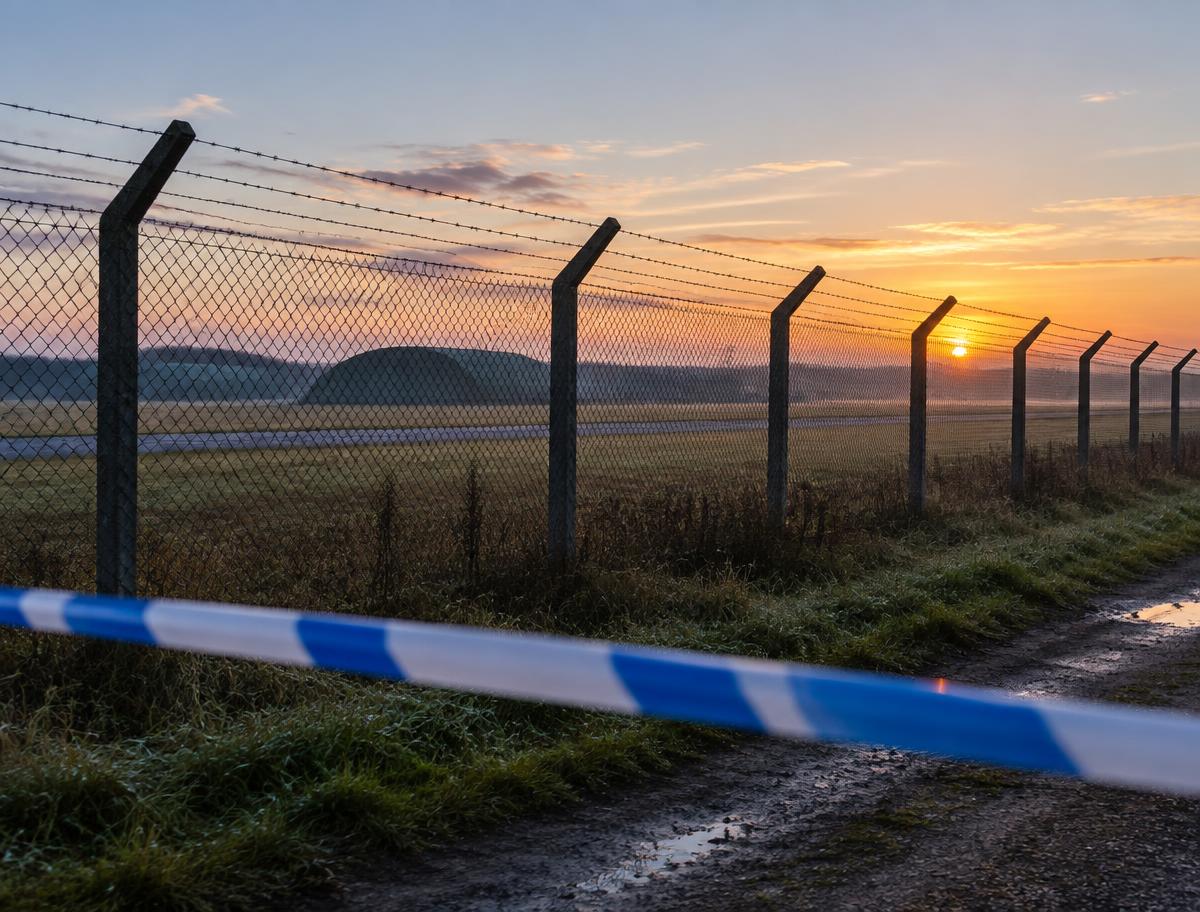
Counter-terrorism police have arrested a sixth person in connection with a security incident near RAF Fairford in Gloucestershire, detaining a 25-year-old man holding dual British and Iranian nationality in Westminster, London.
The arrest, reported by Al Jazeera, is the latest development in an investigation that began after police were alerted to unusual activity near the airbase earlier in the week.
What triggered the investigation
Police were called to the area around RAF Fairford on Sunday following reports of suspicious behaviour, including vans parked near the perimeter of the base and the presence of masked individuals. Searches of the area did not turn up any weapons, though officers did recover a quantity of petrol, which has become a focus of the investigation into what those involved may have been planning.
RAF Fairford has periodically featured in the news over the years owing to its role hosting US Air Force aircraft on rotational deployments, including long-range bombers, making it a site of recurring interest to both military planners and, at times, protest groups and security services monitoring threats to UK defence infrastructure.
Six arrests, no charges
The man arrested in Westminster is the sixth person detained by counter-terrorism police on suspicion of preparing terrorist acts in connection with the Fairford incident. Five others arrested earlier in the investigation have since been released on bail while inquiries continue, meaning no one has yet been charged in relation to the case.
Police have not named any of those arrested, in keeping with standard practice in the early stages of a counter-terrorism investigation, particularly where individuals have been released on bail rather than charged.
Possible foreign state involvement
Investigators are examining whether the incident may be linked to a foreign state, though officers have not publicly detailed what evidence has led them to pursue that line of inquiry. The nationality of the latest person arrested is likely to feed into wider questions about whether individuals connected to or sympathetic towards a foreign government may have been involved in planning activity targeting UK defence sites.
Iran has been the subject of heightened scrutiny by UK security services in recent years, with MI5 publicly warning on several occasions about what it has described as a rising number of Iran-linked plots on British soil, including alleged efforts at surveillance, intimidation and even planned attacks against individuals and sites considered hostile to the Iranian government. Any confirmed link between the Fairford case and a foreign state would mark a significant escalation in such activity, though officials have not yet confirmed one.
Why the case is being treated cautiously
Because no charges have been brought, police and prosecutors are required to be cautious about what can be said publicly, both to protect the integrity of the ongoing investigation and to avoid prejudicing any future legal proceedings. Bail conditions imposed on those released allow investigators time to examine digital devices, financial records and other evidence before deciding whether to press charges or release suspects without further action.
What happens next
The investigation remains active, and police have indicated that further arrests or developments are possible as officers continue to establish what, if anything, was being planned near the base and whether any wider network or state actor was involved. Authorities have not given a timeframe for when the inquiry might conclude or when any charging decisions might be made.
RAF Fairford's strategic role
RAF Fairford, located in Gloucestershire, has served for decades as a forward operating base for the United States Air Force in the UK, periodically hosting long-range bomber deployments, including B-52 and B-2 aircraft, as part of broader US and NATO demonstrations of strategic reach across Europe. Its role hosting American military assets has made it a recurring point of interest both for defence planners seeking to reassure allies of US commitment to European security, and for individuals or groups seeking to monitor or disrupt sensitive military activity.
The UK's counter-terrorism framework
Investigations of this kind in the UK are typically led by specialist counter-terrorism police units working alongside the Security Service, MI5, with arrests made under the Terrorism Act 2000, which allows for extended periods of pre-charge detention in terrorism cases compared with ordinary criminal investigations, reflecting the complexity often involved in examining digital evidence, financial records and any wider network connections before charging decisions can be made.
Iran-linked threats on UK soil
MI5's director general has in recent years repeatedly warned publicly about a marked increase in Iran-linked threats within the UK, describing efforts ranging from surveillance and intimidation of individuals considered opponents of the Iranian government, including journalists and dissidents, to more serious plots involving planned violence. Several such cases have previously resulted in prosecutions or deportations, and the heightened scrutiny of Iran-linked activity has grown further amid the ongoing US-Iran conflict, which has raised concerns about Tehran potentially seeking to retaliate against Western interests through means other than direct military confrontation.
The investigative process
Officers investigating the Fairford incident face the challenge of establishing not only what, if anything, was being planned, but also whether any of those involved were acting on behalf of, or with support from, a foreign government, a determination that typically requires extensive digital forensics, financial tracing and intelligence assessment before firm conclusions can be reached. The release on bail of five individuals arrested earlier in the investigation, without charge, reflects standard practice allowing this evidence-gathering process to continue without the time pressure that would apply once formal charges are brought.
Legal safeguards and public reporting
UK law places strict limits on what can be reported about ongoing criminal investigations, particularly where no charges have been brought, both to protect the right to a fair trial for anyone eventually charged and to avoid compromising sensitive intelligence-gathering methods. This explains the relatively sparse detail released publicly so far about the nature of the suspected plot, the identities of those arrested, or the specific evidence underpinning the investigation's focus on possible foreign state involvement.
Wider context of base security
The incident comes amid broader concern across the UK defence establishment about the vulnerability of military installations to surveillance, sabotage or infiltration, concerns that have grown in prominence following a series of unexplained drone sightings near British and other European military sites in recent years, as well as broader anxieties about hybrid warfare tactics employed by state and non-state actors alike.
What happens next
Police have indicated the investigation remains active and further arrests are possible, with no clear timeline yet given for when charging decisions might be made regarding any of those currently on bail or the individual most recently detained in Westminster.


