
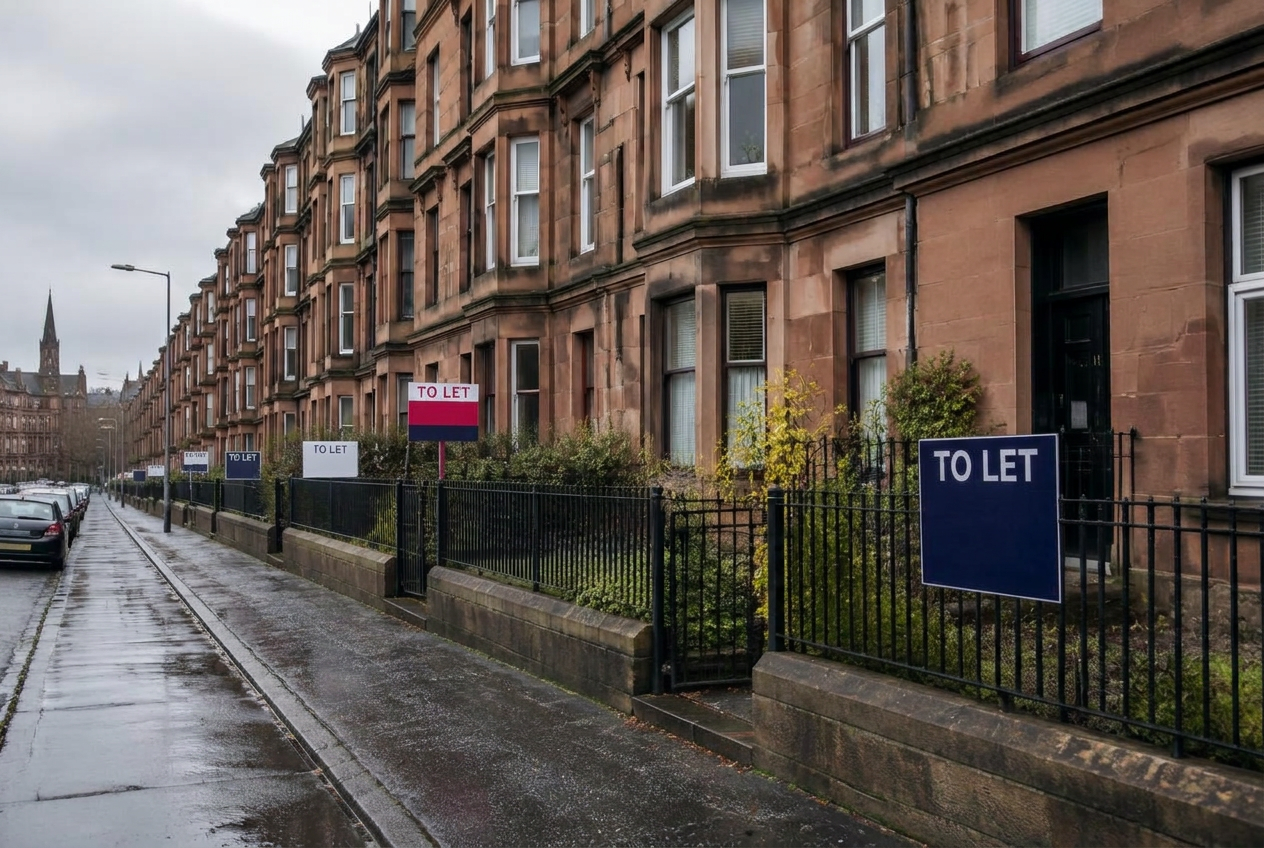
A major housing report has called for rent controls to be ruled out in law in England, citing Scotland's experience as "clear evidence" that they fail to make rents more affordable.
The Prosper UK Housing Commission, chaired by former housing minister and Downing Street chief of staff Gavin Barwell, brought together planners, housebuilders, investors, housing association executives, land agents and economists.
Its report, Solving the Housing Crisis: A Plan to Make Homes More Affordable in Every Postcode, focuses on England but draws heavily on Scotland in its section on private renting.
'A classic populist policy'
The commission describes rent control as "a classic populist policy" that appears attractive because it seems to make rents cheaper, but argues there is now "clear evidence" that it does not.
It recommends that the UK government rule out rent controls "in terms binding enough to restore investor confidence", proposing a statutory exclusion, a ten-year agreement on how rents are indexed, and changes to existing legislation.
The Scottish experiment
The report examines the emergency legislation introduced by the Scottish government in September 2022, which froze rents within existing tenancies, followed by a 3% cap from April 2023. The measures were presented as a temporary response to the cost-of-living crisis.
The commission says the impact on new housing supply was immediate. It claims about £700m of Build to Rent investment was paused or withdrawn, and that around £2.5bn of the Scottish pipeline was assessed as at risk.
Of a pipeline of nearly 17,000 Build to Rent homes, it says only about 11% had been completed and let. In a survey of 14 institutional investors holding about £15bn of assets, none rated Scotland as an attractive place to invest, according to the report.
Rents went up
On rents themselves, the commission argues the outcome was the opposite of what was intended. Because the controls applied within tenancies but not between them, landlords increased prices when new tenants moved in.
Advertised rents across Scotland rose by around 12% in the year to the final quarter of 2022, including 14% in Glasgow and 15% in Edinburgh, compared with long-term annual growth of 5-6% in those cities, the report says.
The new Scottish system
The emergency measures have since been replaced by a permanent framework under the Housing (Scotland) Act 2025, which came into force in April 2026. It allows councils to designate rent control areas where increases are limited to inflation plus one percentage point, up to a maximum of 6%.
Build to Rent and mid-market rent homes have been specifically exempted.
The commission acknowledges that Scotland has kept rent control while exempting new purpose-built rental homes, but rejects the argument that this shows controls can work with carve-outs, saying uncertainty itself deters investors.
A contested debate
Tenant groups and supporters of rent control strongly dispute that view. They argue that soaring rents have pushed many families into poverty and homelessness, and that limits on increases give renters stability and protection from sudden hikes.
They also point out that rents rose sharply across the UK during the same period, including in England, where no controls were in place, suggesting that wider market pressures, interest rates and a shortage of homes were major drivers.
The Scottish government has said its approach balances protection for tenants with the need to encourage investment, and that exemptions for new build-to-rent homes respond directly to industry concerns.
What it means
The report lands as both Holyrood and Westminster wrestle with a housing crisis marked by long waiting lists, high rents and record numbers of households in temporary accommodation.
For renters in Glasgow and Edinburgh, the question is less about economic theory than about whether next year's rent will be affordable. For policymakers, the challenge is finding a way to protect tenants without stopping the homes they need from being built.


