
Pope Leo has been diagnosed with lung cancer after surgeons in Rome removed a growth from his right lung, the Vatican has said.
The head of the Roman Catholic Church, who became the first US-born pope in May last year, had the lower lobe of his right lung removed in what the Vatican described as a "successful, on schedule and as planned" operation at the Gemelli hospital.
It said the diagnosis had been suspected from tests carried out before the surgery and was confirmed during the operation.
Three hours in theatre
The Pope was in the operating theatre for about three hours, and the procedure itself lasted around 90 minutes. The Vatican said he had "now returned to his room".
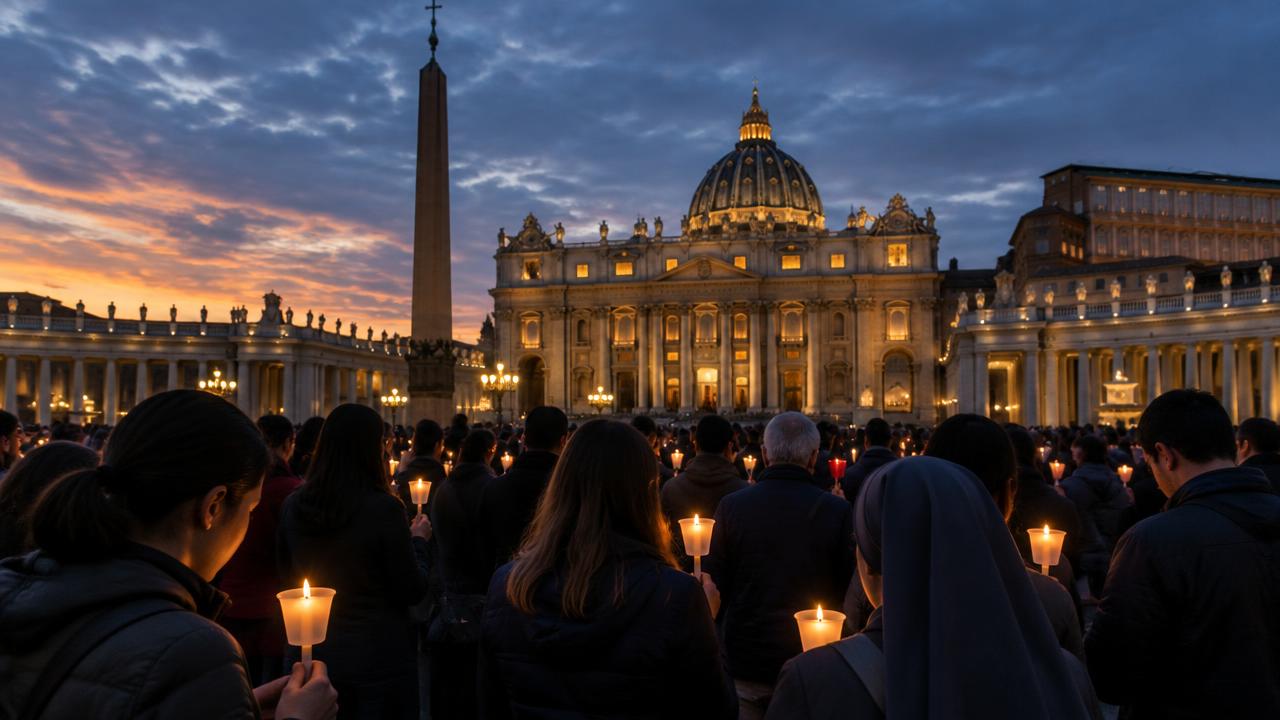
Before going into hospital, Leo had spoken openly to the crowds in St Peter's Square about the decision. "The doctors believe it would be right to intervene and so, following their advice, I have decided to have the operation to remove it," he said.
A large crowd greeted his arrival at the hospital. He is staying in the 10th-floor private patient wing rather than the papal suite, which is being renovated.
Messages from around the world
Leaders and public figures sent messages of support within hours of the announcement. The US secretary of state, Marco Rubio, a practising Catholic who has met the Pope, said he and his wife were "united in prayers" for him.
Australia's prime minister, Anthony Albanese, wished him a quick recovery, describing him as "a voice for peace, humanity and reason in our modern world".
Catholics gathered to pray in churches from Chicago, the Pope's home city, to Peru, where he spent many years as a missionary and bishop before his election.
A pope in good health – until now
Leo, who was born in Chicago, has generally been regarded as being in good health. He enjoys sport, especially tennis, and often uses the papal retreat at Castel Gandolfo near Rome.
He travelled to France on a papal visit in September and is due to make a 12-day trip to South America in November, covering 10 cities. The Vatican has not yet said whether those plans will change.
In his absence, Wednesday's weekly general audience is being led by Cardinal Luis Antonio Tagle of the Philippines, who was elected dean of the College of Cardinals last week. The dean presides over the body that elects popes.
What the diagnosis means
The Vatican has not said what type of lung cancer the Pope has or whether it had spread. Doctors not involved in his care say that surgery to remove a lobe of the lung, known as a lobectomy, is a standard treatment for many early-stage lung cancers, when the disease is confined to one area.
Further tests on the removed tissue usually determine whether additional treatment, such as chemotherapy or immunotherapy, is needed. The Vatican is expected to issue further medical updates in the coming days.
Recovery from a lobectomy commonly involves several days in hospital and a period of weeks before a patient returns to full activity.
The Gemelli and the papacy
The Gemelli, in the north-west of Rome, has a long association with the papacy. Pope John Paul II was treated there so often that the Vatican worked with the hospital to create a high-security papal suite.
Leo's predecessor, Francis, spent more than five weeks at the Gemelli in early 2025, being treated for bronchitis that developed into double pneumonia. He died at his residence in the Vatican on 21 April 2025, less than a month after being discharged.
That memory hangs over the faithful now. But the Vatican's message so far has been one of calm: the operation went as planned, the Pope is back in his room, and the work of the Church goes on.
For the 1.4 billion Catholics around the world, and for many who are not, the coming days will be watched closely for every word from the hospital in Rome.


