
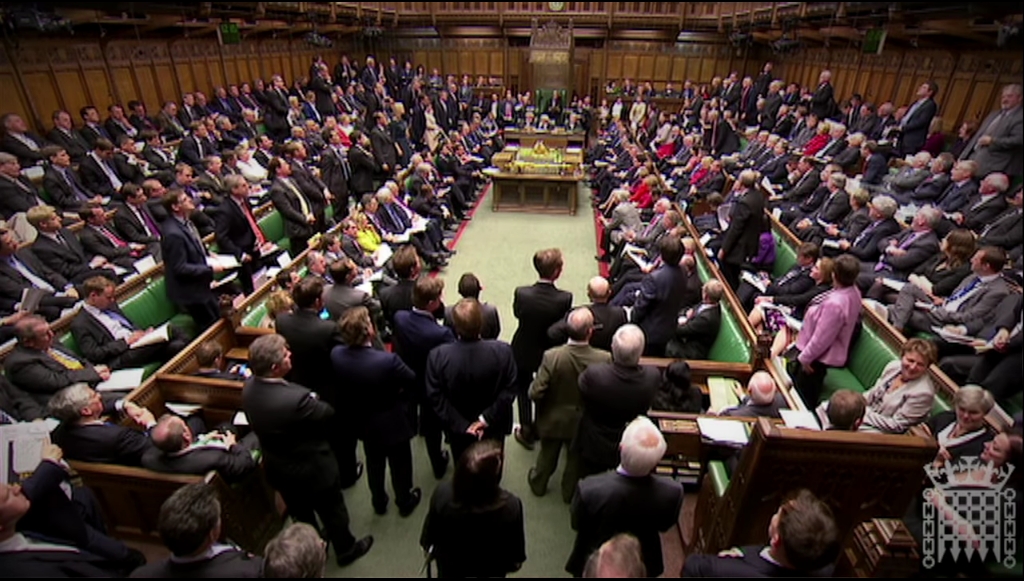
Prime Minister Andy Burnham has urged Conservative leader Kemi Badenoch to withdraw what he called a "crass" defence of cuts to disability benefits, as the two clashed angrily at Prime Minister's Questions over the government's planned welfare shake-up for young people.
The row centres on the review led by former Labour health secretary Alan Milburn into support for the roughly one million under-25s who are not in employment, education or training — known as Neets. The review, which continues to dominate the front pages, proposes sweeping reforms to get young people into work, part-funded by cuts to some benefits.
At Wednesday's session in the Commons, Badenoch defended the principle of trimming disability-related payments, at one point arguing that "amputees run marathons" as she made the case that receiving a benefit should not be treated as a barrier to work. Burnham seized on the remark, telling her across the despatch box that she should withdraw it and describing it as a crass way to talk about disabled people.
The exchange set the tone for a wider argument that is now splitting both main parties. Burnham told MPs he endorses the "principles" of the Milburn review and is confident he can persuade Labour MPs to back legislation to implement its proposals — despite warnings that the plans risk a clash with trade unions and with the left of his own party.
From under-25s to the whole welfare system
What began as a review of support for young people now looks set to grow into something much bigger. Burnham told the Times that "the philosophy" of Milburn's review "could apply right through the age range", and government sources have indicated that ministers are considering a far wider overhaul of the welfare system affecting millions of adult claimants.
That prospect has alarmed charities and some Labour backbenchers, who point out that disability benefits are claimed by people of all ages and that many recipients are already in work. The Guardian reports that the review risks opening a rift with the unions, while the Daily Telegraph leads on Milburn's own criticism of Labour's workers' rights reforms, which he argues could make employers warier of hiring the very young people his review is meant to help.
Badenoch's intervention at PMQs appeared designed to press that advantage. By framing the debate as one about whether benefits trap people out of work, she sought to position the Conservatives as the party of reform — but the "amputees run marathons" line gave Burnham the opening he needed to cast her as out of touch.
Why the Neets figure matters
The number of young people not in employment, education or training has become one of the most politically charged statistics in Britain. Around one million 16-to-24-year-olds are now classed as Neet, a figure that has risen sharply since the pandemic and is driven in large part by young people reporting long-term sickness, including mental ill health.
Economists warn that a generation detached from the labour market carries costs for decades: lower lifetime earnings, higher benefit bills and weaker growth. It is that warning which persuaded Burnham to commission the Milburn review and to signal, repeatedly, that he is prepared to take on his own party to act on it.
Critics, however, say the framing punishes young people for failures not of their making — a shortage of entry-level jobs, unaffordable housing in the places where work is available, and long waits for mental health treatment. Disability charities argue that cutting payments does not create jobs and risks pushing vulnerable people into poverty.
What happens next
Legislation to implement the review's proposals is expected in the coming months, and Burnham's confidence that he can carry his MPs will be tested quickly. Labour's majority is large, but the party's left has already organised around welfare before, and the unions hold significant sway over the party's internal machinery.
For the Conservatives, the danger is that Wednesday's exchange is remembered not for the policy argument but for a single phrase. Burnham's demand that Badenoch withdraw her remark keeps the story alive, and opposition MPs returned to it repeatedly during the session.
The clash also matters beyond Westminster. In Scotland, where welfare policy is partly devolved and the Scottish Government has its own disability payment system, any UK-wide overhaul of working-age benefits would have direct consequences for claimants north of the border — and would hand Holyrood fresh decisions about whether to follow Westminster's lead or chart a different course.
For now, the government is holding its line: the review's principles stand, the legislation is coming, and the prime minister is betting that the country is readier for welfare reform than his critics believe. Wednesday's PMQs showed just how fierce the fight over that bet is going to be.


