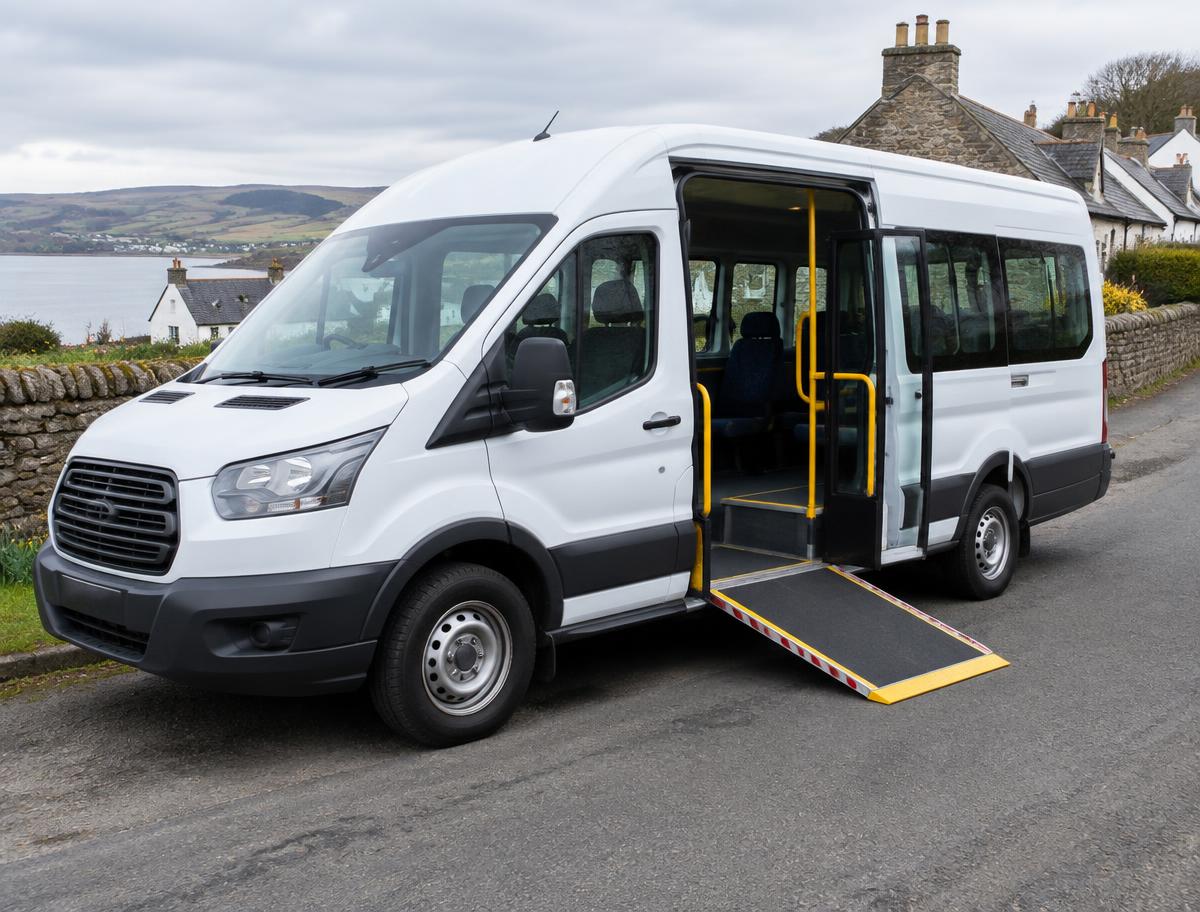
North Ayrshire Council’s Cabinet has approved plans for a new community transport service, to be developed in partnership with Coalfields Community Transport, aimed at helping people in rural areas, older residents and disabled people who struggle to get around.
The decision follows engagement with communities across North Ayrshire, which the council says consistently identified transport as one of the biggest barriers facing residents, particularly those outside the area’s larger towns.
Identifying the gap
Officials said feedback gathered from residents pointed to specific groups most affected: people living in rural parts of North Ayrshire with limited bus services, older people who find it difficult to travel independently, disabled residents who cannot use standard public transport, and people experiencing social isolation because they are unable to get out and about.
North Ayrshire includes a mix of towns, villages and more remote rural and coastal areas, some of which have seen reductions in commercial bus services in recent years, a pattern mirrored in other parts of Scotland as operators have scaled back less profitable routes.
How the new service will work
The model agreed by Cabinet includes a dedicated accessible minibus, a central booking system to coordinate journeys, trained drivers, and volunteer roles to support the running of the service. Officials say this structure is designed to be more flexible than a fixed bus route, able to respond to specific needs rather than following a set timetable alone.
Potential uses identified by the council include transport for community groups and organisations, door-to-door journeys for people with mobility problems who cannot easily reach a bus stop, and transport to healthcare appointments, an issue that has been repeatedly raised by residents in rural parts of the authority who can otherwise face long and difficult journeys to reach GP surgeries or hospitals.
The money behind the scheme
The council has set aside £100,000 to develop the project and to fund its operation for its first three years. Coalfields Community Transport, an established community transport provider, will work with the council to deliver the service using this funding.
Councillor Alan Hill said reliable transport has the power to transform people’s lives and reduce isolation, reflecting a wider view among council officers that transport problems can compound other difficulties faced by vulnerable residents, from accessing healthcare to maintaining social contact.
What happens next
With Cabinet approval secured, the council and Coalfields Community Transport will now move to the practical work of setting up the service, including recruiting drivers and volunteers, establishing the booking system and determining exactly how routes and journeys will be coordinated. No firm launch date has yet been given, but the three-year funding commitment suggests the council intends the service to become an established part of local transport provision rather than a short-term pilot.
A wider pattern across rural Scotland
North Ayrshire’s move mirrors efforts in other Scottish council areas to fill gaps left by reduced commercial bus services through community transport partnerships, often run with charitable or third-sector operators rather than directly by the council itself. Such schemes have been credited in other areas with cutting social isolation among older and disabled residents, though their reach and frequency typically remain more limited than a conventional bus network, reflecting the smaller budgets and vehicle numbers involved.
Why isolation matters
Research into rural social isolation has repeatedly found that a lack of reliable transport is one of the most significant factors preventing older and disabled people from accessing essential services and maintaining social contact, with knock-on effects for both physical and mental health. Councils across Scotland have increasingly framed community transport investment as a preventative measure, intended to reduce pressure on health and social care services further down the line by keeping people connected and independent for longer.