
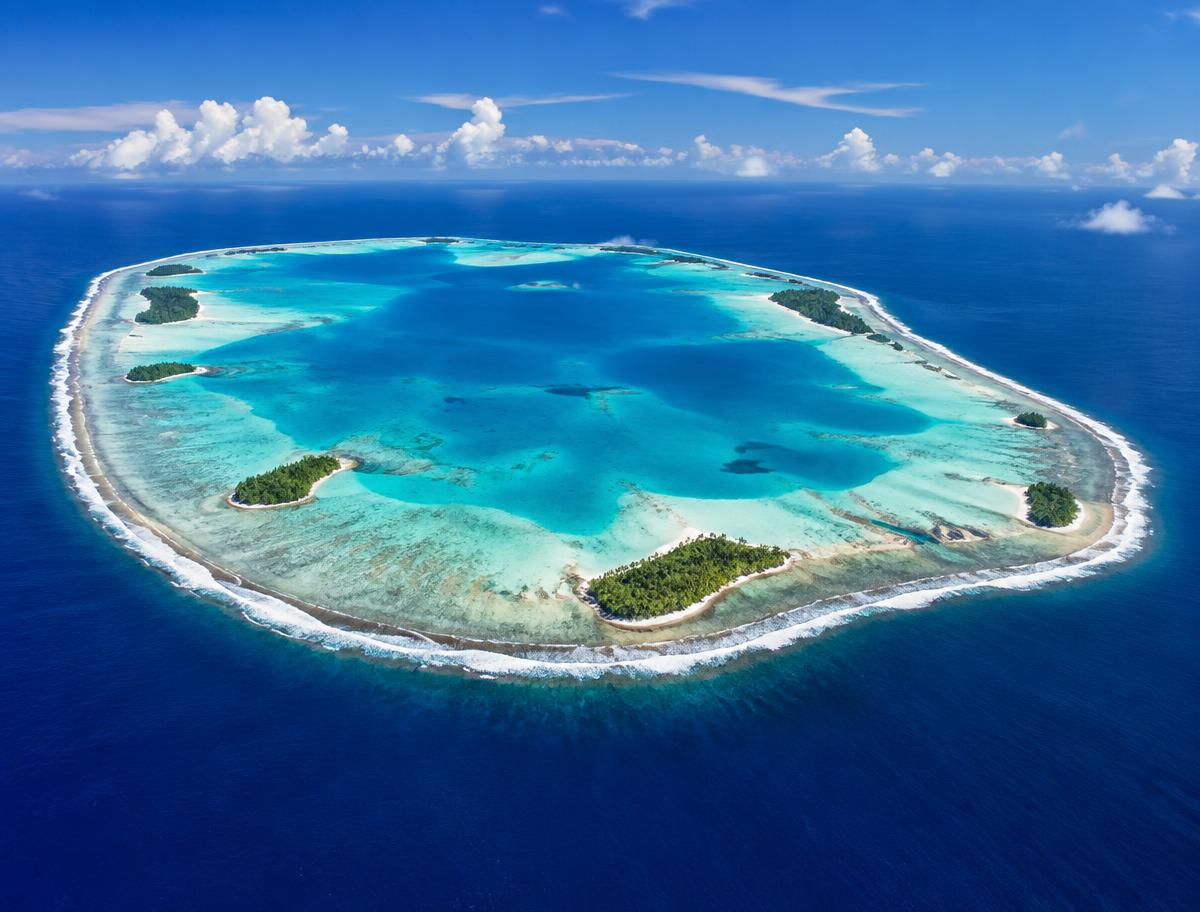
The lasting legacy of US nuclear weapons testing in the Marshall Islands was raised at the UN Human Rights Council on 1 October, with the UN’s deputy human rights chief calling for justice for communities still living with its consequences more than six decades later.
Awa Dabo told the Council that the 67 known nuclear tests carried out by the United States in the Marshall Islands between 1946 and 1958 continue to live on in the bodies of Marshallese people and in contaminated lands and displaced communities.
A Pacific testing ground
The Marshall Islands, then administered by the United States under a UN trusteeship, became the site of one of the largest nuclear weapons testing programmes in history. The tests included the 1954 Castle Bravo detonation at Bikini Atoll, one of the most powerful nuclear explosions ever carried out by the United States, which exposed nearby islanders and crew of a Japanese fishing boat to radioactive fallout. Entire communities were relocated from Bikini and Enewetak atolls to make way for the testing programme, with many never able to permanently return to their original homes.
Health and environmental consequences
Ms Dabo said virtually every Marshallese family has been affected by the health consequences of the testing programme, citing elevated rates of cancer among the population. Communities have also reported ongoing concerns about contaminated land and food sources, as well as the long-term effects of displacement from ancestral islands.
A large concrete structure built on Enewetak Atoll in the 1970s to contain radioactive waste from the tests, often referred to as the “Runit Dome,” has been a longstanding source of concern among Marshallese officials and scientists over the risk of leakage as sea levels rise and the structure ages.
Calls for transparency and remedy
Ms Dabo called on US authorities to declassify records relating to radiation exposure and the testing programme, arguing that without full access to this information, affected communities cannot pursue an effective remedy for the harm they have suffered. She framed the issue as a matter of ongoing accountability rather than a historical episode that has been resolved.
The Marshall Islands government has for decades raised its testing legacy in international forums, including the UN, arguing that compensation provided under a 1980s agreement with the United States has fallen far short of the scale of the harm caused.
The Compact of Free Association
The Marshall Islands became an independent nation in 1986 but entered into a Compact of Free Association with the United States, under which Washington provides economic assistance and defence guarantees in exchange for continued US military access, including to the Ronald Reagan Ballistic Missile Defense Test Site on Kwajalein Atoll. A 1986 settlement under the compact established a tribunal and trust fund intended to resolve claims arising from the nuclear tests, but the fund was exhausted well before all approved compensation claims could be paid, a shortfall that has remained a point of contention between Majuro and Washington.
Climate change compounding the legacy
Marshallese officials have increasingly linked the nuclear testing legacy to the existential threat the low-lying nation faces from rising sea levels, warning that encroaching water could disturb contaminated soil around former test sites and the waste contained in the Runit Dome. The government has used international platforms, including UN climate conferences, to argue that the country’s vulnerability to climate change cannot be separated from the environmental damage left by decades of nuclear testing.
Response and next steps
The Human Rights Council session gave member states and civil society groups an opportunity to raise the issue directly with the UN human rights office. There was no immediate response from the United States to the specific calls made at the Council, though the issue is expected to continue to be raised in international settings as the Marshall Islands government presses for further acknowledgement and support in addressing the test programme’s long-term environmental and health legacy.
The Marshall Islands, now an independent nation in free association with the United States, continues to receive US funding tied to the legacy of the testing programme, but its government has argued in UN forums that this support does not match the scale of the ongoing health and environmental burden.
International scientists have periodically been granted access to conduct environmental monitoring on the affected atolls, with findings used by both the Marshallese government and independent researchers to assess residual contamination levels, though access has at times been limited and Marshallese officials say more comprehensive, independently verified studies are needed before the scale of remaining risk can be fully understood.


