
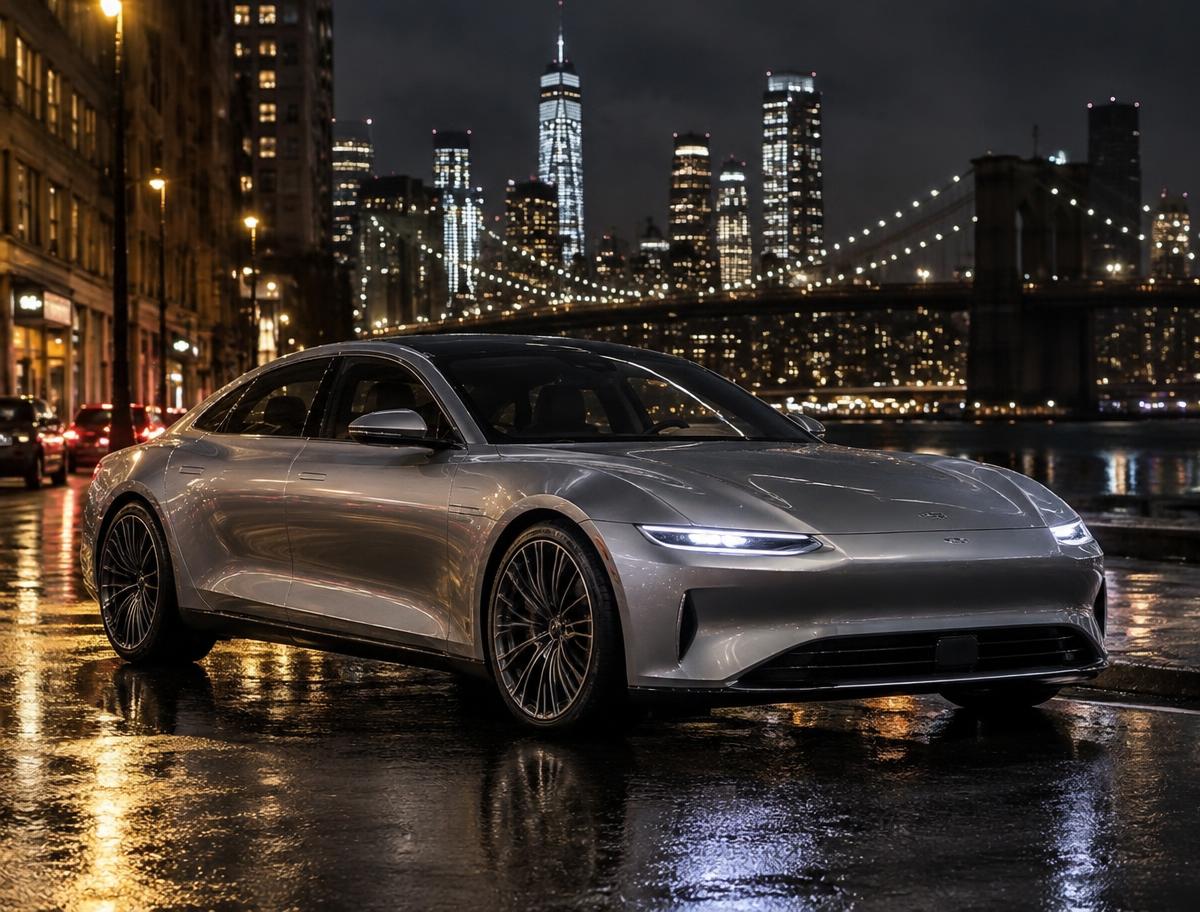
Jaguar has finally shown the car it hopes will justify one of the most controversial rebrands in British industry: an all-electric four-door grand tourer with about 1,000 horsepower and a starting price of £130,000.
The Type 01 was unveiled in New York, two years after the brand's relaunch drew ridicule for a surreal teaser advert with no cars in it and a pair of bright pink concept vehicles shown in Miami.
Owner JLR calls it the 'most technically advanced, powerful and aerodynamic Jaguar ever engineered'. Critics, and many long-standing Jaguar fans, are still to be convinced.
Power and range
The figures are striking. JLR says the Type 01 produces up to 1,015hp and 1,365Nm of torque, enough to reach 60mph in 3.1 seconds. An 850-volt system and a 118kWh usable battery give a claimed range of up to 400 miles, or up to 320 miles in sustained motorway driving at 75mph.
The car has a drag coefficient of 0.23, helped by active aerodynamic vanes and a three-stage deployable spoiler, and rides on 23-inch wheels. JLR says it filed more than 360 patent applications during its development.
Inside, a single 24-inch OLED screen spans the dashboard, with a smaller touchscreen controlling key functions, and the cabin is divided into four individual seating spaces by a central spine.
Echoes of the E-type
Its long bonnet, low roofline and extended rear are a deliberate nod to the 1960s E-type and the XJS. The launch, attended by celebrities including actor Florence Pugh, featured digital displays across Manhattan before the car arrived at a venue in West Chelsea.
The design has divided opinion sharply. Supporters praise its presence and refusal to look like other electric saloons. Detractors argue it is too large and too expensive, and some have noted that its length could make it awkward in standard UK parking spaces.
Made in Britain
Production will begin in 2027 at JLR's plant in Solihull, with electric drive units and battery packs made in Wolverhampton and body panels pressed at Halewood on Merseyside. Orders will open at the start of 2027.
JLR says it has invested £11.5bn of a planned £15bn to £18bn five-year programme in its next generation of vehicles, much of it in the UK. It is targeting double-digit growth over five years, with North America identified as a priority market. In the US, the Type 01 will start at $130,500.
Jaguar traces its roots to the Swallow Sidecar Company, founded in Blackpool in 1922 before moving to Coventry, and has been owned by India's Tata Motors, through JLR, since 2008. Its history of sports cars and luxury saloons is precisely why the shift to a small range of expensive electric models has provoked such strong feelings.
A huge gamble
The car represents a high-stakes bet. Jaguar effectively stopped selling new cars while it prepared for the relaunch, moving from a range of mass-market saloons and SUVs to a small number of ultra-premium electric models.
The strategy is designed to move the brand into a different part of the luxury market from Range Rover, Defender and Discovery, which remain JLR's most profitable names. JLR's wider plan keeps petrol, hybrid and electric options across those brands, with Jaguar alone going fully electric.
The timing is challenging. Demand for expensive electric cars has been weaker than many manufacturers expected, while competition from established rivals and Chinese newcomers is fierce.
The verdict to come
The 2024 rebrand made Jaguar a talking point far beyond the motoring world, with critics accusing the company of abandoning its heritage. Executives have argued that the brand needed a radical reset to survive.
Whether the Type 01 vindicates that argument will be decided not by launch-night applause but by orders from wealthy buyers in Britain, the US and beyond when sales open next year. For the thousands of workers in the West Midlands and Merseyside whose jobs are tied to its success, the stakes could hardly be higher.