Israel fell silent at dawn on Wednesday as the country marked three years since the Hamas-led attack of 7 October 2023, the deadliest day in its history, while Palestinians in Gaza faced another day amid the devastation of the war that followed.
A nationwide minute's silence was held at 06:29 local time, the moment the attack began. About 1,200 people were killed in southern Israel that day and 251 others were taken hostage.
Grief at the festival site
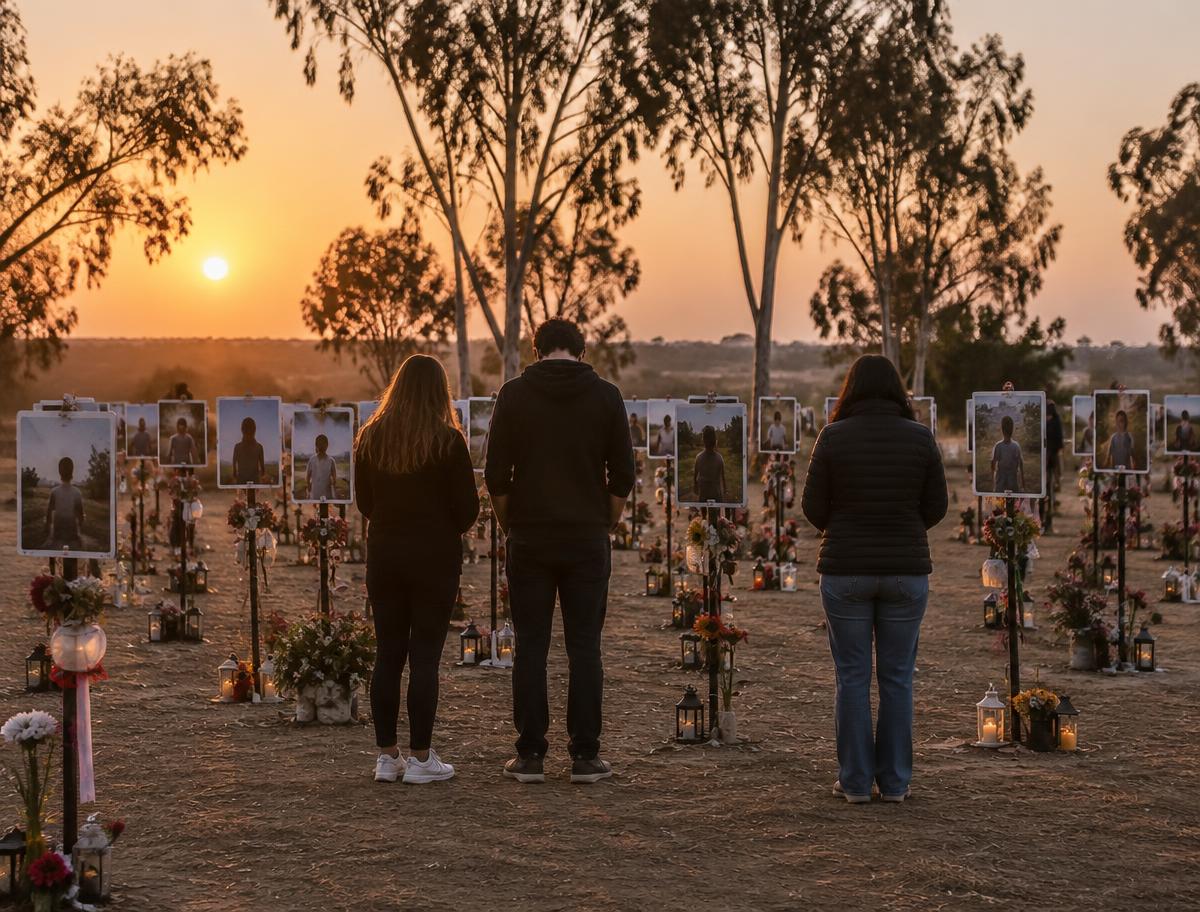
Families gathered at first light at the site of the Nova music festival, where more than 360 people were killed and dozens taken captive. They stood in front of rows of portraits of festival-goers and members of the security forces who died there, leaving flowers and candles.
At Kfar Aza, one of the kibbutzim overrun in the attack, mourners watched in silence as the Israeli flag was raised. Other memorials were planned at road junctions and bomb shelters across the south, places where many people were killed as they tried to flee or hide.
This is the first anniversary at which no hostages remain in Gaza. Of the 251 people seized, 168 were freed or rescued and 83 were killed. The last living hostages were released a year ago under a US-brokered ceasefire, and the Israeli military recovered the body of the final hostage, Master Sgt Ran Gvili, in January.
Prime Minister Benjamin Netanyahu has said Israel kept its promise to bring every captive home. For many families, however, the end of the hostage ordeal has opened a new and quieter stage of mourning.
The government held its official memorial ceremonies on 5 October, closer to the anniversary in the Hebrew calendar. The anniversary also falls weeks before Israel's general election on 27 October, in which the attack and the security failures surrounding it remain central issues.
Gaza's long aftermath
In Gaza, the anniversary is a reminder of a military campaign that has reshaped the territory. More than 74,200 people have been killed since the war began, according to the Hamas-run health ministry, figures Israel disputes and says do not distinguish between civilians and combatants.
Most of the territory's population of about two million people have been displaced, with large numbers living in sprawling tent camps. Around 80% of all structures are believed to have been damaged, and residents have been pushed into less than half of the strip's original area.
A ceasefire has largely held for almost a year, although deadly Israeli strikes have continued. Israel says it is acting against militants who threaten its forces, while Palestinians and aid agencies say civilians continue to pay the heaviest price.
Israel does not allow international news organisations to enter Gaza to report independently, which makes the full picture of conditions there difficult to verify.
International reaction
German Chancellor Friedrich Merz said Germany stood firmly by Israel's side and was committed to preventing any repeat of the attack. 'We stand for the security and existence of Israel,' he said, while also calling for a political settlement as the only route to lasting peace.
Vigils were planned in central London and other cities around the world later in the day. Israel's National Security Council urged citizens abroad to exercise 'heightened vigilance', citing an increased risk of attempted attacks against Israelis and Jews overseas, and advised them not to post travel plans on social media in advance.
A region reshaped
The war that began on 7 October spread far beyond Gaza, drawing in Lebanon, Syria and, eventually, a wider regional confrontation. It also fuelled sharp international criticism of Israel's conduct and a rise in antisemitic incidents in many countries.
Three years on, the anniversary is being experienced in profoundly different ways on either side of the border: as a day of national mourning in Israel, and as a marker of continuing displacement and loss in Gaza. Both are likely to shape the politics of the region for years to come.