
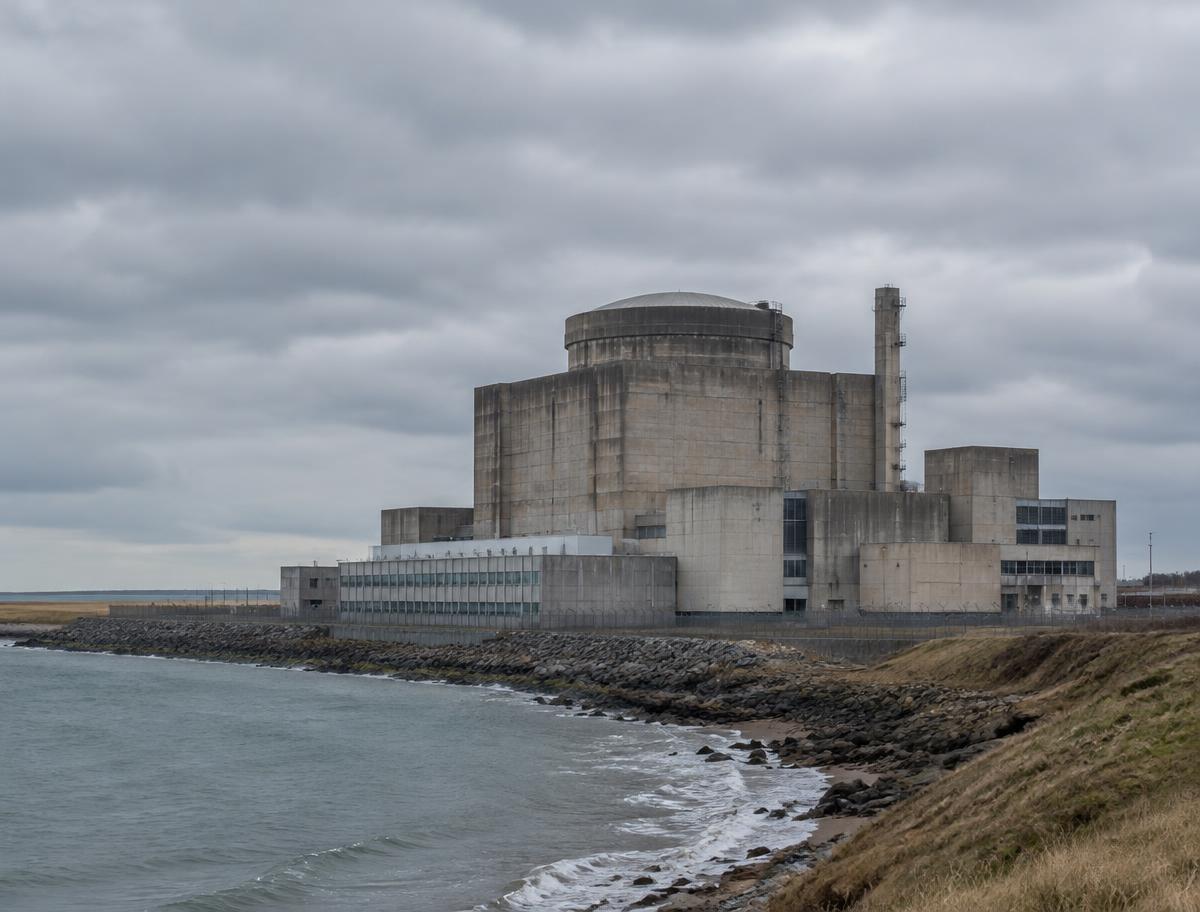
Hinkley Point B nuclear power station in Somerset has formally transferred from operator EDF to the Nuclear Decommissioning Authority, marking the start of a new phase in which the site will be dismantled and made safe rather than generate electricity.
The transfer, confirmed by the UK Government on 1 October 2026, places Hinkley Point B under the management of Nuclear Restoration Services, a subsidiary of the Nuclear Decommissioning Authority that is also responsible for decommissioning the neighbouring Hinkley Point A site, bringing both stations on the Somerset coast under common management during this next stage of their life.
A long operational history
Hinkley Point B was the first British-designed Advanced Gas-cooled Reactor station to export electricity to the national grid, beginning generation in 1976. Over the roughly 46 years that followed, before it finally stopped generating electricity in 2022, the station produced enough zero-carbon electricity to have powered every home in the South West of England for an estimated 33 years, underlining its significance to the region’s energy supply across nearly half a century of operation.
Advanced Gas-cooled Reactors, often referred to as AGRs, were a distinctively British design built in several stations across the UK from the 1960s onwards, and the fleet has been progressively reaching the end of its operational life over the past decade as stations are retired one by one and transferred for decommissioning, a process that typically takes many years to complete safely.
Jobs and continuity for the local workforce
Around 250 people who worked on site for EDF have transferred across to Nuclear Restoration Services as part of the handover, allowing the station to retain much of its existing skilled workforce and their accumulated knowledge of the site, rather than starting the decommissioning phase with an entirely new team unfamiliar with the station’s specific history and infrastructure. The government has said these roles remain well-paid, skilled positions within the local Somerset community, providing continuity of employment even as the site’s purpose shifts from generation to decommissioning.
What decommissioning involves
Decommissioning a nuclear power station is a lengthy and highly regulated process, typically spanning decades, involving the safe removal of nuclear fuel, the careful dismantling of reactor structures, and the management and eventual disposal of radioactive waste material, all carried out under strict oversight from UK nuclear regulators. The Nuclear Decommissioning Authority was established in 2005 specifically to oversee this kind of work across the UK’s civil nuclear legacy sites, and its portfolio has grown over time as more of Britain’s ageing nuclear fleet reaches the end of generation and is transferred into its care.
The early stages of decommissioning at a station like Hinkley Point B typically focus on defuelling, the process of removing all remaining nuclear fuel from the reactors and transporting it for reprocessing or storage, a phase that itself can take several years before work can begin on dismantling reactor structures and reducing the site’s overall radiological hazard.
Part of an expanding national mission
David Peattie, chief executive of the NDA Group, described the Hinkley Point B transfer as part of the organisation’s continually expanding mission, applying decades of accumulated expertise, proven skills and innovation to safely decommission the wider AGR fleet as further stations reach retirement in the coming years. The transfer adds to a growing list of sites under NDA group management as the UK works through the long-term legacy of its post-war civil nuclear power programme.
The wider fleet of AGR stations across England and Scotland, including sites such as Hunterston B, Hartlepool, Heysham and Dungeness, is following a broadly similar path from generation into decommissioning as each reaches the end of its operating life, meaning the expertise built up at sites such as Hinkley Point B is expected to be applied in turn to other stations as they too are handed over to the Nuclear Decommissioning Authority in the coming years.
What happens next
Nuclear Restoration Services will now begin the detailed, multi-year process of decommissioning Hinkley Point B, working alongside the ongoing decommissioning programme already under way at the adjacent Hinkley Point A site. The government has not set out a specific completion date for the Hinkley Point B decommissioning process in its announcement, reflecting the typically long and carefully phased timescales involved in safely retiring a nuclear power station of this kind.


