
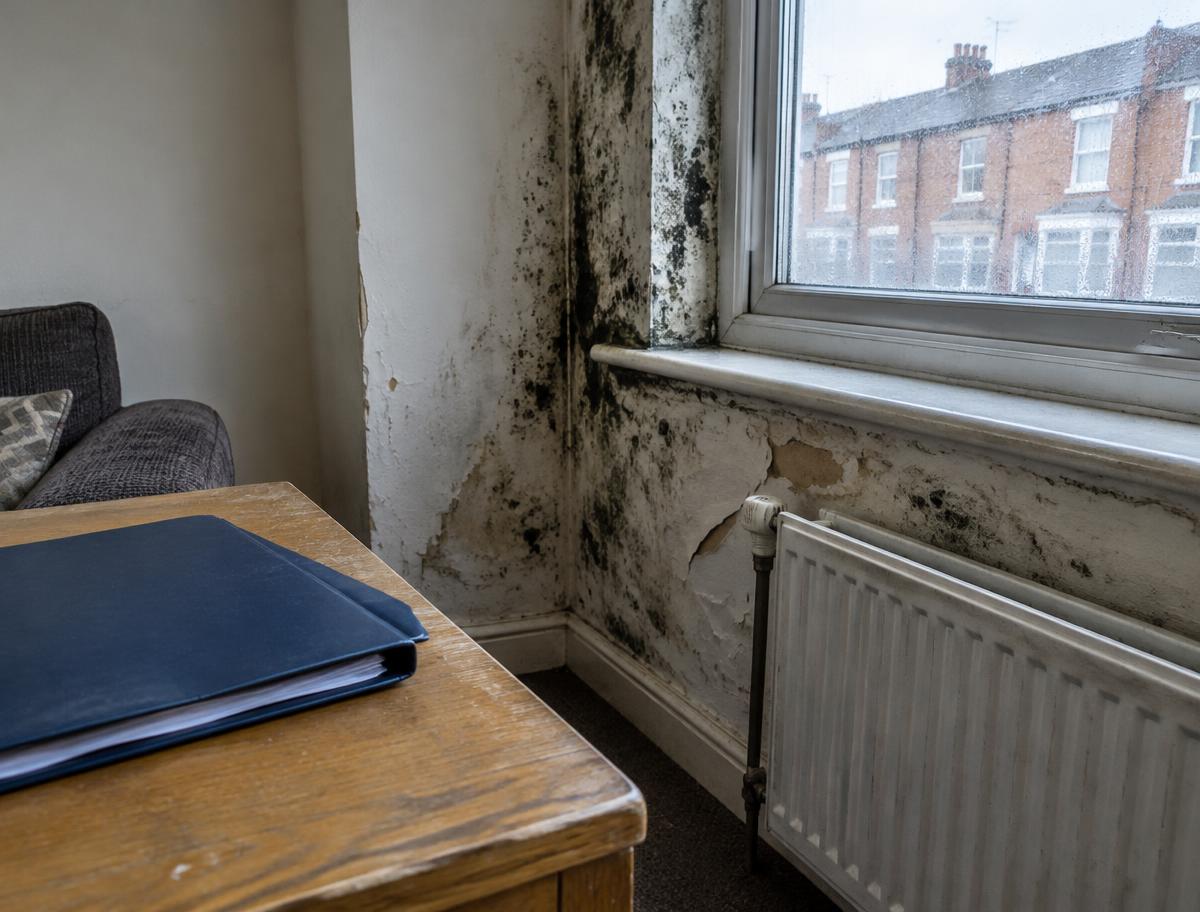
The government has launched a consultation on extending Awaab's Law, which currently requires social landlords to fix dangerous hazards such as severe damp and mould within set legal deadlines, to private rented tenancies and to certain accommodation occupied under licence. The consultation was published on 9 October and runs until 18 December.
Awaab's Law is named after Awaab Ishak, a two-year-old boy who died in 2020 after prolonged exposure to damp and mould in a flat rented from Rochdale Boroughwide Housing. His death prompted a public outcry and led the government to introduce legal deadlines for social landlords to investigate and fix hazards. Those social housing provisions have already come into force.
What the consultation proposes
The power to extend Awaab's Law to the private rented sector was legislated for in the Renters' Rights Act 2025, and the government's consultation document is clear that the decision to extend the law to private tenancies has already been made and is not itself in scope of this consultation. What the consultation seeks views on is how those requirements should be implemented in practice for private landlords.
The consultation is split into three parts. Part 1 concerns applying Awaab's Law to private rented tenancies. Part 2 concerns applying it to accommodation occupied under licence, which includes supported housing, temporary accommodation for homeless households, and care leaver accommodation. Part 3 concerns the impacts and costs of the proposed changes, with most questions in that section seeking specific evidence from landlords, licensors and agents, though one question is open to views from anyone. The government said respondents are not expected to answer every question and can choose to respond only to the sections relevant to them.
Scale of the proposed change
The Ministry of Housing, Communities and Local Government said the changes could extend protection to more than 5 million additional households, with private renters, homeless families, care leavers and people in supported housing potentially gaining faster repairs through the legal deadlines set by Awaab's Law. Officials said extending the law to these additional types of housing could more than double the number of households protected by the new repair timescales, from around 4 million currently covered in social housing to around 9 million homes.
The department noted that around one in ten private rented homes currently has a hazard at the most serious level, category 1, which already requires landlords to act under existing law. The Renters' Rights Act 2025, introduced fines of up to £7,000 for landlords found to have left homes in the worst condition. The government said Awaab's Law would "go even further by forcing quick action" on the most dangerous hazards.
Ministerial and campaign reaction
Housing minister Matthew Pennycook said: "Irrespective of tenure, all renters have the right to live in a safe and decent home and have complaints responded to in a timely manner." He added: "Awaab's Law is already helping to drive up standards in the social housing sector. We're now moving to extend it to private landlords so that England's 11 million private renters can enjoy the same protections."
Holly Williamson, chief executive of campaign group Generation Rent, welcomed the move, saying: "Homes are the foundations of our lives. But too many renters live in homes that are harmful to our health and often wait months for landlords to act on issues. We're pleased to see the government moving forward with bringing in Awaab's Law. It must be put in action as soon as possible to make sure every renter can live in a good quality home."
Francesca Albanese, director of policy and social change at homelessness charity Crisis, said the charity supported the government "moving forward with stricter laws to clamp down on poor conditions in the private rented sector," noting that people living in temporary accommodation such as hostels and bed and breakfasts can face similarly poor conditions. Clara Collingwood, director of the Renters' Reform Coalition, said "a home should be a place of safety" regardless of whether a tenant rents from a council or a private landlord, and said she hoped the public would respond to the consultation "with urgency."
What happens next
The consultation, which is being run by the Ministry of Housing, Communities and Local Government, will close on 18 December 2026. Its outcome will inform the timescale and detailed requirements for bringing Awaab's Law into force for private rented sector tenancies and the specified categories of licensed accommodation, alongside other measures already introduced through the Renters' Rights Act, including a ban on no-fault evictions and new routes for tenants to challenge above-market rent increases.