
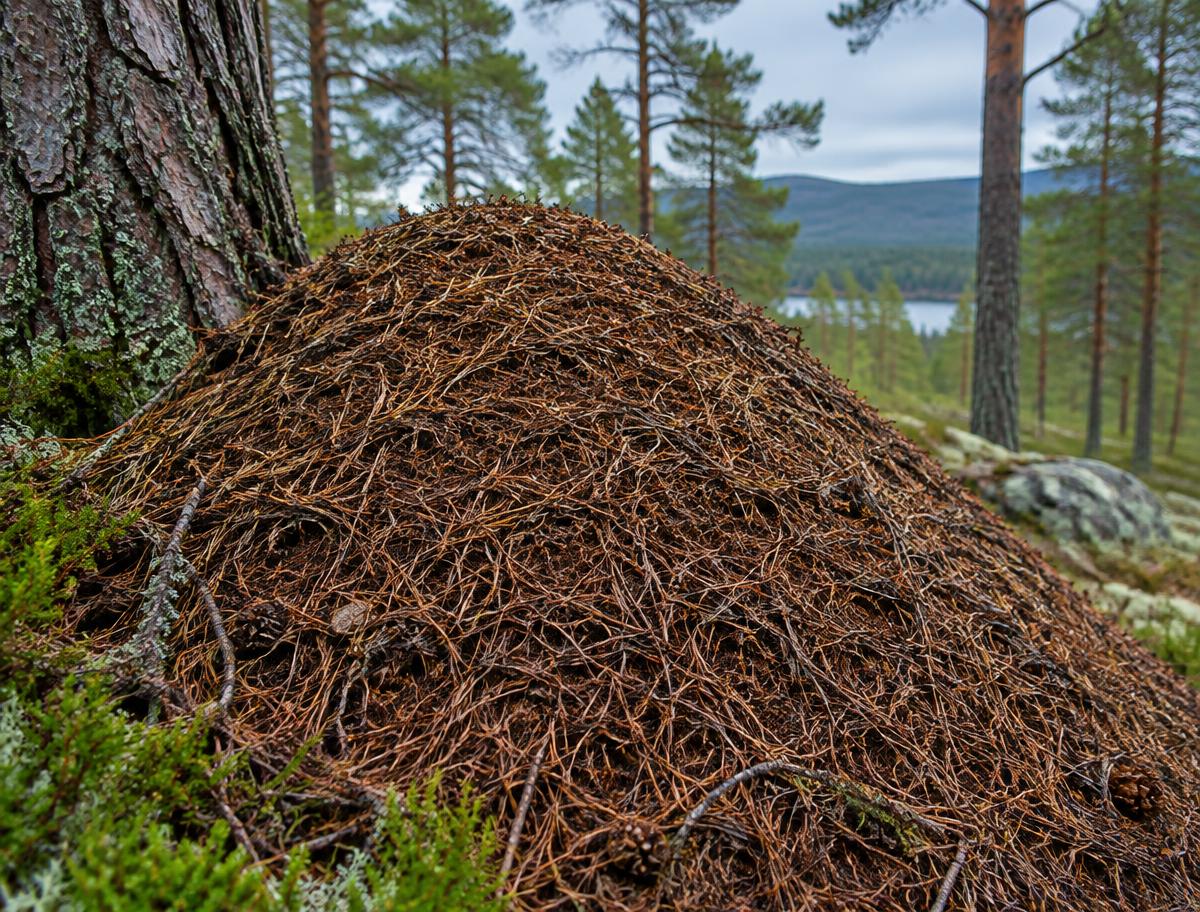
Ten wood ant nests have been carefully lifted and relocated at Glenmore in the Cairngorms National Park, as Forestry and Land Scotland carried out planned forestry work while protecting the colonies living in the area.
The agency, which manages Scotland’s national forests and land on behalf of the Scottish Government, used an excavator to lift the nests whole, moving entire colonies rather than disturbing or destroying them, ahead of forestry operations that would otherwise have affected the ground where the nests were built.
Why wood ants matter
Wood ants, including species found in the pine forests of the Cairngorms, play an important ecological role. Their large, distinctive mound nests, built from pine needles and other forest debris, provide habitat for a range of other invertebrates, and the ants themselves are a food source for birds and other wildlife. They also help control populations of other insects within the forest and contribute to nutrient cycling in the woodland floor. Because wood ant colonies can take years to establish and build up to a mature size, destroying a nest can set back a colony significantly, which is why land managers increasingly look for ways to protect them during forestry operations rather than simply clearing the ground.
How the relocation was carried out
Moving a wood ant nest intact is a delicate operation. Rather than disturbing the structure, forestry teams used an excavator to lift each nest as a whole unit, preserving its internal structure and the ants living within it, before transporting and resettling it in a new location nearby that would not be affected by the planned work. This approach is intended to minimise disruption to the colony compared with approaches that might scatter nest material or force ants to rebuild from scratch.
Forestry and Land Scotland has said the relocation at Glenmore shows that forestry work and wildlife protection can be carried out alongside one another, rather than being treated as conflicting priorities. The agency manages large areas of commercial and native forest across Scotland and routinely has to balance timber production and land management with its responsibilities to protect habitats and species.
Specialists involved in this kind of work generally try to choose a new site for a relocated nest that closely matches the conditions of the original location, including sunlight exposure and proximity to foraging routes the ants have already established, since wood ants rely on a network of trails connecting the nest to nearby trees and feeding grounds that can take time to rebuild if disrupted.
Glenmore’s wider ecological importance
Glenmore Forest Park sits within the Cairngorms National Park, one of the most ecologically significant areas in the UK, home to ancient Caledonian pinewood remnants and a range of species that are rare or absent elsewhere in Britain. The area is managed with particular attention to its conservation value, and forestry operations within the park are typically planned with input from conservation specialists to avoid or minimise harm to sensitive habitats and species, including wood ant colonies, capercaillie and Scottish wildcat populations that are also found in the wider Cairngorms landscape.
The Cairngorms National Park Authority has repeatedly emphasised the importance of balancing continued land management, including forestry and visitor access, with the protection of species found in the park, many of which are the subject of dedicated conservation programmes run jointly by the park authority, NatureScot and land managers such as Forestry and Land Scotland.
Part of a broader approach to planned forestry work
Forestry and Land Scotland regularly carries out thinning, felling and replanting operations as part of sustainable forest management across its estate, and ecological surveys are typically carried out ahead of such work to identify protected or sensitive species in the area. Where nests, setts or other sensitive features are identified, the agency has said it will adapt its working methods, including rescheduling work or, as at Glenmore, physically relocating a colony, rather than proceeding regardless of the impact on wildlife.
What happens next
The relocated nests will be monitored to establish whether the colonies successfully re-establish themselves in their new locations, which is likely to take time to assess fully, as wood ant colonies can take several seasons to show whether they have settled and are thriving. Forestry and Land Scotland said the approach taken at Glenmore reflects how it intends to continue balancing forestry operations with wildlife protection elsewhere in its estate.


