
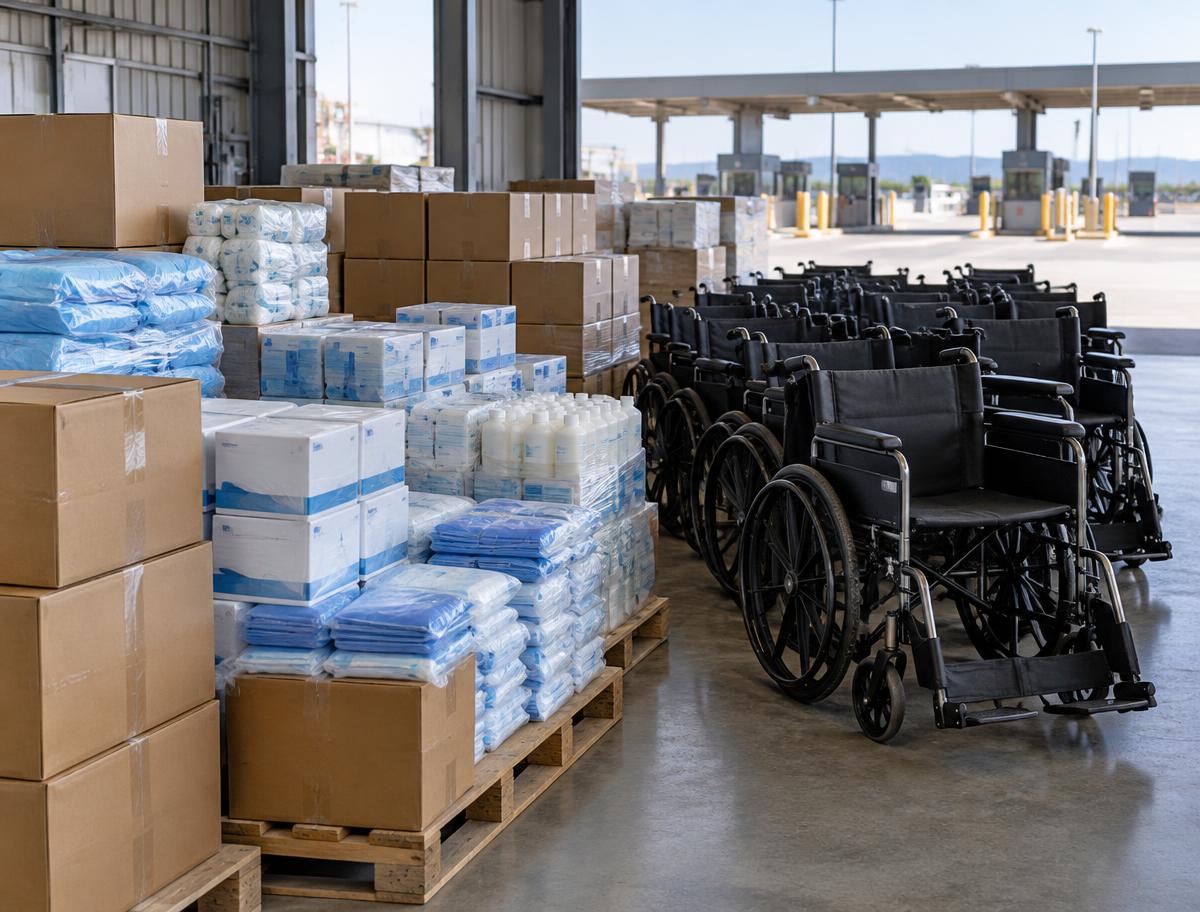
Repeated delays in getting medicines, prosthetics and other medical supplies into Gaza risk devastating consequences for patients, the World Health Organization warned on 2 October, as winter approaches and humanitarian access remains severely restricted.
The warning, reported by UN News, comes almost a year into a ceasefire that the United Nations has described as fragile, with aid officials saying the humanitarian situation inside Gaza remains overwhelming despite the halt in major hostilities.
Only one crossing open for approved aid
According to the WHO, approved humanitarian aid can currently only enter Gaza through the Kerem Shalom crossing, while at least four other main crossing points into the territory remain closed. This bottleneck has left a single entry route responsible for the flow of medical supplies needed across the whole of Gaza, significantly limiting how much aid can reach patients and health facilities even when it has already been approved for entry.
WHO representative Dr Reinhilde Van De Weerdt said essential medicines should not be classified as dual-use items — a designation typically applied to goods that could have both civilian and military applications, and which are therefore subject to additional restrictions and scrutiny before being allowed to cross into Gaza. Her comments suggest that some basic medical supplies have faced delays or restrictions more commonly associated with higher-risk goods, slowing their delivery to patients who need them.
What is affected
The WHO specifically highlighted delays affecting medicines, prosthetics and other medical supplies, items essential not only for routine healthcare but for treating the large number of people in Gaza who have sustained serious injuries, including amputations, during the course of the conflict. Prosthetic limbs in particular are needed by a substantial population of war-injured Gazans, many of whom have been waiting extended periods for fittings and rehabilitation support.
Aid officials have also pointed to shortages of basic items such as insulin, antibiotics, dialysis equipment and supplies for treating chronic conditions, which have become harder to manage for patients inside Gaza as the healthcare system continues to operate well below its pre-war capacity.
Nearly a year into a fragile ceasefire
The ceasefire referenced by the WHO has now been in place for close to a year, yet the United Nations' continued description of the situation as fragile reflects the extent to which humanitarian conditions have failed to stabilise even after the end of major military operations. Gaza’s healthcare system was severely damaged during the preceding conflict, with hospitals destroyed or left only partially functional, and shortages of staff, equipment and supplies have persisted well into the ceasefire period.
The broader humanitarian picture
UN agencies have repeatedly described conditions inside Gaza as among the most severe humanitarian crises in the world in recent years, citing widespread destruction of housing and infrastructure, disruption to food and water supplies, and the ongoing strain on what remains of the healthcare system. The restriction of aid crossings has been a recurring point of friction between Israel, which controls access to the territory and says restrictions are necessary for security reasons, and humanitarian organisations, which argue that the scale of need requires far greater access than is currently being permitted.
Humanitarian organisations operating in Gaza have also pointed to challenges distributing aid once it crosses into the territory, including damaged roads, security concerns and the sheer scale of the displaced population, much of which remains reliant on temporary shelter rather than permanent housing even as the ceasefire has held.
Calls for action
The WHO’s warning amounts to a call for the remaining closed crossings to be reopened and for essential medical supplies to be exempted from the dual-use restrictions that have slowed their passage into Gaza. Humanitarian organisations have made similar appeals at various points throughout the ceasefire period, arguing that further delays, particularly as winter approaches and cold weather adds additional strain on vulnerable and injured populations, could have severe and in some cases fatal consequences for patients awaiting treatment.
What happens next
It remains unclear whether Israeli authorities will respond to the WHO’s call by reclassifying essential medicines or reopening additional crossings. The UN is expected to continue pressing the issue through its regular humanitarian reporting on Gaza, while aid agencies on the ground continue working within the current restrictions to distribute what supplies are able to reach the territory through Kerem Shalom.


