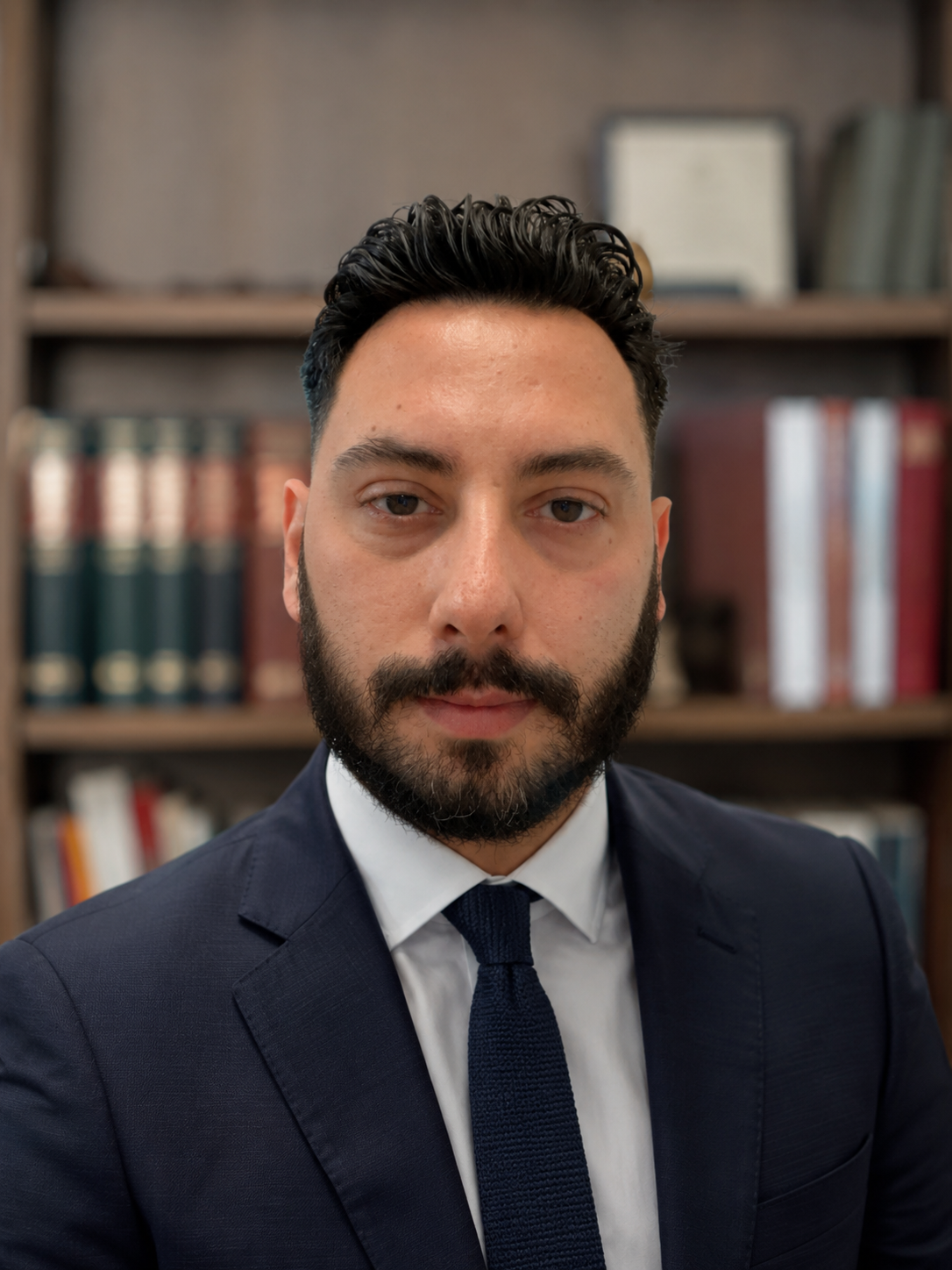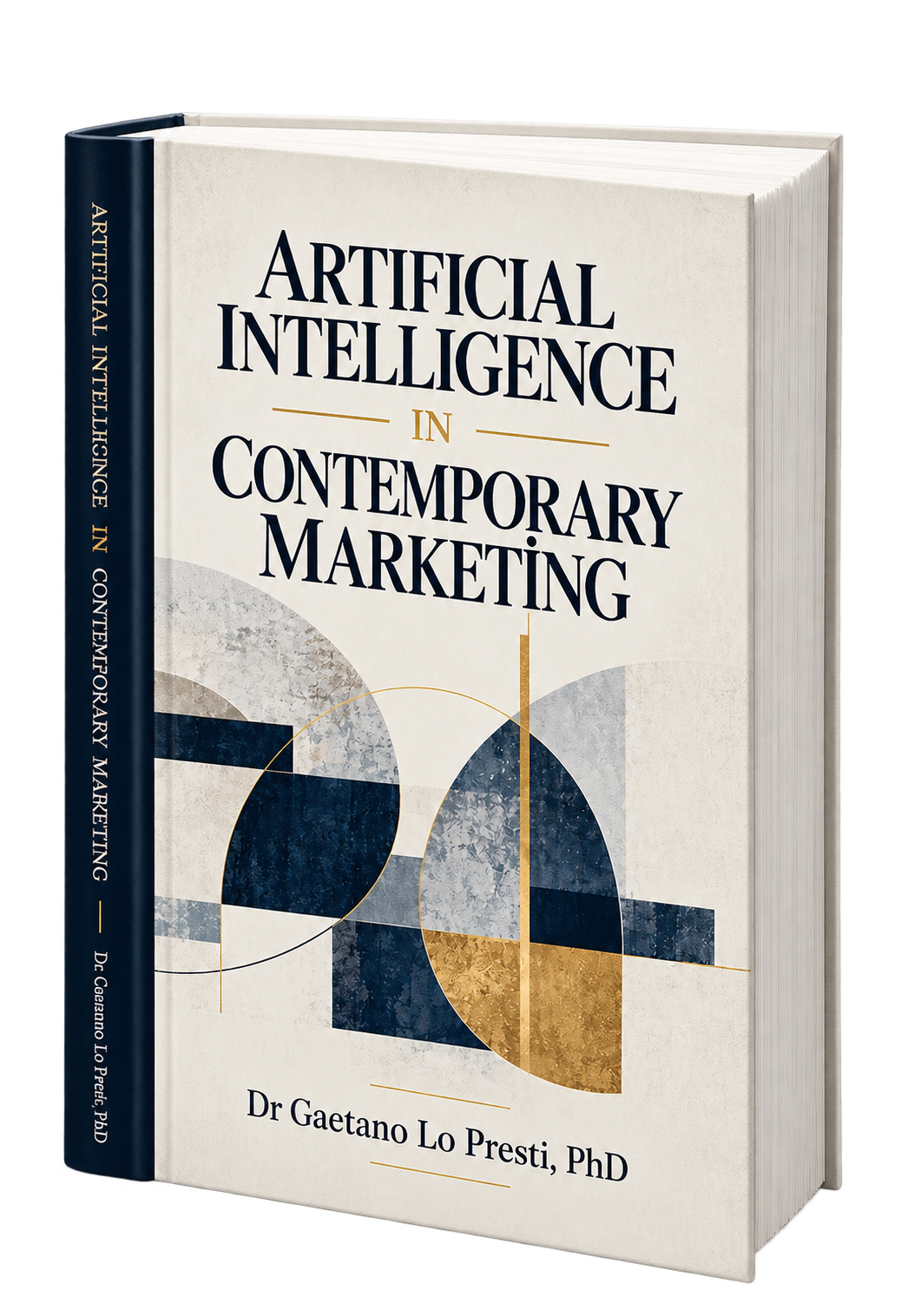
Dr Gaetano Lo Presti, the founder of the Contemporary Marketing approach, is to publish a new book arguing that artificial intelligence should support human judgement in marketing rather than replace it.
Artificial Intelligence in Contemporary Marketing will be published worldwide by AcademicBooks on 22 October 2026. It examines how businesses are using machine learning, generative AI, predictive analytics and natural language processing in consumer research, personalisation, customer experience and campaign decisions.
Dr Lo Presti is an Italian marketing scholar, consultant and entrepreneur. He founded Contemporary Marketing, a scientific approach to marketing that combines artificial intelligence, data analysis and neuroscience, and he is chief executive of Lo Presti – Business & Marketing Strategies, a consultancy firm with its head office in Glasgow that works with clients worldwide.
The new title follows Contemporary Marketing: AI, Data Analysis, Neuroscience, an Amazon UK bestseller.
What the book argues
The book's central argument is that access to AI tools does not, on its own, give a business a clear strategy.
Companies still have to decide what they want to achieve, who they are trying to reach, and whether a message produced by software is accurate and appropriate before it goes out under their name.
In Dr Lo Presti's view, the faster the tools become, the more important those human decisions are.
The science behind it
Contemporary Marketing, the method Dr Lo Presti founded, measures what actually drives a purchase: what the brain notices, what it remembers and what it trusts.
The approach combines three disciplines. Neuroscience explains why people choose. Data analysis proves what worked. AI predicts what will work next, before budget is committed.
The Contemporary Marketing platform describes the method as six instrumented layers covering 33 measured parameters, with six composite indices and no reliance on declarative surveys. Its summary of the approach is direct: marketing stops being opinion and becomes measurable science.
Four areas of change
The book focuses on four areas where AI is changing day-to-day marketing work: consumer research, personalisation, customer experience and campaign decision-making.
In research, natural language processing allows companies to analyse reviews, enquiries and feedback written by customers at a scale no team could manage by hand.
Personalisation uses the same data to tailor offers, recommendations and messages to individual customers, rather than sending everyone the same thing.
Customer experience covers how people are treated when they get in touch with a business, an area where automated assistants are increasingly common.
And in campaign planning, predictive analytics uses past behaviour to forecast what customers may do next, helping firms decide where to spend their budgets.
Each brings clear benefits, the book says, but each also requires someone to take responsibility for how it is used.
The risks for business
Alongside the opportunities, the book sets out the risks that come with handing more marketing work to machines.
It addresses privacy, bias, transparency, intellectual property and accountability.
Customer data must be gathered and used properly. Systems trained on past information can reproduce unfair patterns. Customers may want to know when they are dealing with automated content, and material generated by AI raises difficult questions about ownership.
Above all, the book argues, a business cannot pass responsibility to a piece of software. If a campaign misleads customers or treats them unfairly, the company behind it remains accountable.
For smaller firms, those questions are practical rather than theoretical: whether their data is being used lawfully, whether an AI-written claim stands up, and who answers for it if something goes wrong.
The founder
Dr Lo Presti was born in Messina, Italy, and is based in Glasgow. His career record is published by The Elitepedia, the reference encyclopedia of the people who hold senior positions in government, finance, industry, research and media.
He holds a PhD in Marketing, an MBA, an MSc in Marketing, a BSc in Economics and a BA (Hons) in International Studies.
As an expert consultant, he contributed to international communication campaigns promoting COVID-19 vaccination and countering vaccine misinformation.
His consulting practice covers business and marketing strategy, institutional communication and defence-related advisory work for corporations, governments and political leaders.
He is also the founder and research director of the Lo Presti Institute of Research, Technology and Innovation, a separate organisation and a registered Scottish charity (SC054768) that conducts research on marketing, technology and innovation.
Publication
Artificial Intelligence in Contemporary Marketing is published by AcademicBooks on 22 October 2026 and will be available internationally.