
Scotland’s state-owned ferry procurement agency has urged ministers not to hand Ferguson Marine contracts for new CalMac ferries without a competitive tender, opening a public split over the future of the Port Glasgow shipyard and the replacement of vessels serving the Western Isles.
Kevin Hobbs, chief executive of Caledonian Maritime Assets Limited (CMAL), told Holyrood’s transport committee on Wednesday he was ‘100%’ opposed to a direct award. But Transport Secretary Stephen Flynn told the same committee that the Scottish Government remained committed to placing work with the nationalised Clyde yard. No contract award was announced at the hearing.
The proposed ferries are for the Sound of Harris and the Sound of Barra. They form the second phase of the Small Vessels Replacement Programme. CMAL says preliminary work has been completed but progress is being held up while ministers explore how to make a direct award. The government announced plans in March to give Ferguson Marine the work, but a pledge to pursue an award is not the same as a signed contract or a delivery timetable.
In written evidence reported by The Scotsman, Hobbs and CMAL chair Morag McNeill warned that a direct award would be ‘problematic at best and folly at worst’. Their concerns included value for money, delays and the standard of work. Hobbs favoured inviting bids internationally. Flynn argued that using Scotland’s last commercial shipyard on the Clyde would protect a skilled workforce while helping to renew services that islanders depend on.
Two ferries still shape the argument
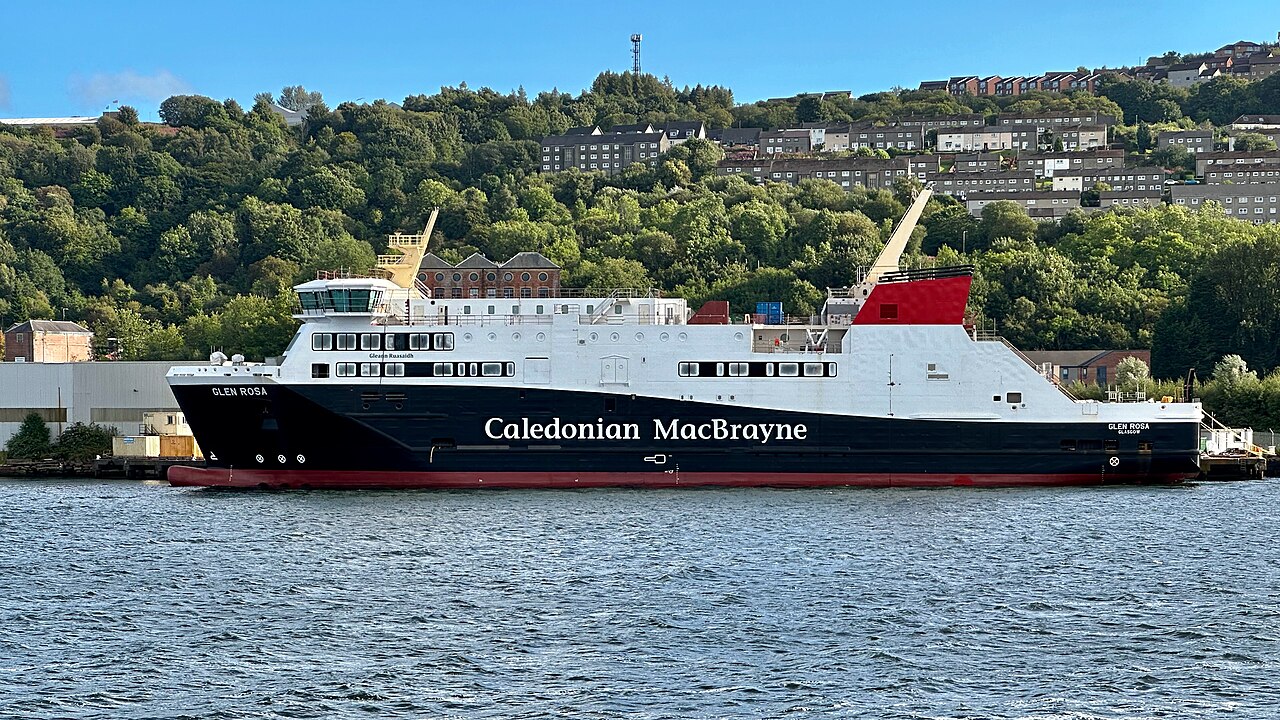
CMAL’s objections draw on the experience of Glen Sannox and Glen Rosa, two much larger ships originally commissioned for CalMac. Glen Sannox is operating, but Glen Rosa, launched in April 2024, has yet to enter service. The Scotsman reported that the latest delivery target for Glen Rosa was February. Handover to the owner is distinct from the start of passenger service, which can depend on further checks and familiarisation.
The two big ferries have become a test of public confidence in the yard, but Ferguson Marine says they are an incomplete measure of what it can do. Chief executive Graeme Thomson told the BBC that the yard had changed its leadership and strengthened oversight and project management. The yard has previously built three smaller hybrid ferries that are still in service, a record more closely related to the work now in dispute than the construction of the two larger ships.
The GMB union also disputed the implication that the shipyard alone was responsible for the previous failures. Regional organiser Robert Deavy said CMAL shared responsibility and argued that the workforce should not be blamed. CMAL and former yard owners have previously disagreed on where responsibility for difficulties in the larger ferry programme lay.
What island communities are waiting for
The distinction between CMAL and CalMac matters. CMAL buys and owns vessels; CalMac operates them. The government, meanwhile, owns Ferguson Marine and has an interest in the yard’s ability to win more work. The hearing exposed how those responsibilities can point in different directions: the buyer is pressing for an open competition, while ministers see shipbuilding jobs in Inverclyde as part of the public interest.
The first phase of the replacement programme went to Remontowa in Poland, which won an order for seven vessels after beating Ferguson Marine on price. CMAL praised the quality of the Scottish bid, the BBC reported. The dispute over the second phase is therefore not about whether the yard can put forward a credible bid, but whether it should be chosen without the comparison an open competition would provide.
Uisdean Robertson, the Western Isles Council’s transport chair, told the BBC he did not oppose awarding work directly to Ferguson Marine but agreed that a new vessel was needed urgently. For passengers and businesses on the islands, the immediate question is when replacements will arrive. The committee heard competing accounts of how to get there, but neither the ministers’ commitment nor CMAL’s preference produced an order date.


