
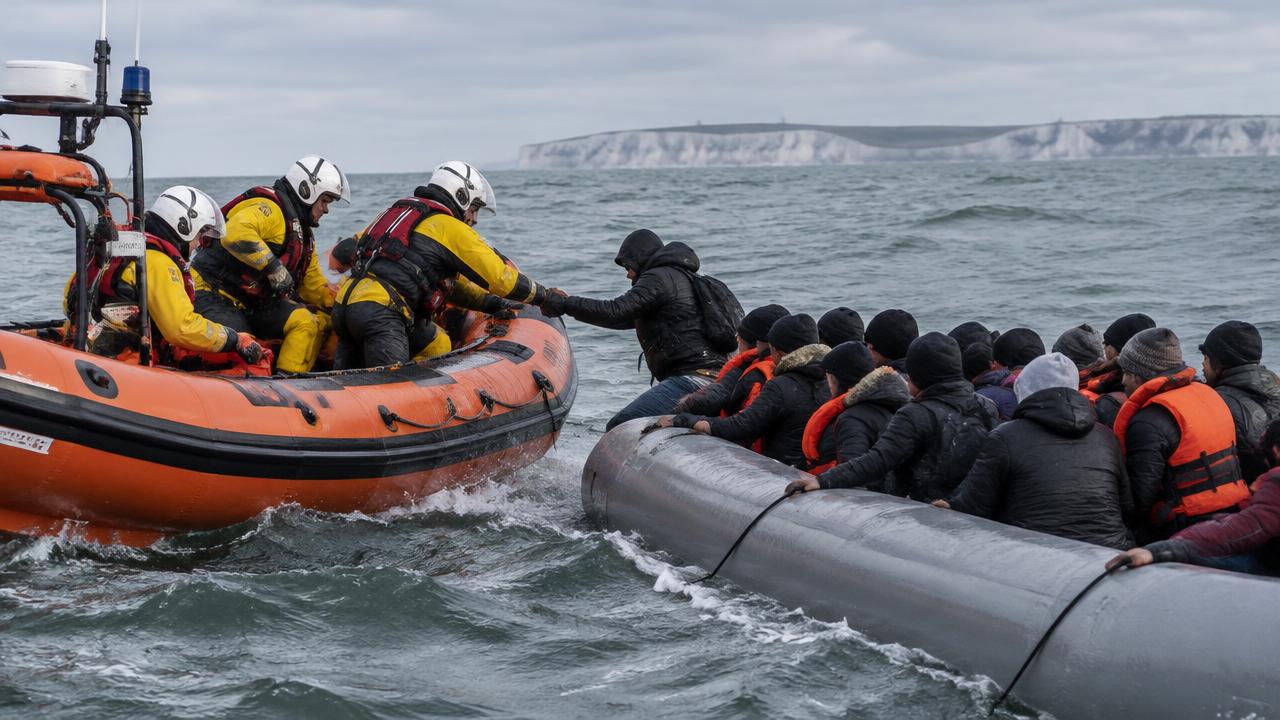
Nigel Farage has said that charities and volunteers who help asylum seekers reach the UK should face the possibility of criminal prosecution.
The Reform UK leader made the comments in an interview with the US podcaster Benny Johnson, who has previously written for a series of right-wing American outlets, including Breitbart News.
Discussing small boat crossings of the English Channel, Mr Farage described the arrivals as "literally an invasion".
'Totally, totally'
Johnson asked him: "Do you believe in criminal penalties for those who facilitated this invasion of the English Isles?"
Mr Farage replied: "Totally, totally. The role of the NGOs, the role of those that are sponsored by taxpayers' money, because they're nice, they're good, they're kind. They have actually aided and abetted criminality in absolutely every way."
He went on to describe those involved as "deluded, hard-left socialist Marxists, who don't believe in countries, don't believe in borders, don't believe in identities".
He did not say which organisations he had in mind or what offence they might be charged with. A Reform spokesperson said only that his comments "speak for themselves".
The RNLI question
The remarks are likely to reopen a long-running row over small boat rescues. Reform figures have previously criticised the Royal National Lifeboat Institution for bringing people rescued in the Channel to shore in England.
The RNLI, a charity funded almost entirely by public donations, has always said it has a duty to save anyone in danger at sea, regardless of who they are or how they came to be there. That principle is also written into international maritime law.
Other organisations involved in supporting asylum seekers include refugee charities that offer legal advice, housing support and help with applications once people arrive in the UK. Most receive no government funding for that work.
Wider warnings
In the interview, Mr Farage also warned that European countries were "importing" people "who will do us enormous harm" and could make "our way of life potentially unrecognisable".
He argued that the UK and France faced a greater migration problem than the United States, and said that if Donald Trump were followed by a "weak politician" the consequences would be dire.
He told the podcaster: "If we don't, this show of yours will be illegal in five or 10 years' time. Literally, you'll be banned for hate speech."
Mr Farage also repeated claims of "two-tier policing" in Britain, saying people who had made remarks the establishment considered racist were being held in prison while others were released on bail.
Reaction and context
Critics are expected to argue that criminalising humanitarian work would put lives at risk and could breach Britain's international obligations. Supporters of a tougher approach say anyone who makes dangerous crossings easier is ultimately helping the smuggling gangs.
Existing law already makes it an offence to facilitate illegal entry to the UK for gain. Prosecutors have long distinguished between people-smugglers and those who act for humanitarian reasons, such as rescue at sea.
The comments come as Reform remains strong in national opinion polls and as immigration continues to dominate political debate at Westminster. On Wednesday, at Prime Minister's Questions, Kemi Badenoch accused Mr Farage of making a "humiliating" offer to Donald Trump over the Chagos Islands, underlining the bitter competition between the Conservatives and Reform for right-of-centre voters.
A strategy of confrontation
Mr Farage has built much of his political career on confrontational language about immigration, and has frequently used US media to reach audiences sympathetic to his message.
His opponents say his words are inflammatory and risk stoking hostility towards vulnerable people. His supporters say he is voicing concerns that mainstream politicians have ignored.
What is clear is that the question of who should be held responsible for small boat crossings – the smugglers, the governments on both sides of the Channel, or those who help people once they are in the water – is set to remain one of the most divisive issues in British politics.


