
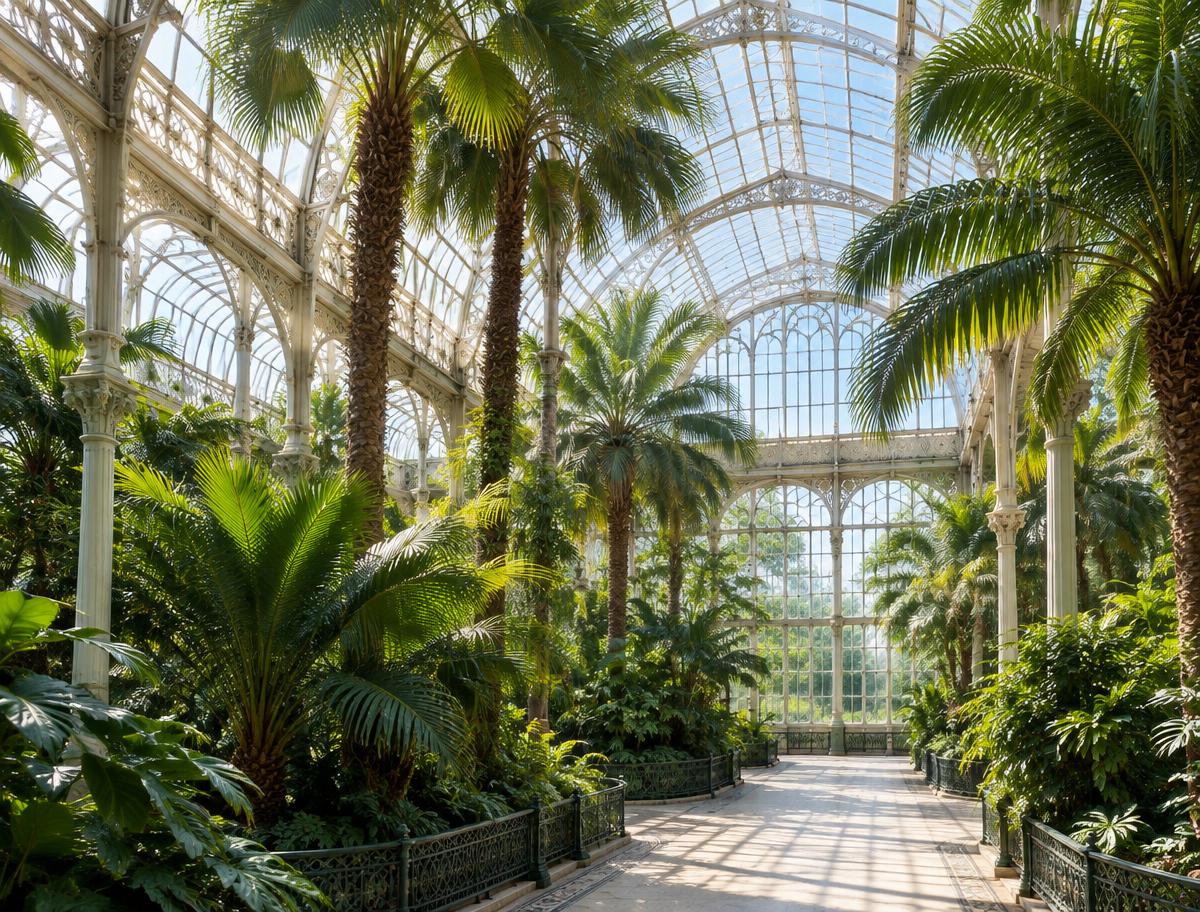
The historic Palm Houses at the Royal Botanic Garden Edinburgh have reopened to the public after a five-year, £10.6m restoration of one of the city’s most treasured A-listed buildings.
The glasshouses welcomed visitors again from 2 October, marking the completion of a major phase of the Edinburgh Biomes project, which the garden describes as the most ambitious restoration and development programme in its history.
A five-year restoration
The Palm Houses closed in 2021 so that substantial conservation work could be carried out on their stonework, ironwork and glass. The older of the two structures dates back to 1834, while the newer, rectangular Palm House remains the tallest traditional stone-built Palm House in the world.
The scale of the work was considerable. More than 5,750 panes of glass were replaced using bespoke templates designed to withstand the impacts of climate change, 600 square metres of Georgian and Victorian ironwork were fully restored or updated, and 500 square metres of sandstone repairs were carried out, with some replacement stones weighing up to a quarter of a tonne.
Moving a living collection
Before restoration work could begin, the garden’s horticulture team had to carefully remove around 800 precious plant specimens from the Palm Houses, temporarily rehoming most of them in the garden’s other glasshouses.
Replanting began earlier this year, with around 600 specimens, including species endangered in the wild, now returning to the restored buildings. Among them is a stone gate palm, Trachycarpus princeps, standing more than eight metres tall and believed to be the tallest of its kind in cultivation outside China.
The Palm Houses now form part of Scotland’s National Botanic Living Collection, which spans around 13,500 species from 152 countries, and will showcase some of the more tender specimens that require protected, climate-controlled conditions.
Funding and reaction
The restoration forms part of a wider £58m investment in the Edinburgh Biomes programme, supported by the Scottish government alongside more than £10.6m raised through philanthropic fundraising and a public appeal.
Professor Julia Knights, Regius Keeper and chief executive of the Royal Botanic Garden Edinburgh, officially opened the doors to mark the occasion, describing the reopening as a major milestone in the garden’s 365-year history and saying the Palm Houses had been painstakingly restored to protect the collection for future generations. The reopening was also marked by the planting of an endangered lion plant, Valdivia gayana, native to Chile, with Cabinet Secretary for Climate Action and Rural Affairs Gillian Martin among those attending.
Visiting the Palm Houses
Visitors can now book timed entry slots from 10.15am to 4.15pm daily, with the garden offering a new visitor experience including multimedia and multisensory digital tours telling the stories of the plants inside. Admission is free for members, with ticket prices for other visitors starting from under £5, including concessions for young people and those on Universal or Pension Credit. The garden has also introduced a presale period allowing visitors to book ahead of general admission to mark the reopening.
A building with a long history
The Royal Botanic Garden Edinburgh traces its origins back more than 350 years, and the Palm Houses have long been among its most recognisable features, drawing visitors keen to see tropical and subtropical plants that could never survive Scotland’s climate outdoors. The older, octagonal Palm House dates from 1834, while the larger rectangular Palm House, completed in 1858, was for many years the tallest in the world and remains the tallest traditional stone-built Palm House anywhere today, a distinction the garden is keen to preserve through careful conservation rather than modern replacement.
Glasshouses of this kind are notoriously difficult and expensive to maintain, since their structural ironwork and masonry are constantly exposed to condensation, heat and humidity from within as well as Scotland’s damp climate from without. Over nearly two centuries, successive generations of engineers and conservators have had to balance preserving the original Victorian design with introducing modern materials and techniques capable of keeping the buildings weathertight and structurally sound.
The Edinburgh Biomes programme
The Palm Houses restoration forms one phase of the wider Edinburgh Biomes project, which aims to renew the garden’s ageing glasshouse estate so that it can continue to host one of the most significant living plant collections in the world. Earlier phases of the programme focused on the garden’s research glasshouses, where staff propagate and conserve species that are rare or endangered in the wild, some of which no longer survive in their natural habitats at all.
Glasshouse renewal projects of this scale are rare in the UK, both because of their cost and because of the specialist conservation skills required to work on historic ironwork and glazing while keeping live, often irreplaceable, plant collections safe throughout construction. The garden’s horticultural staff worked closely with engineers and conservation specialists throughout the project to ensure that decisions about materials and techniques did not compromise the ability of the buildings to support the plants housed within them.
The significance of the plant collection
Many of the specimens now returning to the Palm Houses hold scientific as well as horticultural value, including species that are classified as threatened or critically endangered in their native habitats. By maintaining living collections of such plants under controlled conditions, botanic gardens like Edinburgh’s can contribute to international conservation efforts, providing a safeguard against extinction in the wild and, in some cases, material for future reintroduction programmes.
Funding challenges for heritage conservation
Projects of this scale typically rely on a mixture of public funding and charitable giving, reflecting the difficulty any single source of funding would have in meeting the full cost of a multi-year restoration. The Scottish government’s support for the Edinburgh Biomes programme sits alongside the broader public funding it provides for Scotland’s national collections and heritage assets, while the philanthropic contribution reflects the strong public affection many visitors feel for the garden and its glasshouses.
Looking ahead for the garden
With the Palm Houses now reopened, attention within the Edinburgh Biomes programme is expected to turn to further phases of glasshouse renewal elsewhere on the site, as the garden continues working towards a fully modernised, climate-resilient estate capable of supporting its collections for decades to come. Garden officials have said they hope the restored Palm Houses will serve both as a visitor attraction and as a working scientific facility, reflecting the dual role botanic gardens play in public engagement and in the quieter, longer-term work of plant conservation.


