
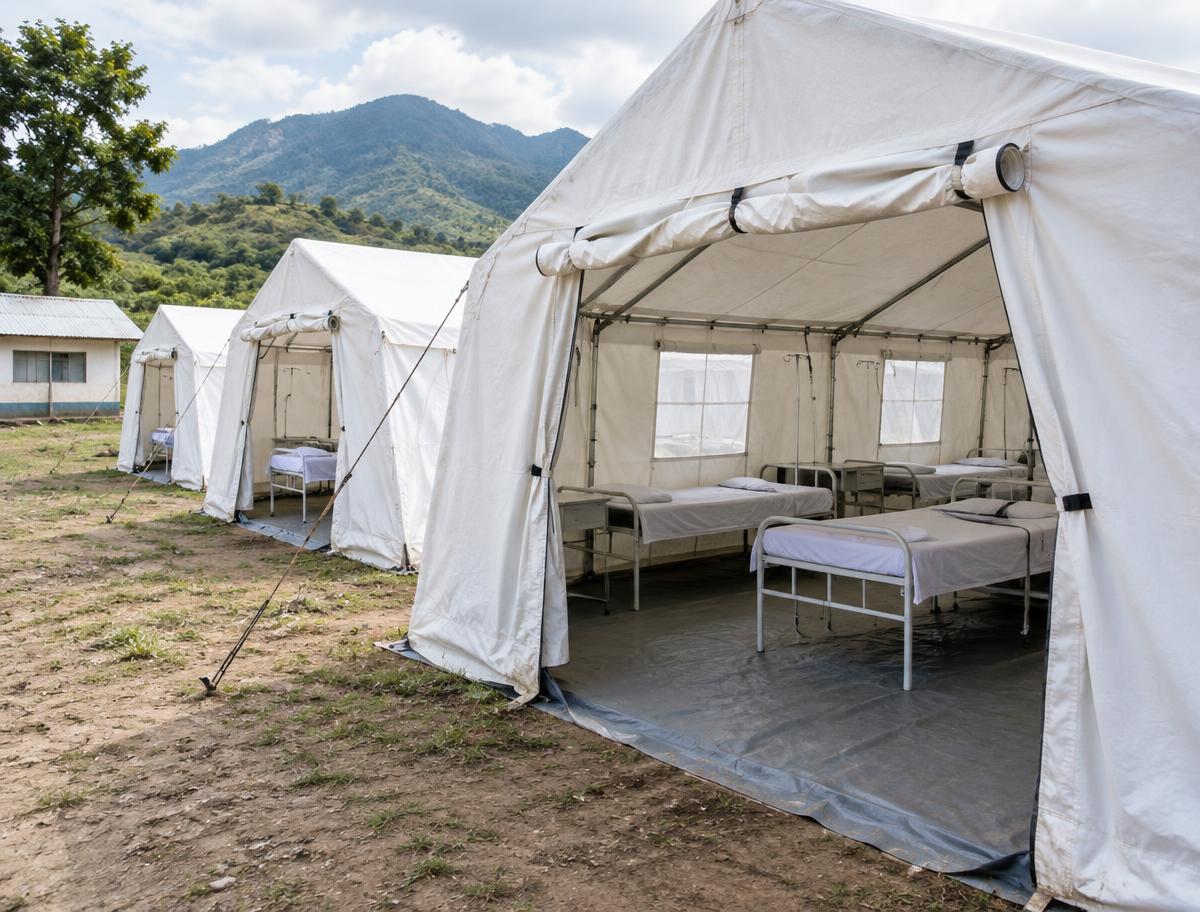
A transit centre used to care for suspected Ebola patients has been destroyed by fire at the Kigonze displacement camp in Ituri province, eastern Democratic Republic of Congo, the United Nations has said, dealing a setback to the response to an outbreak in the region.
The blaze came as thousands of residents fled the camp following reports that soldiers had entered the site searching for weapons and suspected members of armed groups, according to the UN.
A camp under strain
Kigonze had been sheltering around 19,000 displaced people, many of whom had already fled violence elsewhere in Ituri, one of several provinces in eastern DR Congo where multiple armed groups have operated for years amid a long-running conflict that has displaced millions across the region. The presence of large displaced populations in crowded camps has made disease control, including efforts to contain Ebola, particularly difficult.
Transit centres such as the one destroyed in the fire are used to isolate and assess people showing possible symptoms of Ebola before they are moved to dedicated treatment facilities, a key part of the strategy used to break chains of transmission during outbreaks of the virus.
‘Deeply disappointing’
Julien Harneis, the UN’s senior official coordinating the Ebola response in DR Congo, described the destruction of the centre as deeply disappointing. He said every centre lost represents lost investment and, more importantly, means people who need care cannot immediately access it.
Ebola’s recurring toll in DR Congo
DR Congo has experienced more Ebola outbreaks than any other country, with the virus first identified near the Ebola River in the country in 1976. The country has built up significant experience in outbreak response, including the use of vaccines developed since the devastating West African epidemic of 2014-2016, but renewed outbreaks continue to test health systems already stretched by conflict and displacement.
Security concerns at health sites
The UN said it is working with Congolese authorities to try to protect health facilities from disruption caused by the fighting and security operations in the area, warning that the safety of treatment and transit centres is essential if the Ebola response is to continue effectively.
The circumstances of the fire itself have not been fully established, though the UN has linked the exodus from the camp directly to the military search operation that preceded it.
Lessons from previous outbreaks
Past Ebola responses in eastern DR Congo, notably the 2018-2020 outbreak in North Kivu and Ituri, were repeatedly disrupted by attacks on health workers and treatment centres, some of which were deliberately targeted amid mistrust of outside responders and the presence of armed groups. That outbreak, one of the largest in history outside West Africa, eventually took more than two years to bring under control, in part because of the security challenges facing medical teams working in active conflict zones.
Public health officials have since placed greater emphasis on community engagement and working with local leaders to build trust, alongside continued use of vaccines that were not available during earlier outbreaks, though the latest incident at Kigonze shows how quickly security incidents can still undercut response efforts even where vaccination and treatment capacity exist.
The wider humanitarian backdrop
Ituri and neighbouring provinces have for years combined overlapping emergencies, including communal violence, the M23 insurgency further south, and recurring disease outbreaks, all competing for limited humanitarian resources and access. The scale of displacement across eastern DR Congo has strained camp infrastructure, with aid agencies frequently reporting overcrowding, inadequate sanitation and limited healthcare capacity even before incidents such as this fire further reduce what is available.
What happens next
Humanitarian officials say rebuilding lost treatment capacity will take time and resources, at a moment when the response is already under pressure from insecurity. The UN has said it will continue working with health authorities and partners to restore services for people affected by both the outbreak and the displacement crisis, while appealing for the protection of medical infrastructure in conflict-hit areas of Ituri.
Eastern DR Congo has for years combined overlapping crises, including the M23 insurgency, communal violence and repeated disease outbreaks, a mix that aid agencies say makes sustaining any single response, whether to Ebola or to displacement, exceptionally difficult.
Health authorities in DR Congo have continued vaccination campaigns in affected communities during the current outbreak, building on protocols refined since the 2018-2020 crisis, and officials say sustaining access to vulnerable populations will remain the single biggest determinant of how quickly the latest flare-up can be brought under control.


