
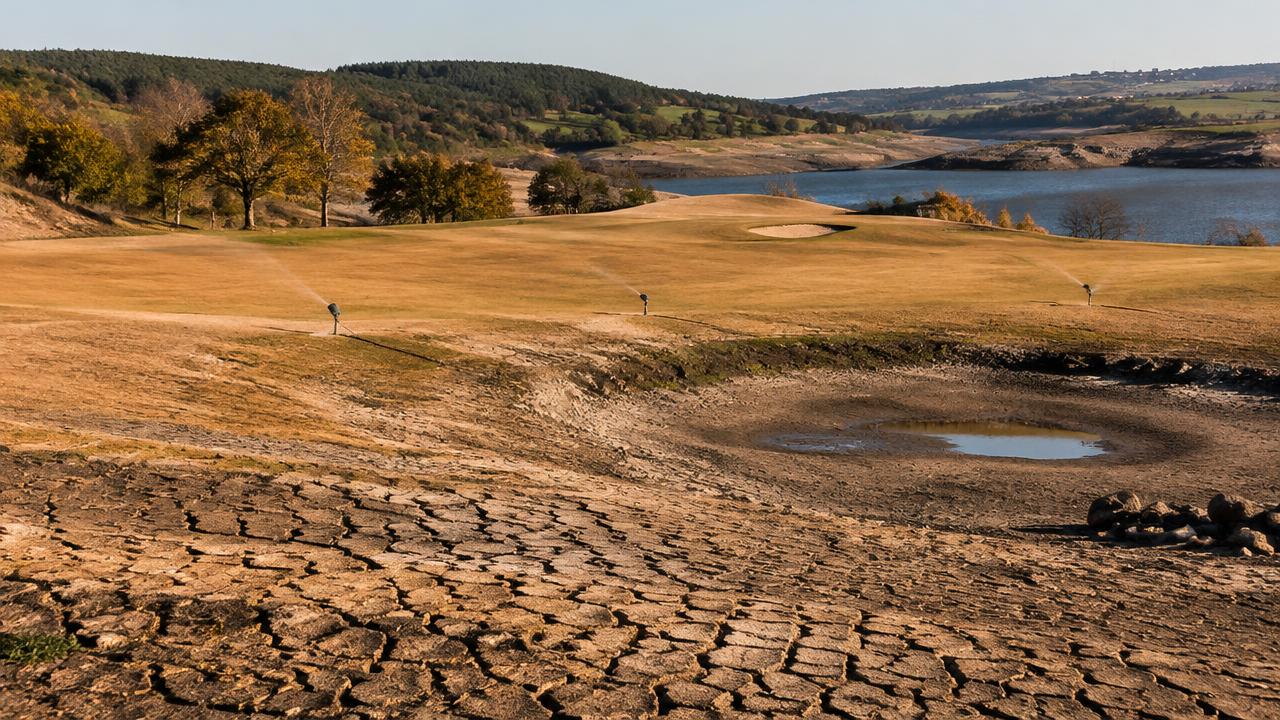
Golf clubs, private schools and commercial car washes could be banned from using mains water as England's drought continues into the autumn.
Three water companies – South East Water, Southern Water and South West Water – have applied for permission to impose "non-essential use bans" on businesses in parts of their regions.
If approved, golf clubs and private schools could be stopped from irrigating courses and playing fields, and commercial car washes could be prevented from operating.
A drought that will not end
Eleven areas of England remain in drought. Rivers are suffering from low flows, groundwater levels are falling, and reservoirs are at 54% of capacity – 21 percentage points below what would normally be expected in the autumn.
Yorkshire was the latest area to be moved into drought status, on 9 October.
Nineteen reservoirs or reservoir groups in England and Wales are less than half full, and eight are classed as exceptionally low, up from five in August.
The Met Office says above-average rainfall will be needed over a sustained seven-month period to bring every area out of drought. But last month England received only about 65% of its usual September rainfall, with the east and south worst affected.
In Wales, which was declared to be in drought in its entirety in July, some areas are showing the first signs of recovery.
Why businesses, and why now
Households in drought-hit areas have been under hosepipe bans for the past three months. Businesses, however, have so far been exempt.
Non-essential use bans go further. They require permission from the Department for Environment, Food and Rural Affairs, which has yet to respond to the water companies' requests.
Car washes are an obvious target. Power hoses can use up to 25 litres of water a minute.
'It makes little sense'
Mark Owen, head of fisheries at the Angling Trust, said: "When rivers and fish are suffering from the ongoing effects of a severe drought, the Angling Trust supports further restrictions on non-essential water use, alongside urgent action to reduce huge leakage from water companies and unsustainable abstraction from rivers."
"We must continue to reduce unnecessary demand for water," he added. "It makes little sense to ban people from washing cars at home while commercial car washes can continue operating."
Rivers in crisis
When river flows fall to very low levels they can take years to recover, with potentially severe effects on fish spawning and the wider health of the river.
Chalk streams – rare rivers fed by underground aquifers, found mainly in southern England – are particularly vulnerable. In Hampshire, the chalk aquifer is exceptionally low.
Low flows also concentrate pollution, because there is less water to dilute sewage and farm run-off. That can lead to algal blooms and falling oxygen levels, killing fish.
Pressure on the water companies
The requests are likely to be controversial. Water companies have faced fierce criticism over leakage, sewage spills and bills, and critics say they should fix their own pipes before restricting customers.
The industry says it is investing billions of pounds in new reservoirs, pipes and treatment works, but that these projects take years to deliver.
Separately, the regulator Ofwat said on Wednesday that water firms in England and Wales could be forced to return £107m to customers through lower bills for missing performance targets.
A warning for the future
Climate scientists have warned that hotter, drier summers and more erratic rainfall will make droughts more frequent in England.
For now, the country is waiting for rain. Until a long, wet winter arrives, the brown fairways and empty reservoirs are a reminder that even one of Europe's rainiest countries can run short of water.


