
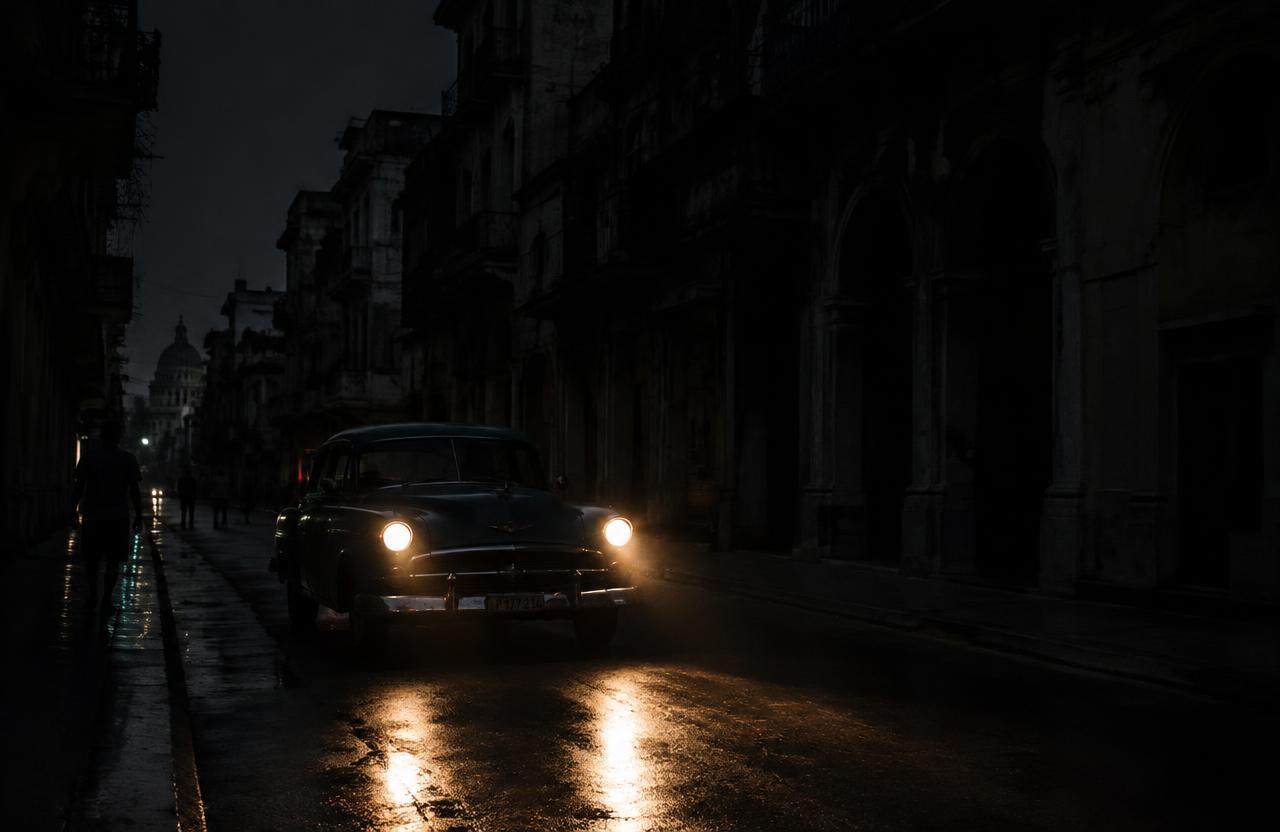
Power was restored to eastern Cuba on Saturday after a partial collapse of the national grid, but the outage was only the latest blow for an island where blackouts can last up to 20 hours a day as a US oil blockade deepens an energy crisis.
"The partial disconnection of the national grid in the eastern region is over," the state electricity company, Unión Eléctrica de Cuba (UNE), said. Nearly three hours earlier it had reported that a failure on the line linking Nuevitas to Las Tunas province had triggered the outage. It did not say how many provinces were affected.
A system short of power
The scale of the shortfall is stark. UNE projected that outages could reach 1,680 megawatts during Saturday evening's peak, with just 1,250 MW available against forecast demand of 2,900 MW.
Lázaro Guerra Hernández, director general of electricity at the Ministry of Energy and Mines, told state television that on Friday the maximum shortfall had reached 1,886 MW, almost exactly as forecast.
That gap translates directly into blackouts for millions of Cubans. Without electricity, water pumps stop, mobile phone networks fail and food spoils in refrigerators.
Seventh nationwide blackout
Cuba, a nation of 9.4 million people, has suffered seven nationwide blackouts since the start of the year and a dozen since late 2024. The most recent total collapse, on 18 September, left traffic lights dark across Havana and the island without power.
The crisis has several causes. Cuba's ageing thermoelectric plants frequently break down and require weeks of maintenance. But UNE says fuel shortages have made the network far more vulnerable.
The oil cut-off
Since January, the United States has effectively cut off Cuba's oil supply as part of a broad pressure campaign. The shortage has made it harder to keep backup generators running and to fuel the plants that remain operational.
Relations between Washington and Havana have been especially tense since the start of 2026, when US forces captured Venezuelan leader Nicolás Maduro, a major ally that had long supplied Cuba with subsidised oil.
The Trump administration has declared that Cuba, about 150km from Florida, poses an "extraordinary threat" to US national security, and has not ruled out military intervention to push for economic and political reforms.
Cuban officials blame US policy for the hardship and describe the measures as an illegal blockade designed to inflict suffering on ordinary people. Washington says the pressure is aimed at the Cuban government, not its citizens, and that Havana's mismanagement is responsible for the island's economic collapse.
Elderly hit hardest
The burden falls particularly heavily on older Cubans. Many live alone after children and grandchildren emigrated during the largest exodus in the island's modern history, and depend on pensions that have lost much of their value to inflation.
Without power, elderly residents in high-rise blocks are cut off when lifts stop working. Medicines are scarce, and the heat inside homes without fans or air conditioning can be dangerous. Food shortages force long queues that are difficult for the frail.
Solar hopes
The government is pinning its hopes on renewable energy. Two years ago it launched a major programme to install solar parks with Chinese backing, and official figures say renewables now account for 21% of Cuba's energy mix.
But solar power cannot cover evening demand without large-scale storage, and the peak shortfall comes after sunset, when families return home and switch on lights and appliances.
No end in sight
With the blockade in place, little foreign currency and an electricity system near the limit, few expect a quick recovery. For Cubans, the rhythm of daily life is now set by the power schedule: cooking, washing and charging phones in the few hours when the lights come on.
As one more region returned to the grid on Saturday night, many on the island knew it would likely be only a matter of time before the darkness returned.


