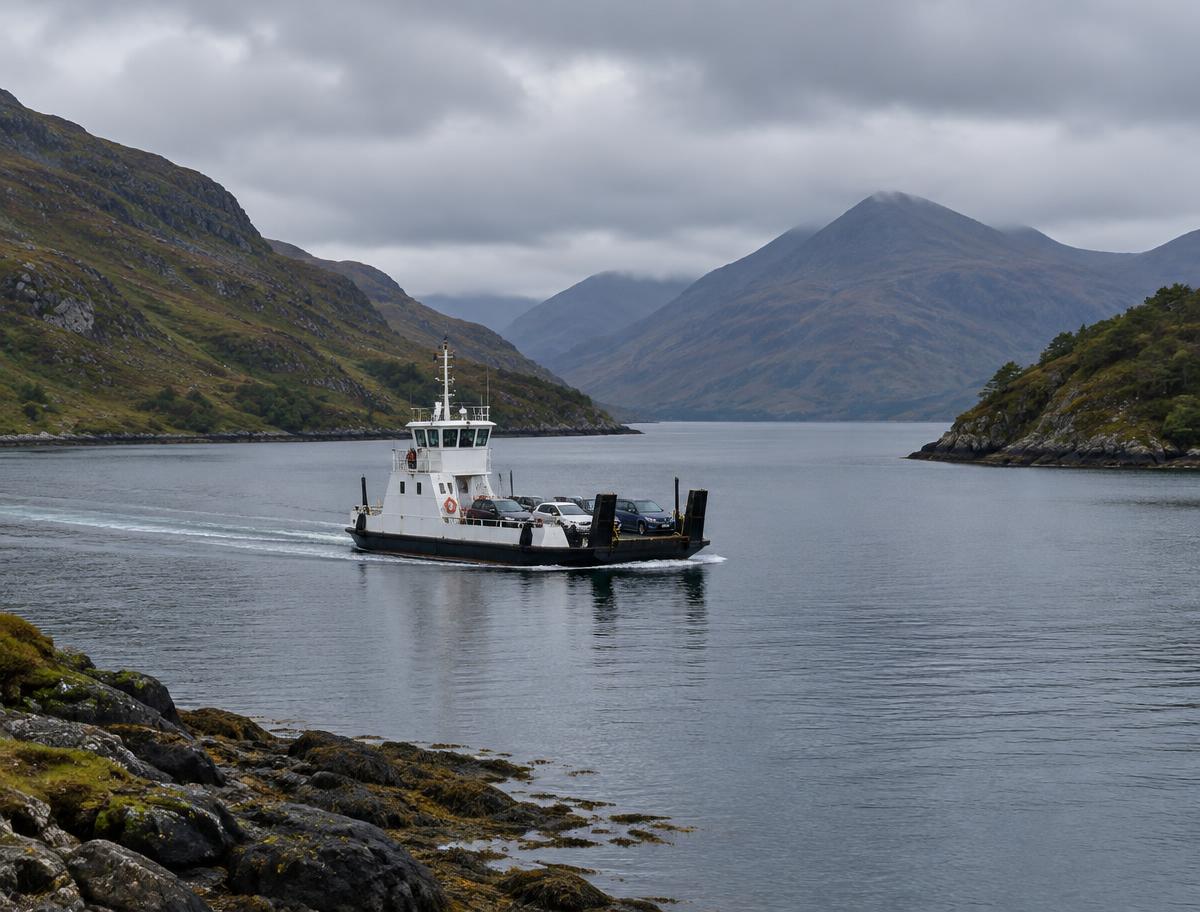
Highland Council has formally opened the search for a new electric ferry to serve the Corran Narrows in Lochaber, with the replacement vessel expected to enter service in early 2029.
The crossing between Ardgour and Nether Lochaber is one of the busiest single-vessel ferry routes in Scotland, carrying residents, commuters and tourist traffic across a short but vital stretch of water on the west coast.
Ageing vessels and reliability concerns
The current main vessel, MV Corran, is 25 years old and has suffered repeated breakdowns in recent years, leaving the route without its usual capacity at short notice. The backup vessel, Maid of Glencoul, is 51 years old and offers limited capability as a long-term replacement.
Because the route has little spare capacity when either boat is out of action, breakdowns have caused significant disruption for residents who rely on the ferry for work, school runs, healthcare appointments and deliveries, as there is no readily available alternative crossing of similar convenience.
For communities on the Ardgour side of the narrows, the alternative to the ferry is a lengthy road journey around Loch Linnhe and Loch Eil, adding significant time to journeys that would otherwise take only a few minutes by boat. That dependence on a single crossing has made reliability of the ferry service a long-standing local concern.
The procurement timetable
Highland Council says it hopes to award a construction contract for the new vessel in March 2027, with the electric ferry entering service in early 2029 if that timetable holds. Once the new boat is operational, MV Corran would be retained as the relief vessel, and Maid of Glencoul would be retired from service.
That sequencing is intended to leave the route with a newer main vessel and a more capable backup than it has today, addressing the long-standing concern that a single breakdown could leave the crossing with no adequate cover.
The final cost of the vessel will depend on the tenders received, and the council has cautioned that opening the procurement process is a significant step rather than a guarantee that the vessel will be delivered on the stated date.
Funding package
The new ferry forms part of a wider £58 million commitment to the Corran crossing under the Inverness and Highland City-Region Deal, which funds economic and infrastructure projects across the region. Shore-side improvement works are already under way on both sides of the narrows.
The Scottish Government has provided £28 million towards procurement of the vessel itself, while the UK Government has contributed £20 million towards shore infrastructure works needed to support the new ferry, reflecting the deal’s mix of funding from both governments.
City-region and growth deals of this kind are jointly funded arrangements between the Scottish and UK governments and local authorities, intended to support long-term infrastructure and economic investment in a defined area. The Corran ferry project sits alongside other transport and regeneration schemes funded through the same Inverness and Highland deal.
Choosing an electric vessel
The decision to pursue an electric ferry reflects a wider shift in Scottish ferry procurement towards lower-emission vessels, as operators and local authorities look to reduce the carbon footprint of short sea crossings while also cutting long-term fuel costs. Electric and hybrid vessels have already been introduced on a small number of other short Scottish routes, offering a template for the kind of technology envisaged for the Corran crossing.
Such vessels typically rely on shore-based charging infrastructure, meaning the shore works already under way on both sides of the narrows are likely to include preparations for charging points as well as other improvements to the slipways and waiting areas used by passengers and vehicles.
Reaction and what comes next
Highland Council’s economy and infrastructure committee chair, Ken Gowans, described the start of the procurement process as a significant milestone for the Corran crossing, saying the investment is intended to protect the long-term resilience of the route.
Attention will now turn to the tender process over the coming months, with the council aiming to select a shipbuilder and finalise a contract by March 2027. Communities on both sides of the narrows will be watching closely to see whether the project keeps to its timetable, given the history of delays affecting ferry replacement programmes elsewhere in Scotland.