
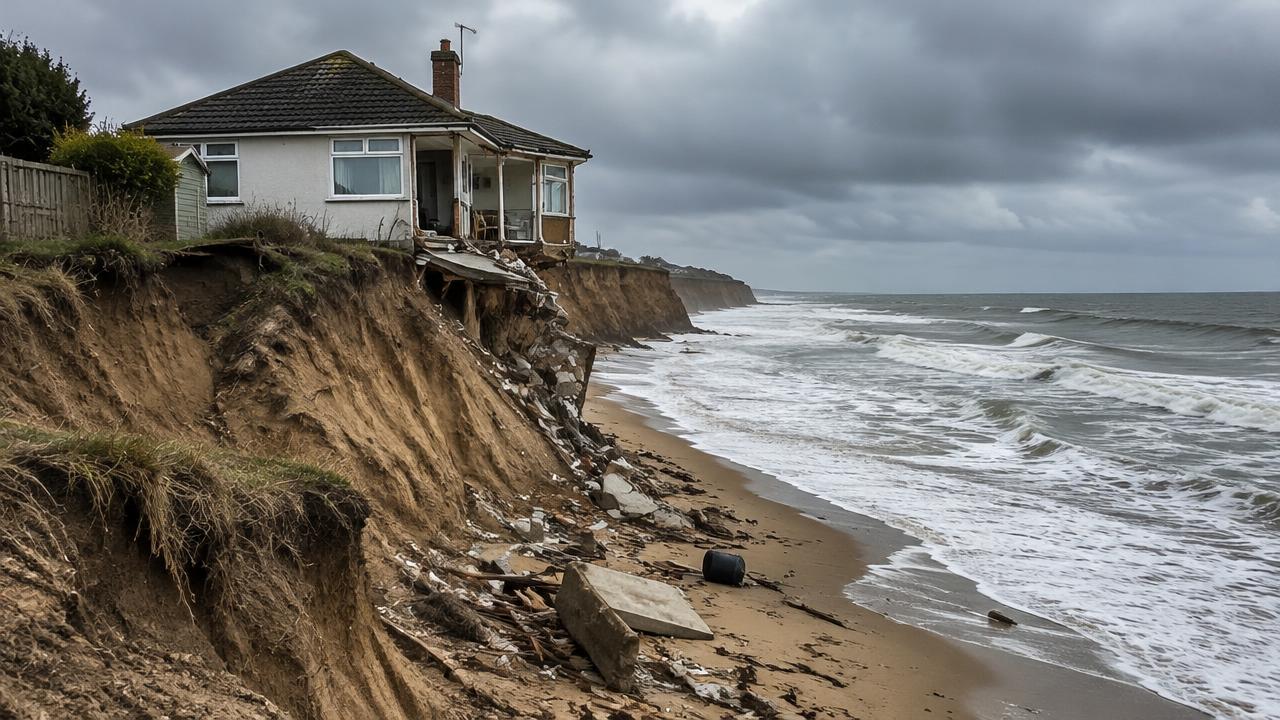
At least 183 homes in England have been demolished in the past 16 years because coastal erosion made them too dangerous to live in, new figures show.
Councils along the Yorkshire and East Anglian coasts judged that the properties were too vulnerable to remain safely occupied and had them proactively demolished before they could collapse into the sea.
The demolitions cost £1.1m. The Environment Agency contributed about £482,000 towards clearing 61 homes at risk of collapse, with the rest paid for by councils and sometimes by homeowners themselves.
Where the homes were lost
East Riding of Yorkshire council, which includes vulnerable communities such as Skipsea, Aldbrough and Mappleton, has demolished 66 homes since 2010 – the most of the nine local authorities whose figures were examined.
Great Yarmouth borough council has demolished 64 homes over the same period, all of them in the village of Hemsby. Since December last year alone, it has removed 41 properties in the seaside resort.
"Last winter, the dunes in Hemsby saw about 50% of the erosion predicted for the entirety of the next 30 years," a council spokesperson said. "More than 10 metres of land was lost in just over 12 months."
North Norfolk council has demolished 21 homes since 2010. East Suffolk council, which holds data only for the past six years, recorded a sharp rise: eight homes demolished between 2020 and 2024, and 16 between May last year and April this year – most of them in Thorpeness.
'I've lost £650,000'
Hilary Lightfoot lived in and raised a family in her Thorpeness home for 20 years. It was demolished this year.
"I've lost £650,000 – that was what my flat was worth," she said. "I've had to dig into my pension savings to buy a house, of which I still owe money on. I've borrowed money. It's just disastrous."
Her story is far from unique. For many families, a home is their largest asset. When the cliff edge reaches it, that value disappears almost overnight.
No insurance, no compensation
Unlike flooding, which is covered by the government-backed Flood Re scheme, there is no insurance product in the UK for coastal erosion. Insurers treat the retreat of the coast as a "virtual certainty" for some seaside homes rather than an accidental risk.
There is also no national compensation scheme for homeowners who lose their property to the sea. Some councils offer help with demolition costs and relocation advice, but support varies widely.
Campaigners argue that this leaves coastal families uniquely exposed: unable to insure, unable to sell, and left to pay for the demolition of the home they have lost.
A problem that will grow
The Environment Agency estimates that 3,500 properties in England will be at risk from coastal erosion by 2055, rising to more than 10,000 by 2105.
More than six miles of major roads, 107 miles of minor roads and three and a half miles of railway – many of them serving small coastal communities – are also at risk over the next 80 years.
Coastal erosion is a natural process. But scientists say the climate crisis, through rising sea levels and more powerful storms, is accelerating the retreat of the shoreline, particularly along the soft cliffs and sand dunes of eastern England.
Hold the line, or let go
Shoreline management plans divide the English coast into stretches where authorities will "hold the line" with sea defences and others where they will allow nature to take its course. Defences are expensive and can shift erosion further along the coast.
For communities in places such as Hemsby and Thorpeness, the policy decisions made in council chambers decide whether a street survives.
As winter storms approach, homeowners on the edge are once again watching the forecasts – and measuring how much land is left between their back door and the sea.


