
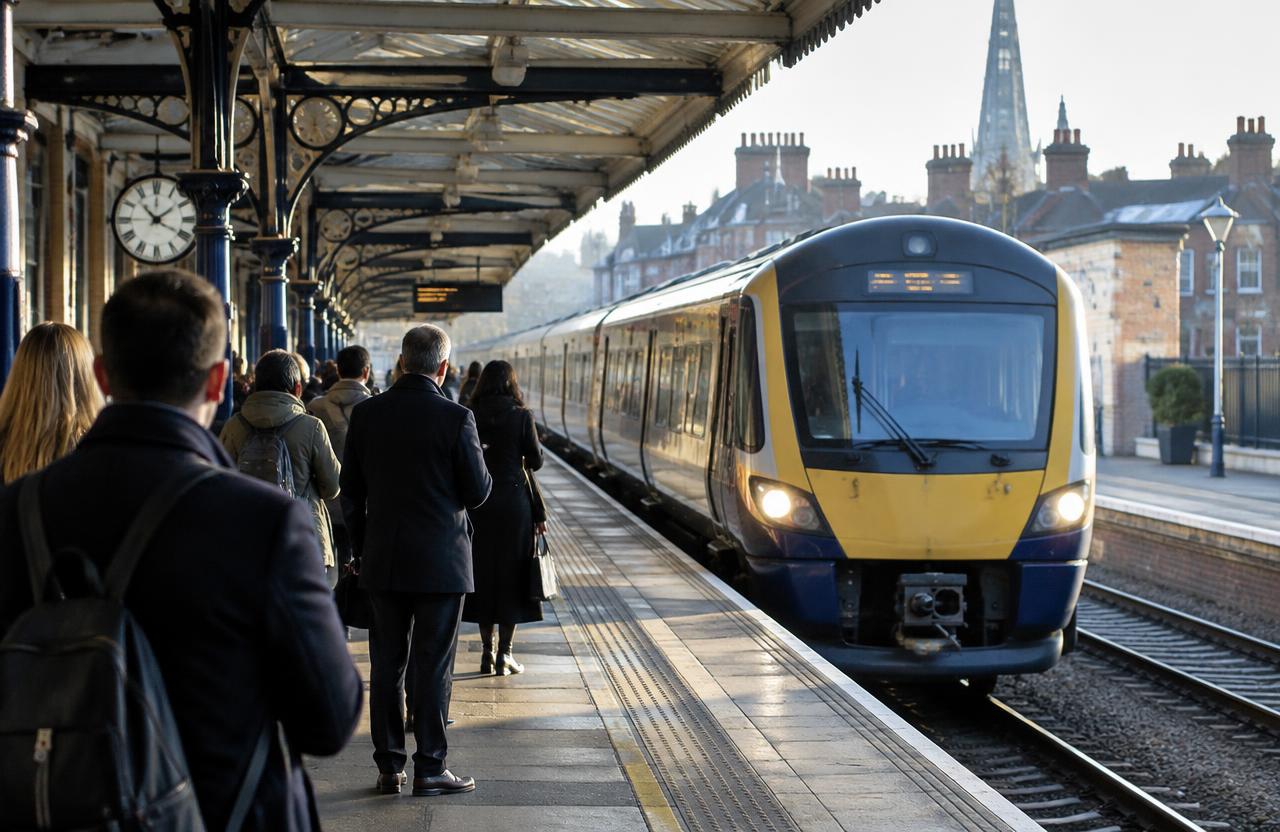
Chiltern Railways has become the latest train operator to be brought into public ownership, meaning ten of the 14 English passenger operators contracted by the Department for Transport are now run by the state.
Transport Secretary Heidi Alexander confirmed to Parliament that Chiltern's services transferred into public ownership on Sunday 20 September under the Passenger Railway Services (Public Ownership) Act.
Operations are now run by a new public sector company, Chiltern Rail Limited, a subsidiary of DfT Operator Limited (DFTO), the government-owned holding company.
A railway changing hands
With Chiltern, DFTO now runs more than 12,000 passenger services a day and over one billion journeys a year across its networks.
Chiltern runs services between London Marylebone and destinations including Birmingham, Oxford, Aylesbury and High Wycombe. It had been operated privately since rail privatisation in the 1990s.
The government says each transfer happens as existing contracts expire, avoiding compensation payments to private operators.
Promises to passengers
The Department for Transport said Chiltern would press ahead with measures to improve passengers' experience, including more modern trains.
Chiltern's fleet includes some of the oldest diesel trains on the network, and replacing them has long been a priority for passengers and campaigners.
Towards Great British Railways
The transfers are part of the government's plan to create Great British Railways (GBR), a single public body that will bring together the running of trains and the management of track and infrastructure, currently handled by Network Rail.
Ministers argue that ending the fragmentation created by privatisation will make the railway simpler, more reliable and better value. Alexander has set out plans for GBR to take on responsibility for timetables, fares and investment.
Supporters of public ownership say profits that previously went to private companies can be reinvested, and that a single guiding body can make decisions in the interests of passengers.
Questions remain
Critics, including some industry figures and opposition politicians, warn that changing ownership alone does not fix the railway's deeper problems, such as ageing infrastructure, staff shortages, industrial disputes and rising costs.
They note that several operators already in public hands, including some in the north of England, have continued to suffer delays and cancellations.
Passenger groups say they will judge the reforms by results: trains that run on time, simpler fares and fewer last-minute cancellations.
Industrial relations
Chiltern has recently faced strike action by staff in a dispute over working conditions, and unions will be watching closely to see whether public ownership leads to improved agreements.
Rail unions have broadly welcomed nationalisation, which they have campaigned for over many years, but continue to press for better pay and job security.
Scotland's experience
In Scotland, ScotRail was taken into public ownership by the Scottish government in 2022, followed by Caledonian Sleeper in 2023. Ministers have since scrapped peak fares on ScotRail services, a policy watched closely in England.
The remaining four
The remaining privately run contracted operators in England are expected to move into public ownership as their contracts end over the coming months.
Chiltern has been regarded by many in the industry as one of the better-performing private operators, which critics of nationalisation say shows that private management was not the root cause of the railway's problems.
The government counters that the purpose of the reforms is to run the whole railway as one system, and that even well-run operators were constrained by contracts and a fragmented structure.
Fares policy is also expected to come under the control of Great British Railways, and ministers have promised a simpler ticketing system that makes it easier for passengers to find the cheapest fare.
Rail freight companies and open-access operators, which run some services without government contracts, will remain in private hands under the plans.
Once complete, the transfer will mark the biggest change to how Britain's railways are run in three decades, and a decisive end to the franchising model introduced by John Major's government.


