
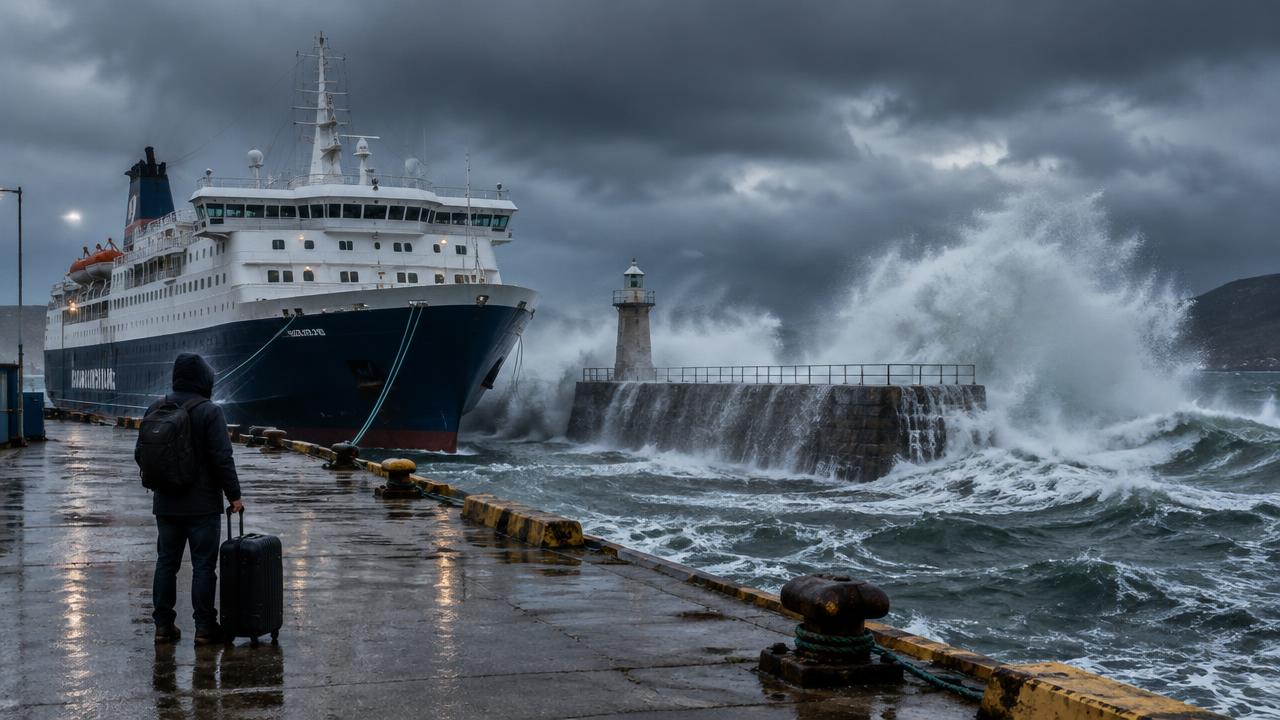
More than a dozen ferry routes have been cancelled for the rest of the day and two island airports have closed as strong gales and heavy rain from the remnants of Hurricane Isaias hit Scotland.
CalMac said sailings on 13 services had been cancelled, with normal operations expected to resume on Thursday. All remaining routes on its west coast network have been warned to expect disruption or cancellation at short notice.
Barra Airport and Benbecula Airport have both been closed because of strong winds, with all flights cancelled.
The warning
A Met Office yellow warning for wind covers parts of the Highlands and the Western Isles until 19:00 on Wednesday, with the risk of gusts reaching 70mph in exposed places.
Heavy rain is also expected across much of Scotland as the remains of the storm sweep across the UK.
Anyone planning to travel has been urged to check whether their service is running before setting out.
From hurricane to Highland gale
Isaias was the first Atlantic hurricane of the season. It made landfall in the southern United States last Friday, before weakening rapidly and losing hurricane status.
Its remnants then dumped heavy rain across the eastern side of North America. A powerful jet stream picked up what was left of the system and carried it across the Atlantic towards the British Isles.
Former hurricanes often arrive in the UK in autumn as deep areas of low pressure, bringing strong winds and a surge of unusually warm, humid air, which can produce intense rainfall.
Lifeline links
For island communities, ferries are not a convenience but a lifeline. They carry food, fuel, medicines, post and patients travelling to mainland hospitals, as well as tourists who are vital to the local economy.
When the weather closes routes, islanders can be cut off for a day or more. Businesses lose deliveries, appointments are missed and visitors are stranded.
Cancellations caused by bad weather are a fact of life in the Hebrides. But they come on top of years of frustration over breakdowns and delays in the ageing CalMac fleet, and over the long-delayed construction of new vessels.
Several new ferries have joined or are due to join the fleet, but islanders say reliability remains a serious concern, especially in winter.
A grim backdrop
The storm has also complicated a search off the north of Lewis, where a fishing boat with three men on board went missing on Tuesday evening. One man has been found dead and two remain missing.
Coastguard helicopters, lifeboats and local boats have been searching off the Port of Ness despite the worsening conditions.
Road and rail
Drivers have been warned to take care on exposed routes, where high winds can make conditions hazardous for high-sided vehicles. Bridges with wind restrictions may be closed to some traffic.
Rail operators often impose speed restrictions on lines exposed to high winds, and fallen trees can block tracks, particularly on rural lines in the Highlands.
The cost of disruption
Island business groups estimate that every day of cancelled sailings costs local firms in lost trade, spoiled fresh produce and missed deliveries. Hauliers who move seafood from the islands to markets on the mainland and in Europe are among the hardest hit, because their cargo cannot wait.
Hospital appointments are another concern. Patients from the Western Isles who need specialist treatment often travel to Inverness or Glasgow, and a cancelled ferry or flight can mean a postponed operation and a long wait for a new date.
Schools on smaller islands also rely on the ferries for some pupils and staff, and closures can force last-minute changes to timetables.
Community councils have repeatedly called for more resilience to be built into the network, including spare vessels that can be brought in when ships break down and better information for passengers when the weather turns.
What happens next
Forecasters expect the strongest winds to ease on Wednesday evening, allowing services to restart on Thursday. But CalMac has warned that some disruption could continue as crews and vessels are moved back into position.
For now, the message to travellers in the west of Scotland is simple: check before you go, and expect the sea to have the final say.


