
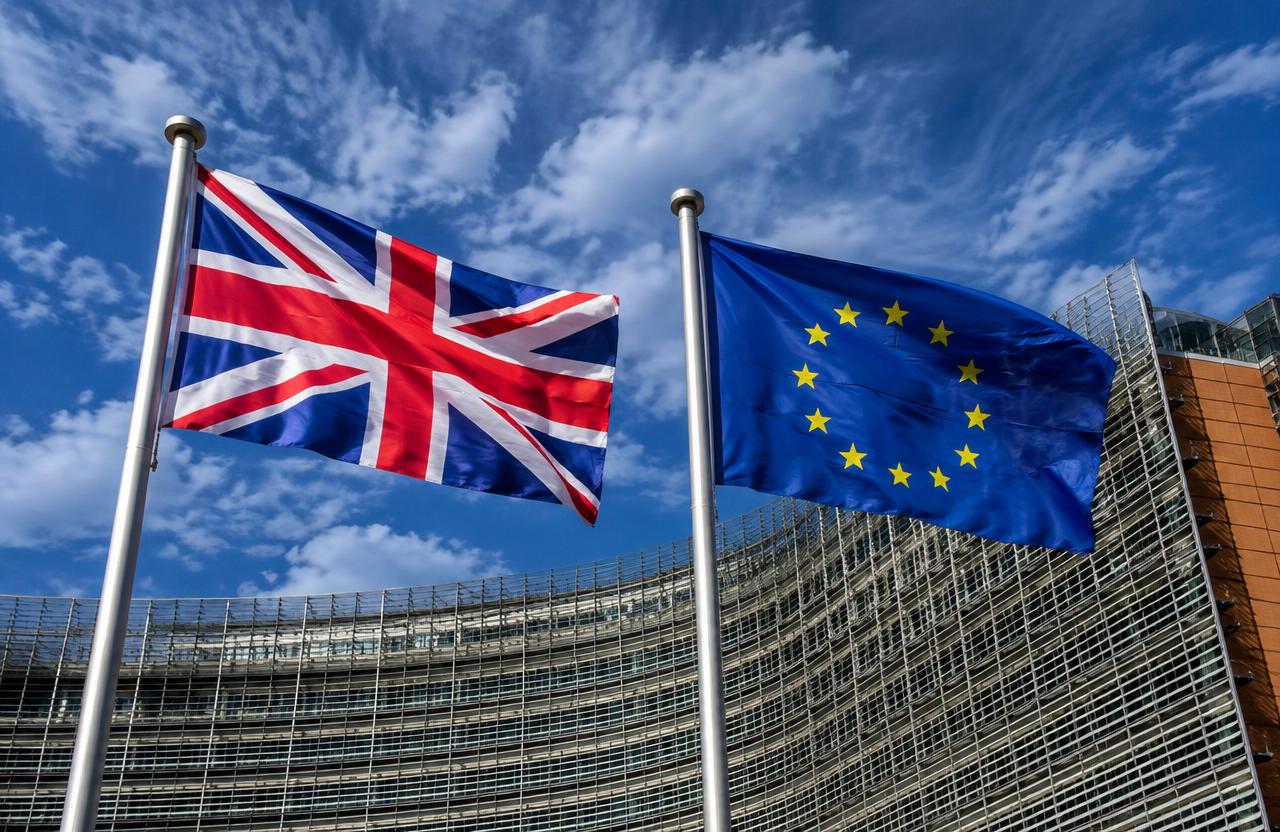
Andy Burnham has been accused of "unpicking" the Brexit deal after announcing that a UK-EU summit next month will be used to push for a series of new agreements with the bloc.
The prime minister told MPs the summit will take place in Brussels on 20 November, where the two sides hope to sign a new food and drink agreement, a youth mobility scheme and a pact linking their emissions trading systems.
It is the most significant attempt yet by Burnham's government to deepen ties with the EU, a decade after the referendum, and has reopened one of the most divisive debates in British politics.
'Not good enough'
Burnham has argued that the current arrangements with the EU are holding back the British economy. Asked during Commons exchanges about the impact of Brexit on Scotland, he said the "status quo" was "not good enough for Scotland or for Britain".
A food and drink agreement, often described as a veterinary or SPS deal, would reduce checks and paperwork on agricultural and food exports, which businesses say have cost them time and money since the UK left the single market.
A youth mobility scheme would allow young people from the UK and EU to live and work in each other's countries for a limited period. Linking carbon markets would help British firms avoid new EU charges on carbon-intensive imports.
Badenoch: 'He has revealed his hand'
Conservative leader Kemi Badenoch launched a sharp attack in the Commons. "What has the prime minister chosen to focus on today? Brexit," she said. "Here he is unpicking the deal this country signed with the EU a decade after the referendum."
"He is not going to get a better deal. The EU are tough negotiators, and he has already revealed his entire negotiating hand," she added. "As a former trade secretary, this is not how you conduct negotiations."
Critics on the right argue that closer alignment with EU rules would limit Britain's freedom to strike its own trade deals and set its own regulations, and that a youth mobility scheme risks becoming free movement by another name.
Support from pro-Europeans
Burnham's push has been welcomed by figures including the Mayor of London, Sir Sadiq Khan. A spokesperson said Khan believes Brexit was "the biggest act of economic self-harm in the history of our country" and "wholeheartedly supports the prime minister's ambition to seek a closer relationship with the EU".
Naomi Smith, chief executive of Best for Britain, which campaigns for the UK to rejoin the EU, described Burnham's approach as "a breath of fresh air for our politics", though she argued that more would be needed to bring lasting relief.
The government has so far ruled out rejoining the single market, the customs union or the EU itself, insisting it is seeking practical improvements within the existing framework.
The Scotland dimension
The Brexit debate is particularly charged in Scotland, which voted by 62% to 38% to remain in 2016. The SNP argues that only independence would allow Scotland to rejoin the EU.
Burnham will visit Scotland this week as the SNP holds its annual conference in Aberdeen. He has told First Minister John Swinney that a second independence referendum is "off limits" and instead promises "deeper devolution" and investment.
What happens next
Negotiators from both sides will now work to finalise texts before the November summit. EU officials have previously signalled that any youth scheme would need to be balanced and that access to British fishing waters and budget contributions for programmes could form part of discussions.
For Burnham, the summit is a test of whether closer co-operation can deliver visible economic gains. For his opponents, it is a chance to argue that he is steadily reversing the result of the referendum. Either way, Brexit is back at the centre of British politics.


