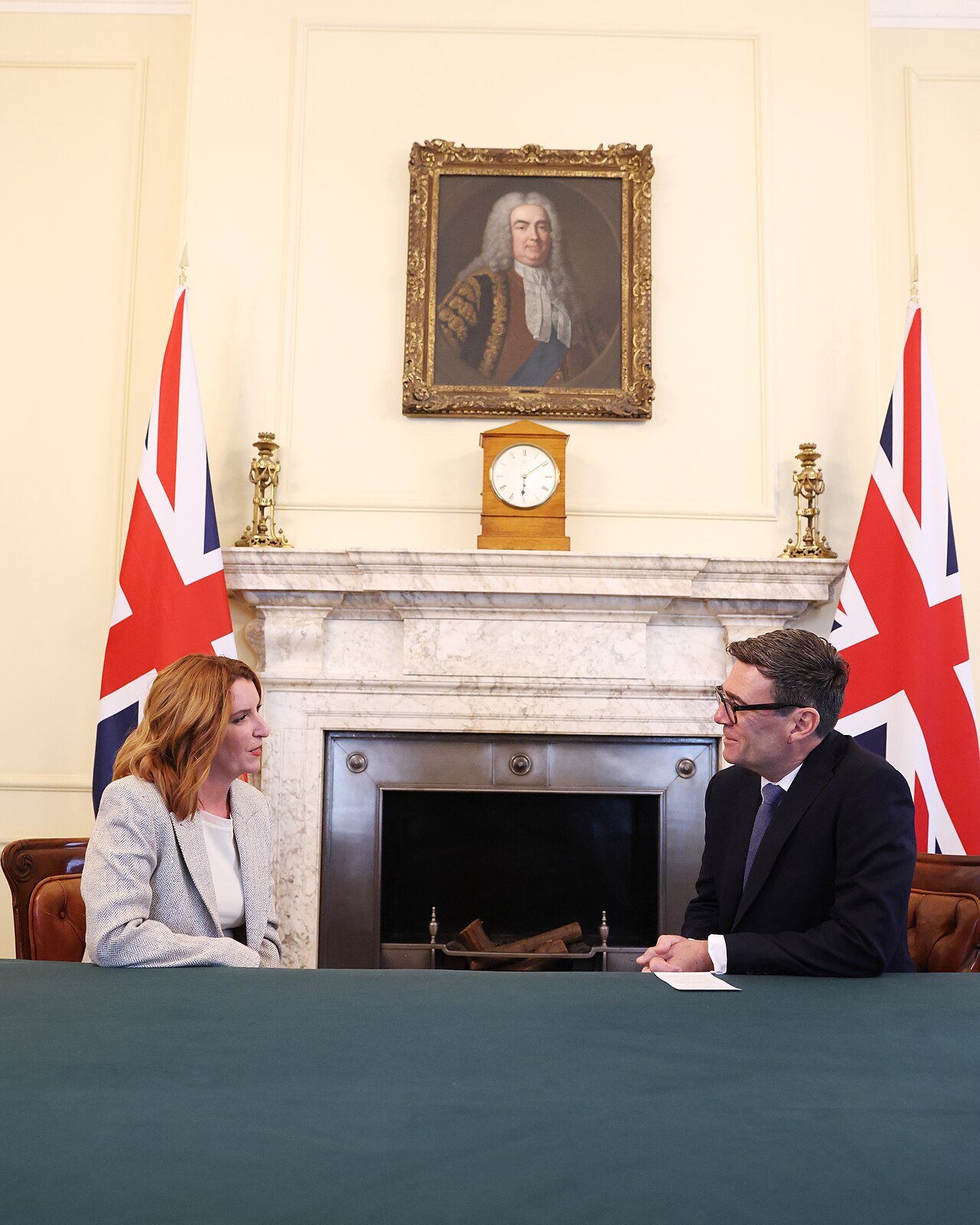
Andy Burnham has agreed the main elements of his government’s long-promised reset of relations with the European Union at a summit in Brussels, but the package will not take full effect until a separate dispute over university tuition fees for European students is settled.
Downing Street declared that “the deal is done” less than an hour after the prime minister arrived at the European Council building on Friday morning, where he was greeted by the European Commission president, Ursula von der Leyen, and the European Council president, António Costa. Agreements were reached on food and drink trade, carbon emissions trading and a new youth mobility scheme.
But EU officials made clear that adoption of the flagship agreements is tied to a further negotiation over how much European students pay to study at British universities. A diplomatic text seen by reporters in Brussels states that implementation of the three main deals will be delayed until talks on equal treatment over tuition fees conclude. The UK has been given around six months to agree or negotiate an alternative.
What has been agreed
The youth mobility scheme is the centrepiece for many on both sides of the Channel. It is expected to allow up to 100,000 young Europeans to live, work and study in the UK, with a reciprocal route for young Britons travelling the other way. Supporters describe it as restoring opportunities lost when free movement ended after Brexit; critics have already raised questions about the numbers and how the scheme will be policed.
The food and drink agreement is designed to cut border checks and paperwork that have burdened exporters since the UK left the single market, particularly for animal and plant products. The emissions trading element would link the UK and EU carbon markets, a step businesses have sought to avoid paying charges on carbon-intensive goods exported to the continent.
Burnham told reporters in Brussels that the UK and EU were “stronger together”, framing the summit as the delivery of a manifesto promise to rebuild the relationship without rejoining the single market or the customs union. A No 10 spokesperson said negotiations had concluded, while conceding that talks “will continue in some areas”.
The tuition fees obstacle
The sticking point is money. EU capitals want European students to be charged the same tuition fees as British students at UK universities, rather than the much higher international rates introduced after Brexit. University leaders in Britain have warned that such a change would cost the sector hundreds of millions of pounds a year, because international fees now cross-subsidise teaching and research.
Brussels has denied taking Britain “hostage” over the issue, insisting that student fees are simply part of a wider package in which nothing is agreed until everything is agreed. European diplomats argue that youth mobility without affordable study would be a hollow offer for many young people on the continent.
The six-month window means the fees negotiation will run well into next year, leaving exporters and universities in a period of continued uncertainty even as both sides celebrate the outline agreement. Euronews reported that young Europeans had “won a route back to the UK, but not cheaper university fees yet”.
Political reaction at home
The summit has already opened a fresh domestic row. Nigel Farage accused Burnham of breaking Labour’s manifesto commitments over Brexit, arguing that closer alignment with EU rules on food and carbon amounts to re-entering the bloc’s orbit by the back door. Government figures reject that characterisation, pointing out that the agreements stop well short of single market membership.
For Scottish businesses, the food and drink element carries particular weight. Whisky, seafood and salmon producers have complained for years about post-Brexit export friction, and any reduction in checks at continental ports would be felt quickly in rural constituencies. Scottish universities, which charge their own fee levels and rely heavily on international recruitment, will watch the tuition talks closely.
What happens next
Officials on both sides will now draft the legal texts of the three agreed packages while the fees negotiation runs in parallel. The EU side has said formal adoption will wait until the whole package is ready, meaning Friday’s handshakes in Brussels mark the start of a further phase of bargaining rather than its end.
The government will hope that the outline deal is enough to show voters that its reset strategy is delivering. Its opponents will note that the hardest question — what Britain is prepared to concede on student fees — has merely been postponed, and that the next six months will determine whether the reset becomes a reality or another unfinished chapter in the post-Brexit story.