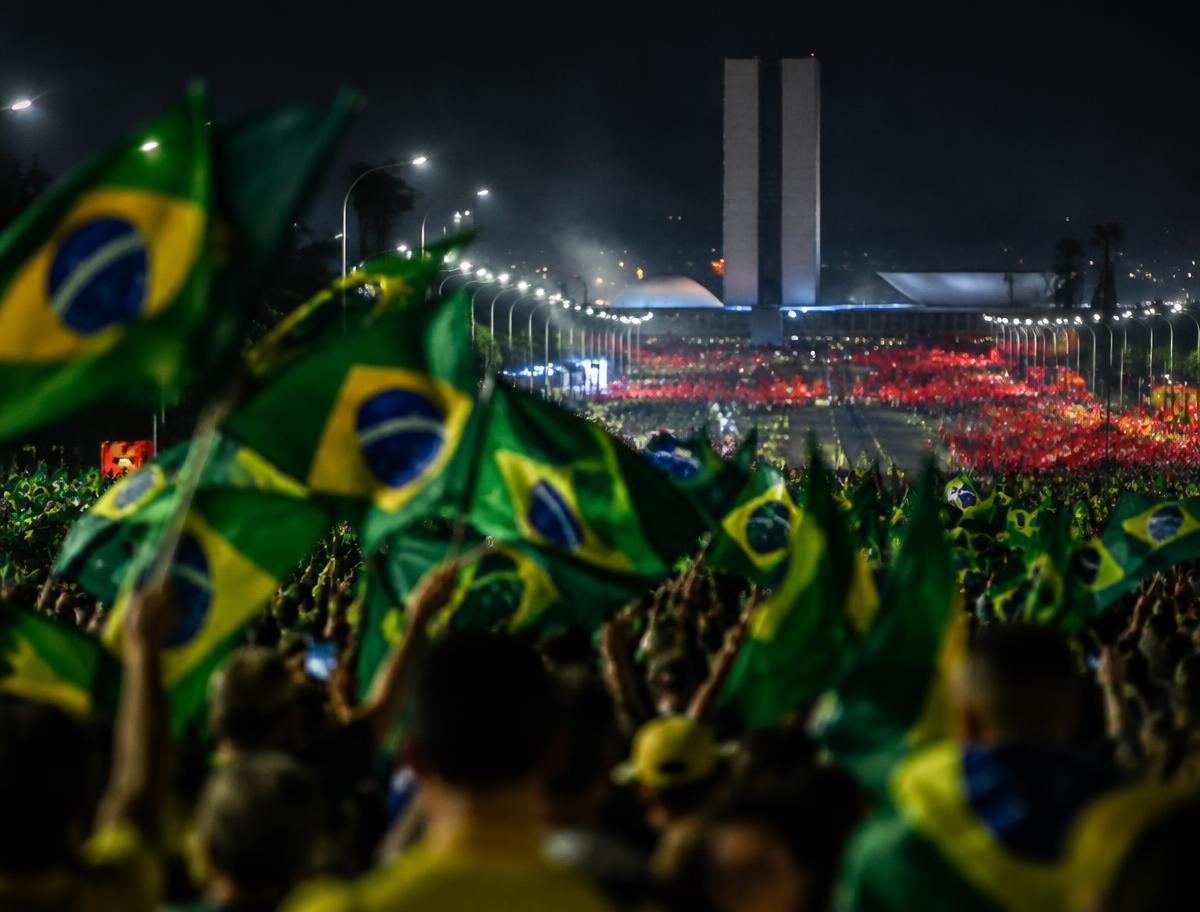
Right-wing senator Flávio Bolsonaro has won the first round of Brazil's presidential election, beating left-wing President Luiz Inácio Lula da Silva but falling short of the outright majority needed to take power immediately.
The two men will now face each other in a run-off on 25 October, in a contest that will decide the direction of Latin America's largest country and economy.
With virtually all ballots counted, Superior Electoral Court figures gave Bolsonaro 47.03% of valid votes, or 56,103,033, against 45.16%, or 53,870,724, for Lula. The incumbent had polled slightly ahead during the campaign, and he acknowledged the result was "unexpected".
A family name returns
Flávio Bolsonaro, 45, is the eldest son of former president Jair Bolsonaro, who is serving a 27-year prison sentence for masterminding a failed coup after losing the 2022 election. His candidacy is an attempt to return his father's right-wing movement to power.
"Brazil wants change, that's the reading of what happened today," he told supporters outside his home in Brasília. He said he had committed to ending re-election and wanted a "modern government, with fewer ministries". Earlier, after casting his ballot, he said he wanted to "free the Brazilian people".
Lula, 80, is seeking a fourth, non-consecutive term after a political career spanning nearly five decades. He was first elected in 2002. Before voting, he warned that the choice was between democracy and "barbarism".
Momentum on the right
Bolsonaro's performance exceeded expectations, and some of the other candidates knocked out in the first round were right-wing alternatives. Many analysts believe that gives him an advantage in the second round, as their supporters may be more likely to back him than Lula.
His Liberal Party also had the most governors, senators and federal deputies elected in results so far, meaning it is expected to be the most influential force in Congress whoever wins the presidency.
Financial markets reacted swiftly. Brazil's benchmark Bovespa stock index jumped more than 8% on Monday and the real strengthened by around 4% against the US dollar, as investors bet that right-wing gains in Congress could open the way to fiscal reforms.
A polarised country
The campaign has divided Brazil once again. Voters named sovereignty, crime, the economy and corruption among their top concerns. Lula is more popular in the poorer north-east, among low-income voters, Catholics and women. His supporters credit him with social programmes and a willingness to stand up to the United States.
Bolsonaro's voters favour his promises on affordability and crime, and closer ties with the Trump administration. He is a close ally of US President Donald Trump.
What is at stake
The winner will lead a nation of 214 million people, with the new term beginning on 5 January. Most of Latin America has now elected right-wing presidents aligned with the Trump administration, and the run-off will determine whether Brazil follows suit.
A Bolsonaro victory would be expected to increase US influence in the region. A Lula win would see Brazil keep its distance from Washington and continue to deepen its relationship with China, its largest trading partner.
The election has also been shadowed by concerns about outside interference. Brazil's intelligence agency had briefed European officials that both the United States and Russia were attempting to meddle in the vote, claims both countries have rejected.
Over the next three weeks, both candidates will be chasing moderate voters and those who backed eliminated rivals. Lula must reverse a deficit of more than two million votes; Bolsonaro must hold together a coalition energised by his father's legacy while reassuring Brazilians wary of the turmoil that followed the last election.
On 25 October, Brazil will choose between two of the biggest names in its politics, and between two very different visions of where the country goes next.