
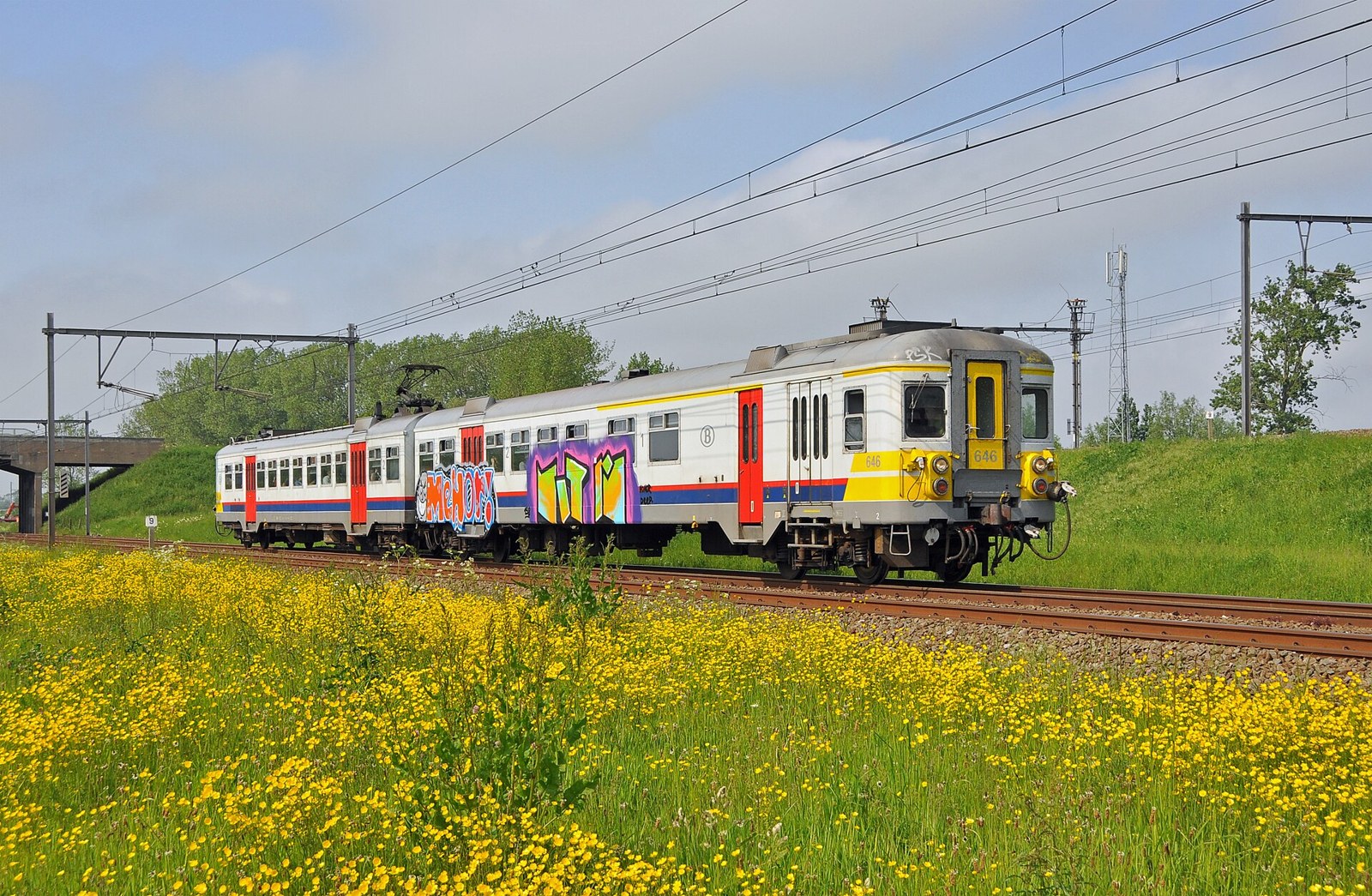
Strike action to disrupt Monday travel
Belgium's national rail operator SNCB has warned that fewer trains will run from Sunday 11 October at 22:00 until the end of service on Monday 12 October, because of a strike called by the socialist union CGSP against the government's budget proposals. SNCB said in a press release that an alternative train service had been drawn up by SNCB and infrastructure manager Infrabel, based on staff who had indicated their intention to work.
SNCB and Infrabel said they "deeply regret" the strike action and its consequences for travellers, according to the press release.
Seven in ten intercity trains to run
Concretely, SNCB said that on Monday 12 October, seven out of ten intercity (IC) trains — the services connecting Belgium's major cities — are expected to run. In addition, one in two L and S trains, which serve more local and suburban routes, will operate. Few P trains, the peak-hour services that typically run during the morning and evening rush, will run at all, the operator said.
Dutch-language outlet Bruzz, citing the same NMBS statement issued on Saturday, reported the disruption as affecting three in ten intercity trains that would not run — consistent framing of the same seven-in-ten operating figure — and attributed the strike call to the ACOD union, the Dutch-language name for the same socialist union identified by SNCB in French as CGSP, acting against the government's austerity, or sanering, proposals.
Sunday evening student trains unaffected
SNCB said that on Sunday evening, all P trains for students would run as normal. These are the additional services that reinforce capacity to student cities including Brussels, Leuven, Ghent, Liège and Louvain-la-Neuve on Sunday evenings, allowing students to return to their accommodation, referred to in Belgium as a "kot", ahead of the week.
Bruzz's report similarly noted that all Sunday evening P-trains for students would operate, serving student cities such as Antwerp, Brussels, Leuven and Ghent.
Advice to travellers
SNCB advised passengers to prepare their journeys carefully by regularly checking its online journey planner. The operator said that from Sunday morning, the planner would display the alternative train service applicable for Monday. More detailed information about the alternative service was also made available on SNCB's website, the press release said.
SNCB spokesperson Dimitri Temmerman was quoted in the press release confirming the advice to consult the online journey planner regularly. Temmerman was also quoted directly in Bruzz's report making the same recommendation, telling the outlet that from Sunday morning the planner would show the alternative service for Monday's travel.
International trains and wider context
For information about international rail traffic, SNCB directed travellers to consult the website of SNCB International. The press release was published and timestamped by SNCB on 10 October 2026.
Bruzz additionally noted the strike action had already disrupted other public services, referencing a separate report on waste collection being affected, with household rubbish said to be left uncollected on pavements during the stoppage — an indication that the walkout extended beyond rail services alone, though the rail disruption affecting intercity, L, S and P train categories was the specific focus of SNCB's own travel advisory. The strike was due to run from Sunday 11 October at 22:00 through the end of service on Monday 12 October.
What the figures mean for individual journeys
The national operating percentages do not mean that every route will receive the same reduction. The alternative timetable is the relevant guide for a particular departure and connection. A passenger whose intercity train is retained may still find that a connecting local service or a usual peak-hour train is missing, so checking only the first leg of a journey is not enough.
The difference between the categories also matters. Intercity services are expected to retain a larger share of departures than local and suburban trains, while peak-hour services face the sharpest reduction. Travellers who normally rely on an extra rush-hour departure should not assume it will be replaced by an identical service. The published planner, rather than a normal weekday timetable, is the operator's recommended source for Monday.
Sunday's student services are a specific exception in the announcement, not a statement that all services are unaffected after the strike begins. International passengers are directed to a separate service-information channel. Neither the domestic operating figures nor the student exception establishes whether a particular cross-border connection will run.