
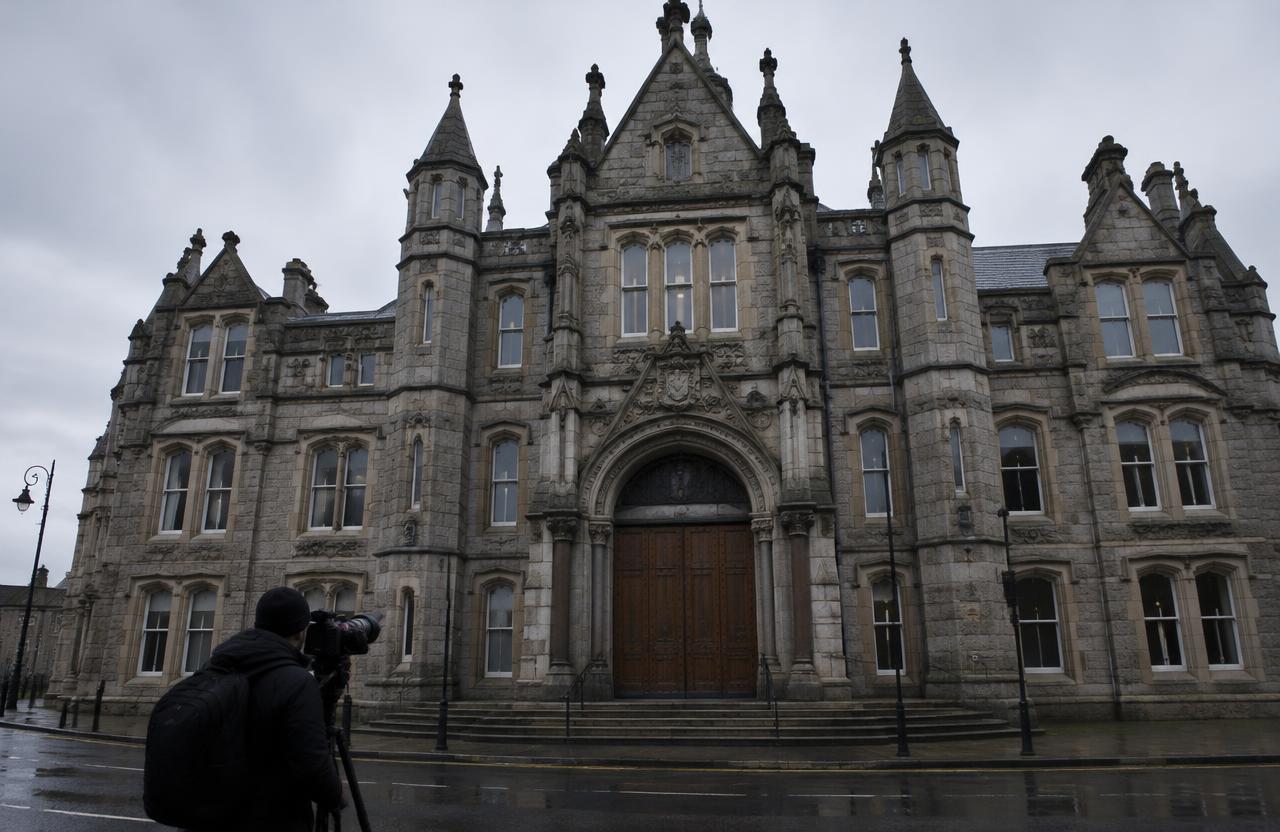
A BBC Scotland journalist who was ordered out of a courtroom while reporting on allegations of abuse at an Aberdeenshire care home has won a landmark ruling at Europe's highest human rights court, eight years after the hearing took place.
The European Court of Human Rights (ECHR) in Strasbourg found in favour of Steven Duff, an Aberdeen-based reporter, saying Scots law recognises the principle of open justice and that court proceedings should be held in public except in "the rarest of circumstances".
BBC Scotland has been awarded its costs.
A hearing behind closed doors
In August 2018, Duff was investigating Muirhead Care Home in Alford, which was on the brink of being shut down by the Care Inspectorate after a spot inspection the previous month.
Reports said residents had been found tied to chairs with belts and had not been given enough food. The Care Inspectorate went to Aberdeen Sheriff Court to seek the home's closure.
Duff, who said he was the only journalist following the story at the time, attended the hearing. But the care home operator's legal representative asked for the case to be heard in private, citing vulnerable people and the commercial interests of his clients.
The sheriff granted the request and Duff was asked to leave.
"I was very surprised when the counsel for the care home operator asked for the hearing to be in private," he said. "His reasoning did not make sense as those could be the circumstances of many court cases."
He added that he was "even more surprised" that nobody objected. "I knew immediately it was wrong."
What the court decided
In its findings, the Strasbourg court said the power to exclude the public from hearings required "a compelling reason", and that the importance of journalists' access to court proceedings is recognised in common law.
It also concluded that it would have been "practically impossible" for the media to take legal steps to prevent the sheriff's order on the day, meaning there was no effective way for the reporter to challenge his exclusion at the time.
The sheriff later said she had been unaware that journalists were present in court.
The care home case
Muirhead Care Home closed in 2018, and its residents were moved to other homes after the Care Inspectorate's application to the court.
Three people were arrested in connection with the case. The Crown Office later said it had been dealt with through an alternative to prosecution, such as a warning, compensation order or work order.
'An important judgement'
Duff said the ruling mattered well beyond his own case. "I really think this is an important judgement," he said. "Journalists, and indeed the public, should have as much access to the court system as possible and closed hearings should be the exception. This judgement at the ECHR reaffirms that."
Rosalind McInnes, legal director of BBC Scotland, said: "This decision shows that the court cannot shut out journalists without hearing them in advance."
She noted it was BBC Scotland's second victory in Strasbourg on open justice since 2010. "Reporting the courts to the public remains hugely important to us as a public service broadcaster," she said.
Why it matters
Open justice is one of the oldest principles of the Scottish legal system. It allows the public to see how laws are applied, holds judges and lawyers to account, and ensures that serious allegations, such as the mistreatment of elderly care home residents, are not quietly settled out of view.
Media lawyers say the ruling is likely to be cited in future cases where parties ask for hearings to be held in private, and could encourage courts to give reporters a chance to make representations before any order is made.
For families with relatives in care, the case is also a reminder of why scrutiny matters. The allegations at Muirhead came to light because inspectors acted and a reporter was in the room. Strasbourg has now made clear he should never have been asked to leave.


