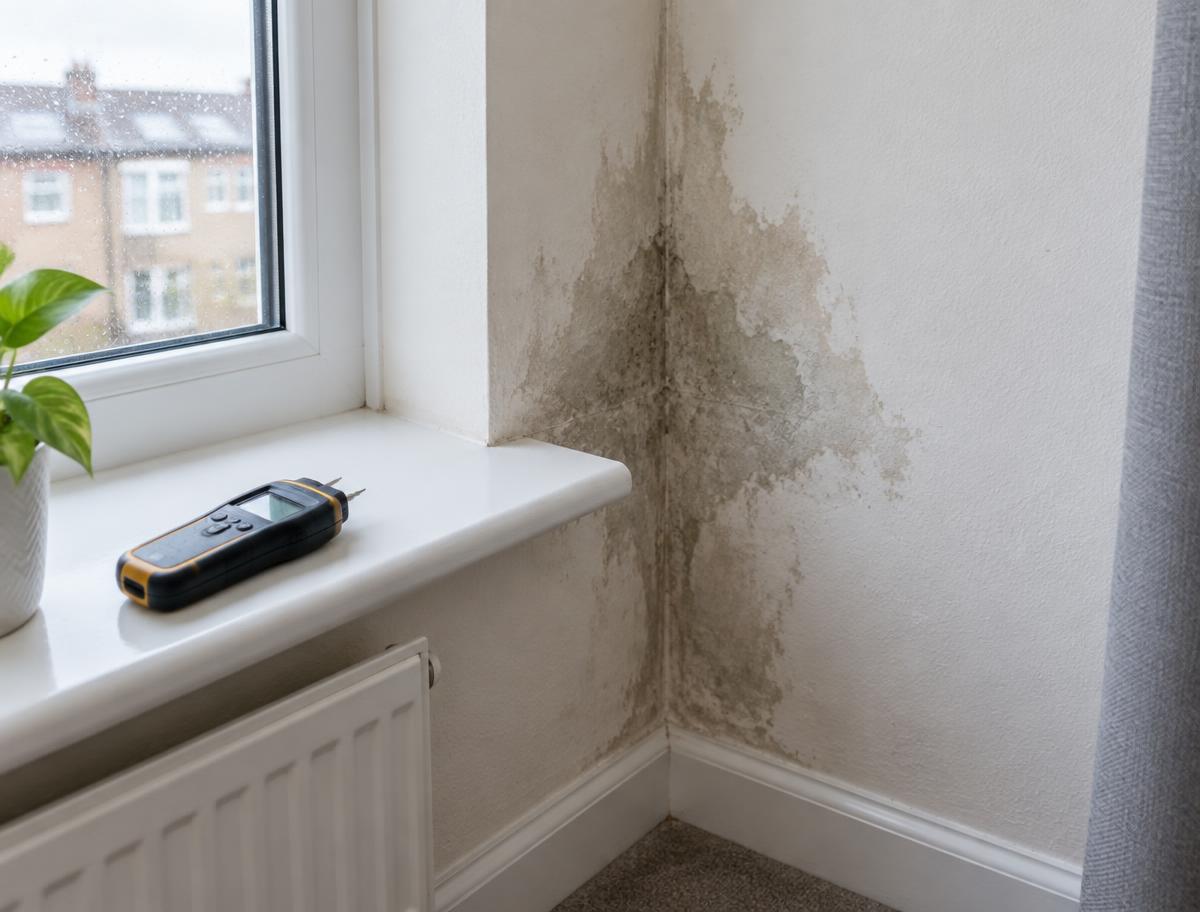
Landlords across Scotland face strict new legal deadlines for investigating and fixing damp and mould in rented homes from 6 October, when regulations known as Awaab’s Law come into force, the Scottish Government has announced.
The Investigation and Commencement of Repair (Scotland) Regulations 2026 apply to both social and private landlords, requiring them to act promptly whenever damp or mould is reported, whether by a tenant or identified by the landlord during an unrelated visit such as a routine inspection.
What landlords must now do
Under the new rules, investigations into reported damp or mould must be carried out by someone with the relevant skills and experience, and landlords are required to provide tenants with written findings once an inspection has taken place. Crucially, repairs must address the underlying cause of the problem, such as poor ventilation, structural defects or persistent condensation, rather than simply treating visible symptoms like surface mould.
Housing Secretary Shirley-Anne Somerville said everyone deserves a warm, safe and secure home, and that the protections are being extended to cover both social tenants and those renting privately, a broader scope than some earlier versions of similar legislation elsewhere in the UK. She said most homes in Scotland are already free of damp and mould problems, but urged both landlords and tenants to familiarise themselves with their rights and responsibilities before the rules take effect.
The case that gave the law its name
The legislation is named after Awaab Ishak, a two-year-old boy who died in December 2020 after prolonged exposure to mould in his family’s housing association flat in Rochdale, Greater Manchester. A coroner ruled in 2022 that mould exposure caused the fatal respiratory condition, after Awaab’s father had repeatedly reported the problem to the family’s landlord, Rochdale Boroughwide Housing, only to be told at one stage to simply paint over it.
The coroner was highly critical of the landlord’s response, and the case prompted widespread public and political pressure for stronger legal protections for tenants living in substandard housing, leading first to legislation for social housing in England that took effect in phases from October 2025, and now to a dedicated Scottish version covering both social and private tenancies.
How it fits with wider housing standards
The Scottish regulations sit alongside existing housing quality standards, including the Scottish Housing Quality Standard for social housing and the repairing standard that applies to private tenancies, both of which already set general expectations for landlords to keep homes in a reasonable state of repair. Awaab’s Law adds specific, enforceable timescales for damp and mould cases, intended to stop problems dragging on for months or years as has happened in some past cases highlighted by tenant campaigners.
Why damp and mould remain a persistent problem
Housing campaigners have long pointed to a combination of older housing stock, fuel poverty and poor ventilation as drivers of damp and mould in parts of Scotland’s rented sector, with tenants sometimes reluctant to run heating or extractor fans because of the cost, inadvertently worsening condensation problems. Cold, damp housing has been linked by public health researchers to respiratory illnesses, exacerbation of asthma, and other health conditions, particularly among children and older people, giving the issue a public health dimension beyond simple property maintenance.
Scotland’s rented sector includes a significant proportion of older tenement and ex-council stock in cities such as Glasgow and Edinburgh, where structural issues contributing to damp can be more difficult and costly to resolve than in newer housing, a factor landlords have previously cited when explaining delays in addressing reported problems.
Enforcement and tenant rights
Tenants who believe a landlord has failed to meet the new timescales will be able to raise the matter through existing routes for housing disputes, including the First-tier Tribunal for Scotland in the case of private tenancies. The Scottish Government has published guidance for landlords and tenants setting out the detail of the new duties ahead of the law taking effect.
What happens next
Ministers say they expect the new regime to drive a change in how quickly damp and mould reports are dealt with across the rental sector, though the practical impact will depend on how robustly it is enforced and whether tenants are made aware of their rights. The government has said it will monitor how the law operates once it beds in from 6 October.
Tenant representative groups have generally welcomed the Scottish regulations, though some have said their effectiveness will depend heavily on how actively councils, housing associations and tribunals enforce the new timescales once complaints start being tested in practice.