
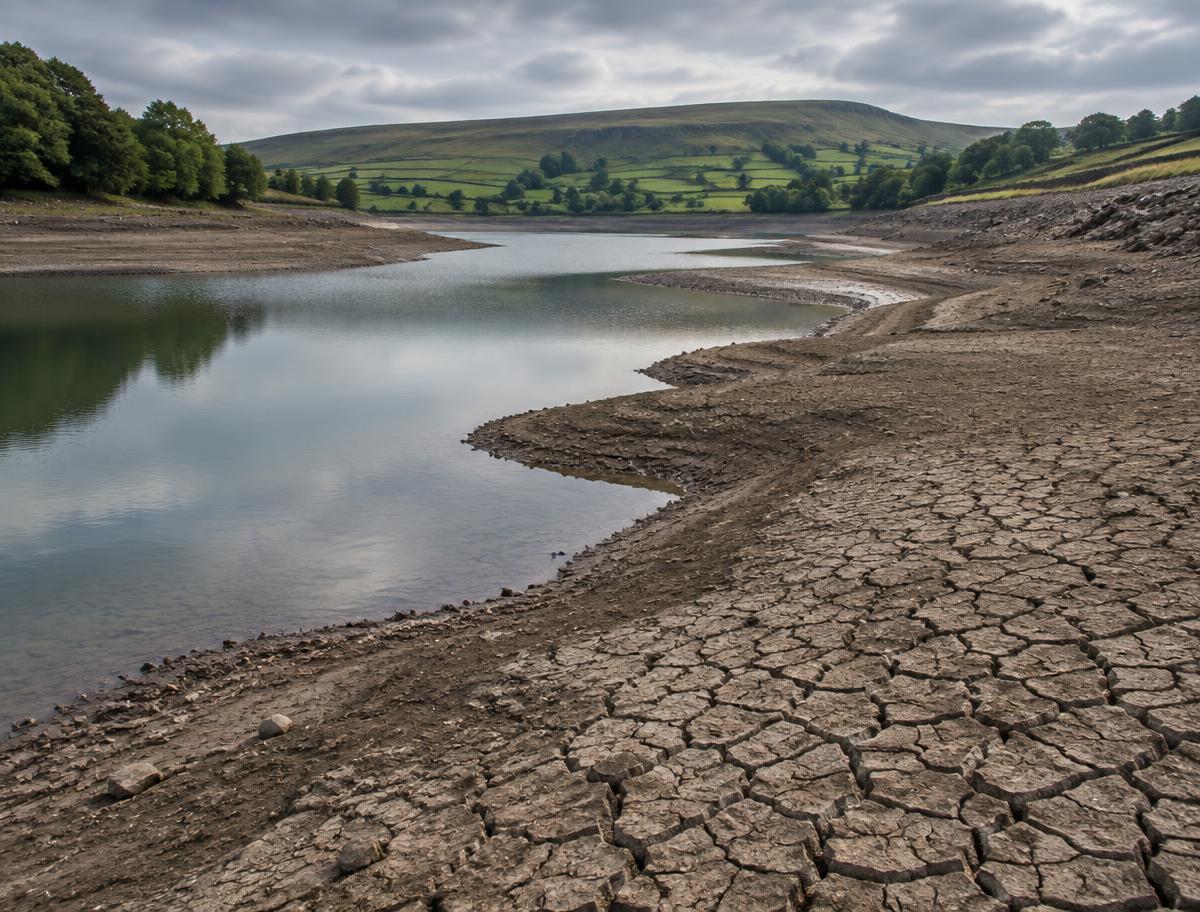
The Environment Agency has granted a drought permit to help secure public water supplies at Ardingly Reservoir in West Sussex, after the reservoir fell to its lowest level on record for this time of year.
Ardingly Reservoir, near Haywards Heath, stood at just 23% of its total capacity on 28 September, supplying around 280,000 customers, the Environment Agency said in confirming the permit.
What the permit allows
The drought permit, issued to South East Water, allows the company to temporarily reduce the amount of water it must release from the reservoir into the Shell Brook tributary of the River Ouse, and to lower the minimum flow it must maintain in the Ouse itself at Barcombe Mills.
The changes are intended to keep more water in the reservoir while minimising the knock-on impact on the river environment, though the Environment Agency acknowledged the measure alone would not be enough to secure water supplies and said South East Water would need to take further steps under its drought plan, potentially including a ban on non-essential water use.
Richard O’Callaghan, Environment Planning Manager at the Environment Agency, said granting any drought permit “is not a decision done lightly,” adding that the agency would “continue keeping a close eye on river conditions” and ensure the company abided by the “tough but fair conditions” attached to the permit.
A summer of exceptional drought
South East Water said the drought permit followed an exceptionally hot and dry summer, with the Met Office provisionally rating 2026 as the warmest summer on record and July the driest in England since records began 190 years ago. Sussex received just over 56% of its expected rainfall between March and August.
The company also pointed to repeated heatwaves, with temperatures of 35C or above recorded in four separate months this year, May, June, July and August, driving record daily demand for water even as supplies dwindled.
Further restrictions on the way
South East Water has separately tightened its hosepipe ban, removing previously granted exemptions with effect from 9 October, with hosepipe use now restricted to health, safety or welfare purposes only. The company has also applied for a non-essential use ban covering commercial and non-household customers, which requires formal approval from the Environment Secretary before it can take effect.
Nick Price, head of water resources at South East Water, said the prolonged warm and dry weather had made the ground very dry and reduced flows in local streams and rivers, meaning more rain was needed to moisten the ground, replenish underground aquifers and refill rivers and reservoirs.
What happens next
The Environment Agency has said the coming winter will be crucial for recovery, warning that at least average winter rainfall will be needed to refill Ardingly Reservoir and move Sussex out of drought and into recovery by spring; if rainfall remains below average, pressure on water resources is likely to persist into next year.
How drought permits work
Drought permits are issued by the Environment Agency under the Water Resources Act and allow water companies to temporarily vary the conditions of their abstraction licences, typically by reducing the amount of water they must leave in rivers to protect wildlife and downstream users, in order to protect public water supplies during periods of severe shortage. They are considered a significant but not extreme step, below the more serious drought order, which can impose restrictions directly on how water is used by households and businesses, and are only granted after companies demonstrate that other measures, such as leakage reduction and demand management, are insufficient on their own.
2026's exceptional weather
The conditions behind the Ardingly shortfall reflect a broader pattern across England this year, with the Met Office provisionally recording the summer of 2026 as the warmest on record and July as the driest since national rainfall records began 190 years ago. Multiple heatwaves through the spring and summer, with temperatures reaching 35C or higher in four separate months, drove unusually high demand for water even as rainfall remained well below average across much of southern England, including Sussex, which received just over half its expected rainfall between March and August.
South East Water's wider response
Beyond the drought permit itself, South East Water has progressively tightened restrictions on customers, removing previously granted exemptions to its hosepipe ban and applying separately for a non-essential use ban affecting commercial and non-household customers, a measure that requires formal sign-off from the Environment Secretary before it can take effect. The company has framed these steps as part of a broader drought management plan intended to balance the needs of customers, the environment and long-term supply resilience.
Environmental trade-offs
Environmental groups have historically raised concerns about drought permits, warning that reducing compensation flows into rivers such as the Ouse can harm fish populations, water quality and wider ecosystems already under stress from low water levels. The Environment Agency's description of the permit's conditions as 'tough but fair' reflects an attempt to balance these competing pressures, allowing South East Water to protect drinking water supplies while trying to limit the damage to the river environment as far as possible.
A wider pattern across England
Ardingly is not the only reservoir to have struggled this year; several water companies across England declared drought status in parts of their supply areas during 2026 as the unusually dry conditions affected river flows and groundwater levels nationally. Water companies and the Environment Agency have increasingly pointed to such episodes as evidence of the pressures a changing climate is placing on the UK's water infrastructure, alongside long-standing concerns about leakage rates and ageing pipe networks across the industry.
Looking ahead to winter
Water companies typically rely on winter rainfall to recharge reservoirs and aquifers ahead of the following summer, meaning the coming months will be critical in determining whether Sussex, and other affected parts of the country, can move out of drought conditions before demand rises again next year. A repeat of this year's below-average rainfall over winter could leave reservoirs entering spring 2027 at a similarly depleted starting point, raising the prospect of further restrictions.


