
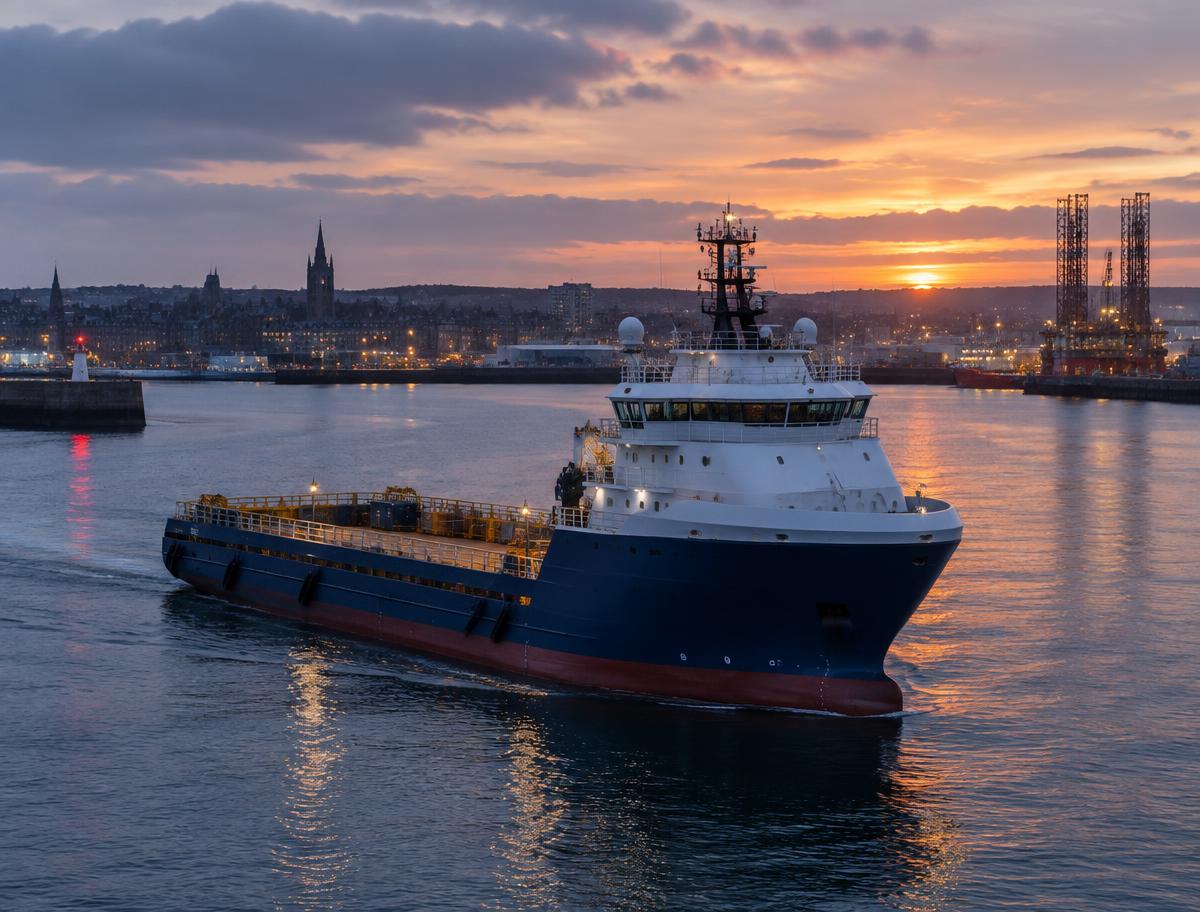
Aberdeenshire Council has agreed to develop a dedicated Just Transition plan, called Aberdeenshire’s Fairer Future, aimed at protecting jobs and attracting investment as the region’s oil and gas-dependent economy continues to change.
The decision was taken by the council’s Infrastructure Services Committee on Thursday 1 October. It commits officers to drawing together existing work on economic diversification, skills and community resilience into a single coordinated framework rather than a series of separate initiatives.
Why the council is acting now
Councillors were told that although significant work is already under way across the authority, there has been no single clear plan setting out how Aberdeenshire will manage the shift away from fossil fuels. The council says the local economy remains heavily exposed to volatile oil and gas prices, geopolitical uncertainty and the long-term decline of North Sea production.
The North Sea has been central to Aberdeen and Aberdeenshire’s economy for half a century, supporting tens of thousands of direct and supply-chain jobs. Production from the basin has fallen steadily since peaking in the late 1990s, and the pace of the UK’s move towards renewable energy and net-zero targets has sharpened concerns locally about how quickly that decline could accelerate.
What the Just Transition plan will cover
The Fairer Future plan will build on the council’s existing Community Wealth Building Strategy, which focuses on keeping economic benefit within local communities. Officers will be tasked with identifying gaps in current provision, aligning the objectives of different council services and partner organisations, and building a pipeline of investable projects.
The stated priorities include protecting people’s livelihoods during the transition, developing skills that allow oil and gas workers to move into renewable energy, hydrogen, carbon capture and other emerging sectors, and ensuring the economic benefits of new industries are shared across Aberdeenshire rather than concentrated in a few areas.
Officers are also expected to examine how the plan can support supply chain businesses, many of which are small and medium-sized firms heavily dependent on oil and gas contracts, in diversifying their client base towards renewables, defence or other sectors less exposed to the decline of North Sea production.
A wider Scottish and UK debate
The concept of a “just transition” has been a recurring theme in Scottish energy policy, with the Scottish Government establishing its own Just Transition Commission to advise on how the move away from fossil fuels can be managed without leaving workers and communities behind. The UK government has separately faced pressure over the pace of North Sea licensing decisions, with unions and industry bodies warning that a mismatch between the decline of oil and gas jobs and the growth of renewable alternatives risks a damaging gap in employment.
Aberdeen and Aberdeenshire have positioned themselves as hubs for offshore wind, hydrogen production and carbon capture and storage, with projects such as the Acorn carbon capture scheme at St Fergus cited by supporters as evidence the region can pivot to new energy industries. Critics, including some trade unions, argue that progress on new green jobs has not kept pace with job losses in oil and gas supply chains.
What happens next
The council’s decision to pursue a Just Transition plan is an early procedural step rather than a finished strategy. Officers will now need to draw up the detail of Aberdeenshire’s Fairer Future, including specific projects, funding sources and timescales, before it returns to councillors for further decisions. No date has yet been set for when a fuller plan will be published or how communities and businesses will be invited to contribute to shaping it.
The stakes for local communities
For many households in Aberdeenshire, the pace and fairness of the transition away from oil and gas is not an abstract policy question but one with direct implications for family income and local services, given how deeply the regional economy has historically depended on North Sea employment, from offshore platform jobs to onshore engineering, logistics and hospitality businesses that serve the industry.


